I am, in no particular order, a son, husband, and father, a pastor, amateur astronomer, and cook, a podcaster, occasional blogger, and sometimes activist, a fan of bad sci-fi movies, a Master of Divinity, a Bachelor of Science, a sinner justified in Christ, and a Child of God, trying to make a difference in favor of loving all living beings.
Can you believe it’s been seven years since my Grand Tour that occasioned this blog? Well, if you are among my ones and ones of followers, you might recognize the fact. It hardly seems possible that it was that long ago. At the same time, the world has changed dramatically since 2018, and that Tour seems like a lifetime ago!
If you don’t know, the Grand Tour was the bulk of my 2018 sabbatical in which I visited 17 astronomical observatories and facilities in nine states in under three months. It was an amazing journey of history, cutting edge science, and discovery. I grew to admire the incredibly detailed work of scientists, the remarkable persistence it requires of them, and the ingenuity and cleverness they deploy to make fantastic discoveries about the universe and our place in it. I mean, that’s a lot of superlatives right there, and it barely scratches the surface of what they do. To learn more about it, just go through my blog posts about it.
Now, it’s 2025, seven years later, and time for another sabbatical. This time, I got it in my mind to work on a book about time and eternity from scientific and theological points of view. This came to me last year when we were on our way across Texas to see the solar eclipse. I was thinking about a summer preaching series, and the eclipse put me in mind of the timing of the movements of the spheres. We happen to live in an era when the moon is just the right distance from the earth to match the apparent size of the sun to create a total eclipse. This doesn’t happen just everywhere in the universe, and it doesn’t happen forever. in a few million years the moon will have moved further from earth and won’t be able to cover the whole solar disk. So we live in a remarkable time. That’s what got me thinking about time as a sermon series theme. Then I realized I could make it into a book during this sabbatical! So that’s been the plan.
As it happens, I now suspect that it is impossible to write a book of much substance in three months. So I’ve scaled back my expectations a bit but still plan to work on the project. I’m thinking about questions like: What is the nature of time? Why do we bother with it at all? Does the past persist? Where does the future come from? What is eternity, and how long is it really? Would humans actually enjoy living forever? Does our view of eternity affect how we behave in this life? I have so many questions! The idea is to consider them scientifically and from a particular Christian framework in a way that is accessible, thought provoking, and maybe even fun. We’ll see how that all turns out. At this point I’m imagining a collection of essays that could be the basis for sermons, lessons, and a deeper book in the future.
Meanwhile, Molly and I have just celebrated our 35th wedding anniversary – hurray! So as part of the sabbatical and as a celebratory trip, we are going out west. We will spend a week at Ghost Ranch, a Presbyterian conference center in northern New Mexico. Each of us is taking a class – Molly on writing children’s books and me on painting still-life and landscapes. Then we’re going to Chaco Canyon National Historical Park, a Native American heritage site that I had hoped to get to on the Grand Tour of ’18. The site includes a number of archaeo-astronomical installations to mark solstices and equinoxes and such. It would have been the oldest observatory on my previous tour. Now it will be a stepping stone in considering deep time for life on earth. And the stepping stones get older and deeper! After Chaco, we will visit Meteor Crater near Winslow, AZ, and then the Grand Canyon. I hope these big holes in the ground will give me a richer sense of the passage of geological time that might just make it into the book.
So there you go! That’s what I’m going to be up to for the next few weeks and months. I hope to keep the updates coming here, and I hope you’ll come along for the ride. It’s going to be a fun time!
There’s an empty chair at the table, A missing voice in the song, A smile that won’t light up the room now, A stillness that lasts far too long.
There’s a guest room that’s missing its guest, A hug with no one to hold, An argument that’s only one-sided, Old stories that must go untold.
There’s laughter that’s a bit too quiet, Games with one too few players A gap in the circle for the blessing, A name that’s missing from our prayers.
Life’s road is short even at its longest, And our loved ones leave us too soon. The holidays exact a joyful song, But our grief sings a different tune.
Though we’re sad and feel brokenhearted, We can still give thanks to the Lord For the life and the love we’re now missing, And can trust in God’s excellent Word.
God still holds the one absent from us In that realm of love, mercy, and grace. The Risen Christ gives us hope for a thanksgiving Day When once more we shall meet face to face.
This is the story of the death and resurrection of my Meade ETX90 Maksutov-Cassegrain telescope. I bought this telescope secondhand for about $200 in 2010 from a guy in Winchester, VA. It is one of the earliest ETX-90 models. The base, as seen on the cover of the owner’s manual in the picture, has a fork mount for altitude-azimuth (alt-az) functioning and is motorized in the RA (right ascension) axis to track objects compensating for the rotation of the earth. (This works best with the legs attached as shown in the picture, but it works without them, too.) It is not a go-to or computerized mount, so one must find one’s own way around the sky. Shortly after I bought it, the motor tracking failed, making it a fully manual scope. The fine motion controls to make small adjustments this way or that have become increasingly sticky and curmudgeonly over the years, making the scope less fun to use. That’s too bad, because the optics are actually not bad for a 3.5″ f/13.5 scope. I’ve clearly seen Jupiter’s Great Red Spot with it, for example, and better than with my 8″ f/4 Newtonian. So it has been a good scope, but had fallen into disuse due to the crotchety mount.
Well, early in 2021, or maybe even in 2020 (time has lost all meaning during the pandemic), once when I planned to use the ETX90, when I opened its case I found that both the fork arms had sheared off from the base of the mount. I’m not sure exactly how this happened, but it was not well secured in its case – no foam padding or anything – so I suppose it got a hard jostle at some point at just the wrong angle, and BANG! There you go. While annoying at first, this actually opened up some possibilities for remounting the thing and making it useful again. I had already been giving thought to a number of options, and now I had only to settle on one.
My first thought was to try to find a new or used base to replace the cranky, broken one. These turned out to be quite rare and rather expensive – at least 3/4 of what I paid for the whole setup in the first place. I thought I could do better. As I tinkered with the broken pieces, figuring how to get the still-attached fork arms off the optical tube assembly (OTA), I found that there were two trunnions, or round bearings, built onto the OTA, as can be seen in the first picture below. This narrowed my thinking for a new mount to building a small, tabletop Dobsonian mount.
John Dobson popularized this sort of alt-az mount about five decades ago in an effort to make astronomy more accessible to the general public. His design was built from plywood and scrap odds and ends mostly so it would be as cheap and easy to make as possible. The design has since become wildly popular, not only with amateurs making their own mounts and scopes, but also with mass production consumer telescopes, and even with the most high-end professional research telescopes you’ll find on the planet. Its simplicity is what makes it attractive – a box with bearings on the sides, sitting on a turntable. With that, you can spot anyplace on the sky.
Most homemade Dobsonian (“Dob”) mounts are for telescopes of 6″ or more aperture and four feet or more length. I wanted to make one for this scope of 3.5″ aperture and one foot in length. Again, plans or even examples of such a small setup are remarkably rare on the internet, at least in any of the places I looked. Some I found were modified Dobs with only one vertical arm. This makes for an interesting and attractive option, even used in some consumer versions, but it complicates the construction by introducing unbalanced forces. Frankly, my skills in building things just didn’t seem to be up to that. To be really honest, I wasn’t sure my skills were up to building a simple, straightforward box, based on my experiences of wood shop in junior high school. So I decided to try to modify the original Dobsonian plans on my own.
The Prototype: Proof of Concept
These pictures show an early attempt at a prototype made from some scrap 3/4″ plywood. I cut two pieces to be essentially the same size and cut a V-shaped notch in each to serve as the bearing for the trunnions on the OTA. It kind of worked, mostly. I wasn’t sure about how well balanced it was going to be, but it was a start. I even took this simple version outside to the deck and played with it a bit on the table out there. Okay, not well balanced at all. Apparently, all the balance came from torque or tension applied by being screwed in place with the now gone fork arms. This could be a problem.
While noodling around on the internet one day, I found a picture of someone’s ETX-90 with no trunnions. On further investigation, I found that, while I thought the trunnion structures were part of the moulded plastic end of the OTA, they were in fact easily detachable. This was exciting news! I could correct the balance problem by removing the trunnions! But, without the trunnions, what will hold the OTA? The original Dob plans call for a box built snuggly around the OTA and onto which trunnions are attached on the sides. This allows for finding the balance point of the OTA and even being able to adjust one way or the other to accommodate heavier eyepieces or whatnot. Since my OTA is so short, and my woodworking skills are so feeble, I didn’t really want to go that route.
I hit on the idea of buying some tube rings, which are pretty much what they sound like: hinged rings that clamp around the optical tube to hold it fast and attach to a mount. This would also give me options. For example, if I wanted to try the one-armed mount, I could just use a tube ring to hold it on…. well, that was still going to be more complicated. With tube rings or a tube ring, I could screw trunnions on what would ordinarily the ring’s top and bottom where it would screw onto the mount and hold other equipment, and then turn it sideways so those trunnions would then be the sides. If that doesn’t make sense, you’ll see in the later pictures how it works. I went on eBay and found a pair of 90 mm tube rings for a lot more than I really wanted to pay, but they were also a pretty rare find, and they would hopefully save me a lot of hassle, so whatever.
Eventually, I found what I wanted at Michael’s, the arts and craft store. For the turntable base I found two 11″ diameter clock faces, unfinished, and an 11″ square piece of pine that would ordinarily be used for a plaque or trivet or whatnot. I took the board to Home Depot to have someone make three cuts for me that would give me the right sized pieces. My assumption here was that they would have a saw that would make nice straight, square cuts and someone who knew how to use it. I may have overestimated. The fellow who ended up doing the cuts for me seemed to be (1) kind of disgruntled, (2) only nominally skilled on aforementioned saw, (3) not at all invested in my project, and (4) really high. Consequently, my little board was pretty much brutalized and my right sized pieces were rough, uneven, and no better than if I had done them myself with my limited resources. Let this be a lesson to you all! And to me, because now I had to figure out how to make them beautiful again and work. Which I did, more or less, through some clever cutting and (for me) careful hand sanding. It also involved buying a new Dremel tool and practicing on various scraps of wood lying about. At any rate, I got it to a place that I was able to accept.
The next problem comes back to my woodworking. Here is my confession. Because I don’t have much experience, I don’t have much skill. Because I don’t have much skill, I don’t do much woodworking. Because I don’t do much woodworking, I don’t have many woodworking tools that would make woodworking a lot easier. Because I don’t have many tools or the right tools, the projects I have done have been hard and haven’t really come out square most of the time. Because my previous projects haven’t be perfect, and because I’m a perfectionist, I don’t do much woodworking. You start to get the idea. Meanwhile, I knew this was a project that would require some precision in the work if it were going to work properly. Pieces would need to be reasonably square, parallel, and smooth to provide the kind of platform that telescopic viewing requires. Again, because I don’t have things like a table saw, or a joiner, or a straight edge guide for saws, or a plane, or whatever else to make wood square, or round for that matter, this delayed the process considerably. Eventually, I decided to try to find pre-cut pieces that would come properly square or properly round to begin with. Then I would just have to do my best not to screw them up too much. This was in conjunction with my efforts at designing the required sizes of the various pieces. So some 35 years after my last engineering class, I managed to work out what seemed to be workable dimensions. Yay, me!
The pictures below show various stages of development of the assembly, from painting to putting the bearing box on the top turntable piece, adding the bearing materials between the turntable pieces, and the whole set up with two sets of trunnions. I ended up with two sets of trunnions, one pair made from the wood cutouts of the bearing slots, and the other pair a couple PVC pieces on which I needed to trim some flanges in order to get them to fit between the uprights. The PVC ones will be the preferred set, I think, because they don’t allow for lateral movement of the OTA in the bearing slots as the wooden set do.
Putting On a Coat or Two
Coming Together
Configuration 1 – Wooden Trunnions
Configuration 2 – PVC Trunnions
Along with the wood pieces and the Dremel, I also bought a set of hole saws with which to make the round bearing slots on either side. My next purchase was a bottle of wood sealer and some foam brushes, so I could paint the pieces to make them pretty. I bought a variety of felt pads to use in the bearing slots and between the turntable pieces, some PVC pieces to use as the trunnions, and some rubber feet to go on the bottom of the base. Other bits I had on hand include the central bolt and washers to act as the axle for the turntable, various screws, an LP record to serve as the bearing plate for the turntable, and the black acrylic paint. On the whole I spent a lot more on the project than I intended, and probably more than if I had just bought a used ETX base on eBay in the first place. But I learned a lot and have increased not only my woodworking skills (a bit) but also my courage to try. That’s worth the price of all the bits.
Today, I managed to get the tube balanced with an eyepiece in and the objective lens cover off. I also aligned the finder scope. The movement of the turntable is pretty smooth — not quite as smooth as I’d like, but I think it will do. The same is true with the rotation of the OTA on the altitude bearings (trunnions); it’s a little sticky, but should work. Now I just need a decent, clear night that isn’t too dang cold so I can try it out and see if it really does work.
September 2, 2018, was a cloudy Sunday morning in Los Angeles. I was really tired. I had been on the road for close to five weeks, a personal record, and it was taking a toll. As an introvert I might expect to have been energized by so much time alone, but that isn’t really how it always works. In particular, I had never been away from my wife for so long, and I missed her terribly. I had seen none of the folks I usually engage with for all that time, too, and I was kind of lonely. I was on a great adventure to see some of the greatest American observatories ever, but I got up thinking, “If I have to go look at another damn telescope today, I’m gonna scream.”
That wasn’t anything I had expected for this trip. It was a sabbatical, after all, and it was supposed to be rejuvenating and energizing and whatnot. The trip was designed around my favorite hobby, one that I regularly turn to when I want to experience a sense of awe, and for the most part it was delivering that. At the same time, I was really feeling homesick and overstimulated. So I gave serious thought to skipping my scheduled trip to Mount Wilson.
This is how I recorded it in my journal a few days later:
I actually gave thought to blowing off Mt. Wilson. I’ve seen a LOT of telescopes and I was tired and whelmed. But this is what I had come so far to see and do! So I went, and glad I did.
My journal, September 5, 2018
One of the things that helped me get over the hump, as it were, was watching the worship service from Catoctin Presbyterian Church, the congregation I serve as pastor. We had been doing a live stream for about a year before I went on sabbatical, and that continued a little sporadically while I was away (as I was the primary tech driver for the project). This particular Sunday, they did have a broadcast. Being the first Sunday of the month, there was communion, and my wonderful wife and colleague Molly was the preacher and celebrant (the minister leading the sacrament). It’s hard to remember that we haven’t always been savvy with videoconferencing, but watching the service was about the first time I’d seen Molly since I’d been traveling, and it did my heart good. So, too, to see and hear my church family. When it came to the sacrament, I recorded in my journal:
I dipped my bagel in my coffee as they did communion.
My journal, September 5, 2018
Again, at the time virtual communion was entirely unknown and to some extent unthinkable, so I didn’t count it as fully communing, but it was the next best thing, and it made me feel connected again. This, I think, as much as anything, gave me the stillness of soul and clarity of purpose to make the trip to Mount Wilson that day.
Up the Hill
I was surprised when I mapped the drive up to Mount Wilson from my flat in Glendale, as it’s about 10 miles as the crow flies, but 27 miles driving and, according to Google Maps, 48 minutes travel time. You might think that after ascending so many mountains I would have figured out that it isn’t quick or easy, but I guess I’m stubborn that way. As I set off, with plenty of time to get to the top before the 1:00 p.m. tour times, it was still pretty overcast. The driving was easy on the broad highways of Los Angeles, until the turnoff to head up into the hills of national forest land, then it was two lanes and switchbacks the rest of the way. Hence, 48 minutes for 10 miles. About two thirds the way up, the weather broke suddenly for the better as the clouds fell away. No, seriously, I drove up out of the clouds and could look over the top of them! It was spectacular.
Not long after, I reached the summit parking area, which is surrounded by antennae of various types. It was not clearly marked where one ought to park for scientific geekiness as opposed to mountain biking or hiking, so I took first available. It was a short walk to the Cosmic Cafe where you buy your parking pass (if you haven’t already done so in the lowlands), regardless of your purpose on the mountain, and also tour passes for the observatory (to say nothing of food). Both passes were pretty reasonably priced. Standing around in the pavilion of the cafe, there were posters declaring the 150th anniversary of George Ellery Hale’s birth, 1868-2018, a point I had not realized in all my preparations and learning. How cool!
Eventually a group of about a dozen other nerds gathered for the 1pm tour, and we set out. Our docent was a retired engineer whose name is now far gone from my memory, but he was very personable and knowledgeable, as you would want in a docent. The campus is very pretty and quite a natural setting, bustling with evergreens and wide views of the valley below. It isn’t as carefully crafted as Lowell Observatory in Flagstaff, which seems to have been designed for visitors, but it is more like walking in a national park that happens to be home to a world class science outpost, which is what it is, of course.
Some of the first knowledge imparted was about how Hale selected the site, and how they built it up, and how they brought the equipment and instruments up the mountain with mules and carts. Not even kidding. The project started in 1904, so cars and trucks weren’t much of a thing yet, and this was pretty remote territory at that point. So naturally it took years before Hale and Co. could get any science done. This really isn’t unusual in the realm of astronomy, the long haul of time and materials in remote places to build a bigger telescope. It’s still happening in the Atacama Desert of Chile and the Australian Outback. There’s even talk of building a telescope on the far side of the moon, which would take the pattern to a whole new level. But I digress.
Starting with the Sun
The 150-foot solar observatory tower
There are several observatories on the Mount Wilson campus, actually. The first we saw were the 60-foot and 150-foot solar observatories, the white heads of which both towered above the trees. Hale was himself a solar observer of some renown, so it isn’t surprising that he set up a sun tower at the new site. (If you haven’t been following along, and after two and a half years, there’s no reason for me to expect you would, the old site was the Yerkes Observatory in Williams Bay, Wisconsin, where Hale had organized the construction of the world’s largest telescope of 1897, the 40″ refractor. Before that he had a home observatory outside Chicago. The sky conditions in both places were regularly pretty poor, so this California mountain was a huge upgrade.)
The way the solar towers work is there is a little dome at the top with a mirror and clockwork that tracks the sun. The light is reflected down a central shaft into a control room/laboratory where the image is projected and can be measured and recorded and whatnot. Astronomers could and can take spectra by sending the light through a prism or diffraction grating to spread it out. That gives you data to figure out what elements are present in the sun, among other things.
So we went to the lab of the 150-foot tower (actually the third solar telescope on the mountain) and met Sam, a solar astronomer who works there. They still do science there, recording and measuring sunspots and spectra and such. It’s not real cutting edge work these days, but this lab has some of the longest continuous records of solar observations at a single site in existence, and the early work done there really was groundbreaking. You can read more about it on the Mount Wilson website. It’s worth a read. I just learned some things I had missed or forgotten that raised Mr. Hale some more in my estimation, which was already pretty high.
There is a small museum near the 150-foot tower that we stopped to see. We didn’t spend very long there, though. They have a variety of documents, letters, photos, and a diorama of the observatory campus. It would have been interesting to spend some time there, but we had other fish to fry.
The Big Hooker
Most of the Hooker optical tube and some of its closed yoke mount.
The centerpiece that I was most eager to see is the 100″ Hooker Reflector Telescope. This was the third “World’s Largest Telescope” that Hale was responsible for bringing into existence and the one that produced some of the most shocking discoveries in modern astronomy. Gaining first light in late 1917, the Hooker Telescope was at the same time a remarkable technological achievement and a remarkably flawed instrument. The closed yoke mount looks like a tank or a battleship (your preference), and the cage of the optical tube is impressively large. Coming as it did early in the industrial age when steam and mules were still major power sources, the mass and precision of the instrument is considerable.
The 100″ primary mirror is its greatest technological advance and also its greatest technological hindrance. No one had ever cast such a large piece of glass successfully, and it took quite a few attempts and several different contractors to actually do it. That they managed it at all was no small feat, but they only just barely managed. The glass is terrible quality, riddled with bubbles. We actually got to see a small section of it, and it’s stunningly bad! Bubbles in your mirror make it extremely difficult to get a smooth polished surface without pits and divots. Bubbles also mean the thermal and strength properties of the mirror are inconsistent, which leads to inconsistent expansion and contraction from warming or cooling, which causes distortions in the surface, which causes distortions in the image. Inconsistent stresses can also lead to things like cracking or shattering, which you don’t generally want for your mirror. Amazingly, the technicians were able to figure and polish the mirror smooth enough to do its job (within a millionth of an inch!), and it hasn’t cracked yet.
The 100″ primary mirror (the green part) is a frothy mess, full of bubbles! Skilled technicians made it work, though.
So they got it to work, and it turned out to be pretty good. Hale did start making plans immediately for a bigger and better telescope (the 200″ at Palomar), but the 100″ didn’t go to waste. This is the telescope used by Edwin Hubble and Milton Humason to discover, first, that the universe is bigger than just our galaxy, that there are in fact many galaxies, and second, that this much-larger-than-imagined universe is expanding. These were both radically revolutionary ideas in the 1930s. Other sites cover this much more thoroughly and intelligently than I can here, so I encourage you to learn about it if you aren’t familiar. My own connection to this is that when my dad passed on to me my grandfather’s homemade 6″ telescope, he told me how Grandpa would observe the Great Andromeda Nebula as a favorite target. This “nebula,” as it was known before Hubble, is now known as the Andromeda Galaxy, a spiral galaxy and bigger neighbor to the Milky Way. It’s the same galaxy that Hubble and Humason observed, discovering it was over 2 million lightyears away, when everything else being observed was on the order of tens of thousands of lightyears distant. So Andromeda is a favorite of mine, too.
Anyway, our docent was telling us about Hubble and the telescope and all while we were under the dome, which was open, and it was awesome. Meanwhile, I want to tell you about three things going on besides the telescope and the lesson, just because I think they were unusual. First, while we were there, they closed the shutters in the dome. This was pretty cool, and I got video of it. It’s faster and quieter than you might imagine. They closed the shutters because the sun was starting to shine on the telescope, which you never want, and the sun was warming up the inside of the dome. Both were unwanted because of item of interest #2, they were preparing to have a soiree in the dome later that evening. There would be jazz music, and guests (donors?) would get to look through the Hooker. So they wanted the dome to be cool and the telescope to be in thermal equilibrium for a good viewing experience. I had never thought of having a jazz party in an observatory dome, but I can’t think of anything much cooler than that. (Nerd!) This was so exciting it must be what led to item of interest #3. While the docent was telling us about Hubble, I looked around a bit. There is a visitors’ gallery half a floor down from the observing floor where we were, with large glass windows so guests can watch what is happening on the observing floor without getting close enough to mess anything up. In a reverse of that, I noticed down in the gallery there was a woman sitting on a man’s lap, and they were making out like crazy. Astronomy is so hot! Definitely not something I expected to see in the hallowed science halls.
We got to mill around in the dome for a while and even to touch the mighty Hooker. The docent showed us the bad mirror glass, leading to the picture above. I took many a selfie in front of this important instrument. Then we made our way outside heading toward the next tour stop. On that way there’s a spot where a famous picture was taken of Albert Einstein when he came to visit Mount Wilson and see (and use?) the great 100″ reflector. So naturally, we all took selfies on the spot. Einstein wasn’t keen on the idea of an expanding universe, and for many years dragged his feet in accepting it as true, although he eventually caved. He would have flipped completely at the discovery in 1997 that the expansion of the universe is accelerating. At any rate, it was kind of exciting to stand where your heroes have trod. It’s part of what made this a pilgrimage for me as opposed to just a big sightseeing trip.
4, 3, 2, …
Our last stop was to see the 60″ reflector. This telescope also was once the “world’s largest,” but now it is more like a forgotten middle child. It doesn’t even have a cool benefactor name, just “the 60-inch.” It was the successor to the Yerkes 40″ refractor and was itself succeeded by the 100″ Hooker. It was also cutting edge technology in its day and is still a formidable instrument for most people on the planet. I, for one, would love to spend a clear night with it. But these days public outreach is its main job as opposed to significant science.
Here’s what I wrote in my journal:
George E. Hale was responsible for the largest telescope in the world four times in a row, and now I’ve seen them all. Two of them are on Mount Wilson. They run Yerkes 40″, Mt. Wilson 60″, Mt. Wilson 100″, Palomar 200″. I saw them Yerkes-Palomar-MW100-Mw60. Consequently, by the time I got to the 60″ – five feet in diameter, mind you – it looked tiny! But the docent was very good and all the scopes in their context are quite impressive.
My journal, September 5, 2018
The venerable but nameless 60″ reflector. It may be obsolete, but I wouldn’t kick it out of bed.
Indeed, the docent acknowledged that seeing the 60″ after the 100″ does a disservice to the smaller scope, which was and is, as I mentioned, a remarkable instrument. We got to see the mirror glass on this one, too, and it is beautiful and clear, as it should have been. One fascinating part of the mounting system for this scope is that it rests in a pool of mercury that holds about 95% of its weight! This is a clever and very stable engineering solution except for the part about mercury being poisonous, which was apparently not well understood at the time. The optical tube for the scope is like steel girders, like an oversized Erector Set, for those old enough to remember such.
When I think of the dome for this one-time champion instrument, it seems kind of homey and rustic, like a cabin in the woods where you might spend a weekend. This is odd, because when I just looked at my photos I see that it is actually a metal framework and not the wood that I was imagining. Still, there was something cozy about the dome, especially after the lofty grandeur of Palomar and Hooker. I imagine that the guys that built it and used the 60″ didn’t think of it in those terms. I suppose for them it was a cutting edge outpost in the wilderness of science and the wilderness of California.
Postlude
That brought the tour to an end. It was a little anticlimactic, but I was satisfied. It had turned out to be a beautiful warm day, and after a few hours of science and fresh air I was tuckered out. I was also pretty hungry, as that bagel was the last thing I’d eaten. So I made my way back to the Cosmic Cafe and got a lovely pastrami panini and a cup of coffee, if I recall, which were very good and not too expensive. They had no swag at all, which was very disappointing. When I got home I ordered a t-shirt of my own design with my own picture (see top of the post) from Cafe Press, and that sufficed.
I am so very glad I dragged myself out that morning. I have seen the four great Hale telescopes and more, and I overcame the lethargy that would have led to regret. In my journal, I wrote this:
I began to realize that I was having an experience like what I would expect had I done the Camino in Spain. Long and far and alone and awesome and exhausting.
My journal, September 5, 2018
Pilgrimage is a challenging road, filled with long slogs, many hardships, and in the best cases moments of brilliance. It is in persevering through the slogs and hardships that we put ourselves in a position to receive the brilliant. Whether it comes or not, we will be stronger and richer for the experience. That’s the theory, and it seems to have paid off this time.
I had a couple other smaller adventures before the end of my time in L.A. I had lunch in Pasadena with a church friend from Catoctin who was on extended stay in the area. I went to visit the headquarters of the Planetary Society, also in Pasadena. And I got to spend some more time with friend Steve Craig who bookmarked my sojourn by getting me back to the train station. Maybe I’ll tell you about those before I’m done with all this. Also, remind me to tell you about the guy at the gas station near LAX. But I was looking forward to the next leg of the sabbatical with great anticipation. Molly was coming to join me in Albuquerque, NM! Stay tuned.
My time in California was very full! I was in Los Angeles for a week and saw theCalifornia Science Center, theGriffith Observatory, the Palomar Observatory (about which you are about to read), the Mount Wilson Observatory, and the Planetary Society home office (the latter two about which you will read someday soon). Other than seeing the Hollywood sign from Griffith Observatory, I didn’t really do much in the way of typical tourist sightseeing. Of course, I was a pilgrim and not a tourist, so I’m not really upset about that. I do hope someday to return to LA and engage more in its culture, but for now, let’s get on with Mount Palomar, which I visited on September 1, 2018.
Palomar: The Short Form
The following is what I managed to record in my journal, which, if you are a regular reader you know, is woefully incomplete but helpful as far as it goes.
Two and 1/2 hour drive SE through a couple reservations to Palomar Mtn. It’s still an active research facility so they kick everyone out at 4pm. Conditions are good enough they observe [on] over 300 nights a year. There is a nice little visitor center with lots of posters about the history and science. A few interactive displays. Nice gift shop with lots of swag.
The dome of the mighty 200″ Hale is beautiful Art Deco style, designed as a “cathedral of science,” and you get that in its scale, design, beauty, and acoustics. The mount and scope are epic in proportion. Dwarfed by the next generation coming online but really just massive. It’s like a battleship of astronomy. It has been upgraded with adaptive optics, so it can produce better resolution images that the puny Hubble. A great experience to be there.
– written 9/5/2018 at Albuquerque, NM
That’s it. I’ll try to fill in some gaps here next, and you can also see my pictures with commentary>HERE<.
Palomar: The Long Form
I had been to Griffith on Friday evening, and Saturday was my day for Palomar, which was only offering tours on the weekends. It was a two and a half hour drive southeast from LA to Mount Palomar, and since I planned to attend worship somewhere on Sunday, it seemed like a good idea to make the long drive on Saturday and go to the more local Mt. Wilson on Sunday. The drive down was pleasant enough on a beautiful, warm fall day. It was mostly freeway driving (about 100 miles / 160 km) until it wasn’t, getting off I-15 about 15 miles (24 km) north of Escondido, then heading east on highway 76. This was also a pleasant road which included going through several small towns and at least two Indian reservations, the Pala and La Jolla. Lastly there was the standard narrow, winding road up the mountain to the observatory. I remember a couple of these (Kitt Peak, especially) to be white-knucklers, but I don’t remember that about Palomar, so either it was an easier road or I was getting used to the hairpin switchbacks.
My guess is this is crowd control by scientists and engineers: essential information and warnings only. No frilly welcomes or unnecessary use of color. Someone from the sales department probably added the pretty “Tours Today” poster.
Arriving
When you arrive at the top, there is a midsize parking lot with a couple picnic tables around as I recall. Simple signs indicate when and where to go and warn that the gate is closed at 4pm. The grounds are well kept but not manicured, looking fairly natural in some areas. If you stick to the path (as directed by the signs) you soon come to the visitors center, which is a low, small, simple building. Inside is a guestbook, restrooms, the gift shop, and the display hall. You buy tour tickets at the gift shop, as seems to be the case at most of these facilities. The displays in the hall include a model of the 200″ telescope and its dome, an actual 18″ telescope used for several decades onsite, and mostly illuminated posters full of words on the walls. Having taken the time to read a lot of the words, there is a lot to be learned there. But you have to be willing to take the time to read it all. My guess is a lot of people and kids especially miss most of that information. Kind of a shame, really. I feel like they could update some of the displays to be a little more interactive. The posters have cool color illustrations that are eye catching, so that’s good. Just … there are so many words!
Panorama of the visitors center museum/display hall. Each panel is full of sciency words!
I arrived at about 11:00 a.m., and if I remember correctly, my tour was at 1:00 p.m. There was no cafeteria or food service, and I don’t remember exactly what I did for food. It runs in my mind that I packed my lunch and ate it in the car between reading all the words and going for the tour. Let’s go with that.
A Cathedral of Science
The tour started at the back of the dome for the 200″ Hale telescope (a.k.a. “the Big Eye”), so I wandered over and got there early. (This “early” as you call it is something that happened to me quite often on the Grand Tour and rarely happens to me in real life. Now that I’m admitting that to you, I suppose I have to consider why that is so. Anyway…)The Palomar dome looks like it could be a monument on the Mall in Washington, DC, a beautiful, smooth, bright white dome with art deco ornamentation on the shutters. Against a blue sky with the sun on it, it is absolutely stunning. It is so iconic that many pop culture references to observatories, whether in movies, cartoons, or comics, are based on Palomar.
We met at the back door, essentially. There were maybe 20 people in the group and a couple docents. The tour started outside there with an overview of some of the history of the site. The 200″ telescope project was a direct result of the 100″ telescope at Mt. Wilson – both from the work being done with it and the fact the its mirror was remarkably poor in its fabrication. But more on that when we get to Mt. Wilson! The 200″ was the brainchild of George Ellery Hale, who conceived it and arranged financing for it in the late 1920s. It was designed in the 1930s during the Great Depression, working to overcome a variety of new technological issues, including how to cast a mirror that big and then how to support its weight. The outbreak of World War II put work on the project on hold so that it wasn’t commissioned until 1948, twenty years after its conception and ten years after Hale’s death. The telescope was then named for Hale, and so he achieved the creation of the world’s largest telescope four times in a row: the Yerkes 40″ refractor, the Mt. Wilson 60″ reflector, the Mt. Wilson 100″ reflector, and the Palomar 200″ reflector, all of which were of course on my list for the Grand Tour.
We entered the observatory building from that back entrance into the downstairs maintenance area. Honestly, after all this time, I don’t remember much about this part of the tour, except that recurring sense that real science smells like oil and steel. There was interesting information delivered to us, but it beats me what it was. Well, there was the massive beams supporting the structure of the dome and the telescope mount on the floor above us. The colossal loads beneath which we stood have been ably held by these Atlas-like foundations for over 80 years so far. So we got that sense of scale before even seeing the Big Eye.
We made our way upstairs to the observing floor. This is very cool, and not everyone gets to do this. If you don’t take the guided tour and come during the week, you can only get to the visitors gallery, which is a room on the side with a glass wall. That would be lame. Meanwhile, being out on the floor didn’t mean we could touch the scope or anything, but we were out under that magnificent dome! They say the building was designed as a “cathedral of science,” and it certainly feels that way! First, it is a vast, soaring, majestic space like a cathedral. Second, on the inside the dome appears to be made of stainless steel panels, and the light under the dome is reflected in rich, warm tones that give it a sense of artistry and beauty, qualities notably lacking in most other similar structures. Third, the acoustics under the dome are very much like a cathedral. It doesn’t take much to be heard from some distance, and all that is said hangs in the air in the reverberations. Last, they have done a lot of holy science in there, as mere mortals stretch out to reach and understand heaven.
“The Big Eye” – the 200″ Hale reflector, a magnificent machine under the “cathedral” dome. This is the upper half. It was once someone’s job to ride at the top, which probably wasn’t as much fun as it sounds.
All Hale the Big Eye!
The telescope itself is simply colossal. I mean, it’s not as big as the Large Binocular Telescope, but that’s really two anyway, so it isn’t a fair comparison. But this has the same feel of just being huge. The mount, a polar-aligned fork mount, is like a big suspension bridge or something on a battleship. The optical tube, an open steel cage, is like a water tower. The mirror is obviously 200″ or five meters or 16 feet 8 inches in diameter. That’s two and 3/4 times my height. Yes, I know I saw several mirrors almost twice that size in Arizona (SML / LBT), and yes, they are phenomenally large. But standing next to the mirror cell for this venerable, world changing and still world class telescope, I was impressed by its size. Sue me! The mirror cell is, I’m pretty sure, bigger than my car… yes, I just checked. Definitely bigger than my car. I think it is actually possible to ride in the cage under the mirror cell. Interestingly, the cage at the other end of the tube, the top, where the secondary mirror sits, originally was designed so someone could sit there and, by observation and manipulation, guide the telescope to stay on its target. That was actually someone’s job, to ride at the top and steer the telescope all night! This got to be pretty cold, as you might imagine, especially if you’ve ever spent a non-summer night out under the stars. Eventually they got their hands on some war surplus electrically heated flight suits (they have one on display), and thus the poor grad students or whomever could avoid frosting over.
I would love to have a chance to see through the Big Eye. Of course, it is still used for real scientific work, so letting tourists use it isn’t really going to happen. Besides, it has been refitted, as virtually all modern scientific instruments are, to be strictly photographic. As far as I know there isn’t a visual eyepiece to look through even if you got the chance. But what a view it would offer if you could see through it! As mentioned above, it also has been fitted with adaptive optics, which means a software system analyzes turbulence in the atmosphere and mechanically deforms the telescope mirrors (generally the secondary mirror) to compensate for that turbulence, effectively removing the effects of the atmosphere from the image. Along with that, as I consider the size of the instrument, I’m aware that it is 25 times larger than my backyard telescope. That means for every one photon hitting my mirror, the Big Eye gets 625. What a remarkable, even transcendent experience it must have been to look through that on a steady night! I wonder if those astronomers in the early days ever got bored or jaded or blasé about what they could see. I suppose they did, but I hope not.
The tour ended with some Q&A, then a walk down a long flight of stairs to the front door of the dome, with a bust of Mr. Hale sitting just inside the door. Outside it was a beautiful, warm fall day, just as it had been when we started, but it seemed like we had traveled through time and space. I mean, technically we did travel through a couple hundred meters and a couple hours, but it felt like cosmic distances and long eras. It was like coming out of a ride at DisneyWorld. It was like coming out of a blockbuster movie. It was like coming out of a really good worship service. That’s the proper effect of a pilgrimage site, or the experience created by interacting with true creativity, to break us out of our ordinary timeline and allow us to imagine a broader universe.
Having had such a broadening experience, I bought a bunch of swag at the gift shop and made my way back to my apartment.
In my last entry I described the day I arrived in Los Angeles, including my visit to the California Science Center. That was a Wednesday, August 29, 2018. The next day, according to my journal and my now vague memories, was spent doing laundry, getting groceries, and watching Netflix, a luxury with which I was pretty unfamiliar at the time. Doing laundry was also a luxury, as I didn’t have the opportunity during my week in Arizona, and my last attempt was that time in New Orleans when the machine flooded the kitchen in my apartment. Good times. This was a much better experience than that, entirely without incident. But that’s not why you’re here reading this! So let me tell you about the next day.
Griffith Observatory – Short Form
Here’s what I wrote in my journal a week after I left L.A., then I’ll add some details after that.
Griffith Observatory [is a] classic science center from the 1930s with a huge underground gallery added in 2003. Saw the sky show and got to look through the 12″ Zeiss refractor at Saturn. View was nominal, expected for look over LA, but still glad to have done. Four moons visible, Cassini Division, disk shadow. Stood in line with Gita, a science teacher from India. She was fairly knowledgeable about many things, some more than me, some less. She had never seen a planet through a telescope. I think she was a little disappointed at 175x, but that’s how it goes. There were a lot of people there, which is heartening. Lots of adults.
My Journal, 9/5/2018
Griffith Observatory – Long Form
The Approach
I’m sad that I didn’t write more in my journal, and I’m sad that I haven’t written up my memories before now, because things are getting pretty foggy after two years. But let’s see what we can do here. I was not really familiar with Griffith before going there, so I didn’t know what I was getting into. Well, that’s not entirely right. I had explored the website, of course, so I knew it wasn’t a research facility. And I knew that they had public telescope viewing every clear night. What more do you need to know? Let’s go! Sundown was about 7:30 p.m. local. Since I wanted to do the viewing, I knew it would be a late evening before getting home. Consequently, I wasn’t in a hurry to get there when the doors opened.
It wasn’t very far from my apartment to Griffith, about six miles, but decided to take a Lyft. It was about 4:00 in the afternoon. My driver was an interesting young man, a musician and song writer, as it turned out (hence a Lyft driver?). When I told him I was a pastor on sabbatical, he said he was a PK (“preacher’s kid”) and had learned his love of music in the church. That was cool. So after that pleasant drive, I was in the parking lot. The Griffith is a beautiful building to begin with, but there’s also the view. Griffith Park is in what I think is the Hollywood hills. One reason I think this is you can see the Hollywood sign just opposite the observatory! It was surprising to me to have these lovely, rugged, sort of wilderness hills overlooking one of the most populous cities in the world.
Art Deco. Very nice!
The observatory itself is, again, the beautiful, white, art deco building with a decorative dome and planetarium dome in the center and observing domes on either end. There is a monument in front, also art deco in style, commemorating six great historical astronomers. The approach to the front door also has markers in the sidewalk showing the scale distances of the orbits of the solar system planets. There were quite a number of people of all ages milling about outside, making their way in or out. I was excited to see the inside, because the outside was such a pleasant start.
Remember the Buhl!
Inside, the Griffith Observatory is a classic planetarium. High ceilings, subdued lighting, two main wings for displays and the planetarium / sky show theatre in the back. It reminds me of the Buhl Planetarium in Pittsburgh that I loved when I was a kid. Another similarity is the Foucault pendulum in the lobby. This is a 19th century experiment in which a pendulum, free to swing in any direction, with a very long cable for its arm and a large bob demonstrates the rotation of the earth. The pendulum thinks it is traveling in a the same plane with each swing and wants to do so, but it is actually moving in a slight arc as the earth turns under the pendulum. This is proven by a circle of little pegs set up on the floor that the pendulum very slowly knocks down every so incrementally.
Anyway, the one wing had a variety of telescope models, replicas, and displays including a replica of Galileo’s telescope and a Faraday cage with a big Tesla coil, and the other had various science-y alcoves, ending with displays about the sun. This part is under the solar observatory/coelostat in one of the two domes on the roof. There is a large screen showing an image of the sun’s surface, which unfortunately was blank because the sun was in the minimum phase of its 11-year activity cycle. I enjoyed exploring all these displays for some time.
I took in the sky show in the Oschin Planetarium at about 6pm, as I recall. It was a pretty standard planetarium show with digital images, star patterns, and whatnot projected on the dome with dulcet narration. I don’t really remember the content, just the pleasant contentment of sitting in the big comfy reclining seat in the dim light, digging on the science, and feeling nostalgic about the whole planetarium experience. I always love the giant spider projectors, again, going back to Buhl Planetarium in my childhood, and more recently in the Hopkins Observatory in Williamstown. This one, like many such, is made by Zeiss.
The Zeiss star projector in the Oschin Planetarium, not quite as buglike as the older ones were.
Space, Underground
Had I visited Griffith in my youth, that is all I might have found. Some years ago (2002-2006), though, they underwent a major renovation by adding an enormous gallery and a second theatre underground! They actually have a movie about this in the underground Leonard Nimoy Event Horizon Theater, which I watched dutifully and enthusiastically. It was a fantastic engineering project! They didn’t want to change the beautiful original art deco building, and since it is perched on the edge of a hill, there was no room to expand outward. Their only option was to go down. So they had to figure out how to dig out a cavernous space under the building while artificially supporting said building so it wouldn’t fall into the new hole. This they did successfully! The result more than doubled the size of the facility.
The Big Picture in the grand gallery downstairs. It shows a bit of the Virgo Cluster of galaxies.
Much of this space is given to the cosmos beyond earth, so the solar system (displays about each of the planets and whatnot, with scale models hanging from the ceiling) and beyond to far-flung galaxies and discussion of cosmology. The entire back wall is a single photographic reproduction of a section of sky that includes the Virgo Cluster of galaxies. According to my notes and a short film telling about it on the floor of the gallery, it is the largest such astronomic reproduction in the world and includes millions of galaxies and hundreds of thousands of foreground stars. The whole area on the sky can be hidden by your thumb at arm’s length. This is brought home by a sculpture of Einstein sitting on a bench holding up his thumb to do exactly that. It is a remarkable display, and all the more because they have telescopes on the balcony that you can use to look at it as if you were under the night sky. I found this to be very cool, as I have explored that region of sky with my own telescopes.
Into the Night
Sunset was about 7:12 p.m. on September 5, 2018, with astronomical twilight lasting until about 8:30 p.m. I don’t remember if they said when the viewing through the big telescope would begin. I do remember getting something to eat at the Cafe at the End of the Universe (with a tip of the hat to Douglas Adams). I’m not sure if I did this before or after looking through the telescope. I think it must have been before, because the time stamps on my pics shows I was at the telescope at 8:52 p.m., and the cafe closes at 9:00, as does the gift shop. I distinctly remember eating in the cafe and then going to the gift shop for some time. I also remember that there was not much available at the cafe other than grab-and-go stuff like microwave hotdogs, which I think is what I had. This was somewhat disappointing as meals go, especially since the cafe is listed under WolfgangPuck.com. I also remember that some staff person was mopping the floor and putting chairs up. My reconstruction is that I was eating at around 8:00, well after the dinner rush. It was a disappointing meal, as I said, also because I was really hungry. It had been pretty long since lunch, and I had been burning a lot of calories in walking and braining. Afterward, as I said, I went to the gift shop where I bought some refrigerator magnets and not much more. At this point I was still thinking I didn’t want to get too many t-shirts, because I had very limited carrying space. Eventually, I gave up on that, as I was able to pack more and more efficiently with every move. But really, this isn’t very important, is it? Let’s get on with it, shall we?
It was in fact dark by 8:30 p.m. when I emerged on the roof. The sky was clear and full of light pollution from the remarkable lights of Los Angeles. The city (at least its downtown) is like a lonely mountain in the middle of plain. Just a flat grid of lights all leading to a central peak of skyscrapers. It is kind of pretty, but of course it blots out all but the brightest stars and planets. The line for viewing through the 12″ Zeiss refractor was long enough but not depressingly so. I fell in, and it took about 20 minutes. As I mentioned above in my journal entry, I got to talking with a science teacher from India named Gita who was ahead of me in line. It took me quite a while to realize she was from India, because she had virtually no discernible accent. I don’t remember much of what we talked about, except that she was well versed in earth sciences but had never seen a planet through a telescope. I remember being eager to engage and encourage her about astronomy, and also feeling somewhat rebuffed. I wish I’d written more down at the time. Otherwise, there were quite a lot of people in line or milling about on the roof. It was a very pleasant night weather-wise, and there was a pleasant atmosphere among the museum patrons, with lots of lighthearted banter and the murmur of many energetic conversations going on at once.
The target for the evening was Saturn, which was high in the southern sky. Venus and Jupiter were low in the west and close to setting if not already set by 8:30. Mars was rising over the city. As you may recall, it was near its close approach but had been covered by a global dust storm since the end of spring. That left Saturn as the best candidate, and let’s face it, Saturn is always a good candidate. The line made its way into the observatory dome and wrapped around and up a narrow wooden staircase to the eyepiece. Staff were stationed here and there to direct and assist, and while I seem to remember someone being at the top of the steps, my pictures show that wasn’t the case. Huh. Anyway, one would go up to the eyepiece, get in a good look, then come back down and head to the exit, and then the next person would go.
The Zeiss 12″ refractor, looking as much like an antiaircraft gun or laser turret as weapon of scientific inquiry.
The Zeiss refractor is a 12″ diameter tube, about 16 feet long (f/16, I guess). It has a variety of other scopes mounted with it for guiding, spotting, and additional views, whatnot. The whole lot is on an equatorial fork mount, kind of. As noted above, the view of Saturn was, well, standard and adequate. Since Yerkes I had been tempering my expectations, and what would one expect of heavily light-polluted skies over a major metropolis? So, the seeing wasn’t great, kind of wavy. The magnification was 175x, which I can often beat at home. On the other hand, it is a 12″ refractor, so lots of photons to look at, which makes for a brighter image, which probably counters the light pollution some. Plus, it’s the Griffith Observatory Zeiss refractor, which is said to have had more humans look through it than any other telescope in the world. That makes it worth being on my list.
After admiring the view of Saturn for a minute or so and then the view of Los Angeles for a while, I decided to call it a night. I made my way to the parking lot and called for a Lyft, which was also true of about a few hundred of my close Griffith friends, or so it seemed. Anyway, it was pretty crowded. While I waited for my ride, I could hear the sounds of baseball from the valley below, which was I guess coming from Dodgers Stadium, about 5 miles away. It sounded like it was just over the hill from me. My Lyft driver had to make a couple passes, as I didn’t see him on the first one. We eventually connected, though, and had a quiet ride back to my abode, as he was pretty much the opposite of the driver I had on the way to Griffith. Well, it takes all kinds.
Conclusion
My trip to Griffith was a delight. I thoroughly enjoyed the blend of old and new, nostalgia and innovation on display there, as well as just soaking up the astronomical goodness of it all. I was very pleased to see how many people, and particularly adults, were there, not just for the displays but for the nighttime observing, on a Wednesday. Although I hadn’t been familiar with Griffith before, I am really glad I put it on my list and that I got to look through their historic Zeiss refractor. With the possible exception of those hot dogs for dinner, it was a wonderful experience.
To see the rest my pictures from the Griffith, click >HERE<.
After the encounter with the Pretty Good Comet of 2020, F3 NEOWISE, and not getting any good pictures of it, I got it in my head to get DSLR camera so I could do wide field astrophotography. That means wide shots of the sky that look sort of like what you see with your eyes, not a closeup through a telescope. The idea wouldn’t go away, even though the comet did. So I set out to find something used and useable that I could afford, something that would be good for a beginner and with enough capacity to grow with me for a while. After a few weeks of research and shopping online, I found a Nikon D3100 body in great condition for what seemed to be a reasonable price. After a misfire, I found an AF-S 18-55mm DX f/3.5-5.4 zoom lens, also in great shape, to go with it, and again for not too much money. So off we go.
My Photographer Cred
My dad used to do a lot of photography as a hobby. He even had his own darkroom, developing his own film and printing his own pictures in black and white. My brother was something of a photographer, too, having got in pretty early on the digital revolution with a Canon Rebel, which my daughter now has. While I’ve never owned an SLR before, being around a couple good photographers gave me a general conceptual knowledge of how they work. Plus, I have used plenty of point-and-shoots and have developed a pretty good eye, I’d like to think. Still, actually using a DSLR, and for a specialized brand of night photography, presents a pretty steep learning curve.
Not Gonna Do It
For one thing, on my first attempt, I found that my camera is finicky and stubborn in low light conditions. Even having figured how to set the aperture wide and the shutter speed long in manual mode, I couldn’t convince the D3100 to actually take a picture it was sure would be bad. This led to a great deal of frustration on my part, causing me to question whether I had made a terrible mistake. I managed not to rage quit and instead resigned myself to discover through further study how to be smarter than my camera. Reading the owner’s manual seemed a good first step, but before too long I got bored and did an interweb search for my problem.
It turns out the “AF” in the AF-S lens stands for “auto-focus,” which the D3100 takes very seriously. This line of cameras performs auto-focusing with motors in the lens rather than in the camera itself as the lens and camera discuss the shot you are trying to take. Consequently, there is a switch on the side of the lens to go between automatic focus and manual focus. When in auto mode, the camera tries to give the lens all the information it can in order to get a sharp focus. If the camera can’t see well enough to know if the shot will be in focus, it won’t flip the shutter. Putting the lens in manual focus mode solves this problem. The camera still boldly announces that the shot is too dark, but assured by the now-manual lens saying, “I got this,” it allows the picture to go ahead, even though you clearly don’t know what you are doing, in its not so humble opinion. Thanks, internet photography forums! You saved me from having to slog through the boring owner’s manual!
And so it was that, having switched to manual focus, I accidentally took a 20 second exposure of the inside of my lens cap. At first I was confused, because, as noted, the camera was still declaring the shot to be invalid. But having heard the shutter flip, I realized I had broken the code. Actually, taking a “dark frame” is an important part of astrophotograph processing, as it reveals any hot pixels and biases and stuff that the camera and lens may have that can then be subtracted from the final product, or so I’m told. I’m nowhere near ready for that level of postproduction yet. Nevertheless, that first unintentional black picture was the start of something wonderful. I hurried outside with my camera and tripod, found a mostly clear sky (not sure how this was allowed, but I’ll take it), and started taking long, dark pictures of the night sky at 1:00 in the morning.
The Pictures
You can see the whole collection except the dark frame >here< (plus all of what you just read), and I’ll put a few in here directly below. I’m pretty pleased with how they came out straight from the camera. Obviously there is so much more that can be done that I intend to learn, but for the first run, this is pretty cool.
Technical
Most of these shots are 25 seconds long, with a couple at 20 seconds. If you zoom in you can tell there is just a bit of a trail on the 25 second stars, but not so much that you notice it much when zoomed out. As expected, the 20 second exposures have less of that effect, but they are significantly darker. I suppose about 20-25% darker. The 20-25 second figure is a product of what is called the “500 rule” that I read about on a number of websites. Divide 500 by the lens focal length to get the max shutter speed without trailing. For certain types of digital sensors, such as the one in the D3100, you have to adjust for the architecture by using 1.5 x the lens focal length. So I was shooting at 18mm zoom, times 1.5 is 27, and 500 / 27 = 18.5. So I was really going too long at 25 seconds by that calculus. Some folks I read recommended more like 8 seconds, take lots of images, and stack them in processing. That’s a lot of work for a beginner. The other option is to get a tracking mount of some sort that would essentially remove the limit altogether. By following the stars as the earth turns under them, you never get any trails. Well, we may get there eventually, but for now I’ll play with the math.
First of all, the featured image on this post comes from JPL-NASA. It’s Comet NEOWISE over Deer Valley, Utah. I tried to take some pictures of the comet with my phone. They all came out like this:
My 8th image of C2020/F3. Or is it the 6th? Oh, no, that’s right. It’s what EVERY single image I took of the comet looks like!
This is the first naked-eye comet to come our way since… Hale-Bopp 1997? There was McNaught, but it fizzled in the northern hemisphere. And this is just barely naked eye here, but we’ll get to that.
Molly and I went up to the top of the “mountain” at the commuter parking lot on the SE corner at the intersection of Rt 9 and Rt 115. Good clear view to the NW, but looking across the lights of Charles Town/Ranson and under several bright street lights. Several others standing about when we got there, about 9:30 pm. At about 9:40 I spotted the comet in my 10×50 Bushnell binoculars. There was still a good bit of fading sunlight low in the sky, but the comet appeared, as you would expect, just where the sky got dark. It was about 12º above the horizon in the constellation Lynx (as charted later). The head was obvious, bright, and had a slightly brighter center, all fairly compact. A bit of a halo and a long and obvious tail slightly wider than the head. If my binocular field of view is 5º, the tail appeared to be 1.5-2º long, but a good solid 1º any way. The tail was tilted maybe 10º from horizontal, tipping slightly to the east. As night continued to fall, we were both able to see it with our naked eyes. It appeared as a faint, fuzzy strip of white, about “an inch” long (two finger widths at arm’s length), better with averted vision.
My sketch, inverted
View from the top
A family in a pickup was there, and I asked if they had found it. The dad came over, and I showed him where to look. He was excited to see it and went to show the family. It was fun to hear the kids yell, “there it is!” and “oh, wow!” We decided to go down away from the streetlights and stopped on a side road near Rt. 9. The sky was about full dark by then, and the comet stood out better. Still much better with binocs or averted vision, clearly there.
The ISS made a nice pass from SW to NE.
15 July: 21:45 EDT
Saw C2020/F3 from the back deck, low ever the trees in the NW. First with binocs, then vaguely naked eye. Similar in appearance to last night. Near 26 Lynx.
17 July: ~21:15-23:00 EDT
Started the evening with a great pass of the ISS – very cool!
Slightly enhanced photo of humans orbiting earth
As to the comet:
Head and tail seem to be spreading out slightly. Rising eastward night by night. Tail angled higher, maybe 45º to horizon? Streaky clouds.
18 July: ~21:30-23:00 EDT
Neighbors having a bonfire to the south, shooting fireworks to the west. Not helping my observing – the nerve! Any way, C2020/F3 continues to march east. Between the toes of the Big Bear tonight in a beautiful arrangement. Something like this:
A thorn in the Bear’s paw?
Mostly clear, some clouds to the south. “Heat lightning” filling 1/2-1/3 of the sky. Turns out to be from a storm near Staunton and Harrisonburg, 75-100 miles away (120-160 km). Must be a heck of a storm.
19 July: ~21:45 EDT
Saw it briefly through clouds, which soon overwhelmed.
Another triangular setting; inverting didn’t work as well on this on, so….
About 25º above horizon, visible naked eye in Ursa Major. Angled at about 12:45 ~ 20º from vertical? Tail is wider and longer looking, 3-4º long visible in binoculars. It fades a lot toward the “open” end, giving a suggestion that there is more out there. The head is wider and more uniform than before.
22 July: 21:30-23:00 EDT
Conditions
warm – upper 60s-lower 70s; very damp after rain; no moon (2 days old); seeing good, transparency, no so good; some clouds, then fewer, then more
It was clear enough after an afternoon of heavy rain to try the scope on C2020/F3, which was visible naked eye (averted) over the trees from the deck, and clearly visible with binoculars. About 3º NE (straight up) from 𝛌-UMa. So that µ-𝛌-F3 made a right triangle with 𝛌 at the corner. The tail still looks pretty solid for about 3º in binocs, but with the sense that it goes further. It is still fairly compact laterally, broadening slightly as it stretches from the nucleus. It’s a little stronger on the northern edge.
As for views in the C8 NexStar, it was not a great improvement over binoculars. There is a bright, tiny nucleus, then a much larger coma that is pretty even for maybe 0.2º (based on 0.8º field of view in 32 mm eyepiece at 62.5x). The coma then fades gradually for quite a ways, so that it is hard to say where it ends. The tail went off to the east mostly.
I did have the experience of seeing a gap or a dark patch with averted vision, at the edge of the uniform coma. This gap/patch would move around depending on where I looked. Not sure if it was an illusion or an actual feature. I found a graphic of comet structure online that showed a gap between the coma and the surrounding hydrogen envelope. If that’s a thing, that might be what I saw.
Telescopic view, annotated
I first found the comet in the scope at around 21:45, then went in for a bit to finish watching the finale of the Great British Baking Show, season 5, with Molly. We both then came out at maybe 22:15, and F3 was no longer centered in the field of view but was about 1/3 from the top — not a lot of motion, but noticeable! It could be because of the tracking on the telescope, but that seemed to be pretty steady across the rest of the night. So I presume it was the actual motion of the comet. Neat!
Astromechanics in action
I eventually tried higher magnification just to see how it looked – 9mm eyepiece at 222x – a big jump from 62.5x. It did not improve the view. It really didn’t look that much different except that the fuzziness of the coma filled the field of view. Probably should have tried a lower magnification, like 50x with 40mm, but I didn’t. Sue me. About then, a bank of clouds started creeping up from the west, and it wasn’t long before the comet was enveloped and disappeared.
Other stuff
I pressed on for a bit with a few other objects. Sky&Telescope had had a feature article about M101 (face-on spiral galaxy) not long ago. I’ve never had much luck observing it, even with the 25″ scope in New Mexico (2010). I’ve been trying to see it with my binoculars all summer with no success. But I thought I’d give it a try. The GOTO went and found… nothing. I poked around some but still saw nothing. You’d think an enormous galaxy would at least give you a hint of its existence. I mean, Messier saw it with a tiny telescope, right? I tried M51 (face-on, interacting spiral galaxy), which I know I can see with this scope, just to make sure all was well, and because I love looking at it. The GOTO went and found… nothing! Hmm. I poked around again, and finally found it about a field of view to the north. Aha! The GOTO alignment was off. (M51 was beautiful, as always, with both partner galaxies clearly visible.) Went back to M101, corrected for the GOTO, and found… nothing? Well, wait. Is that…. ? Yeah, I think so. Found it. It appeared about as large as C2020/F3, but much fainter. Mostly a fuzzy blob, maybe some hint of structure? Maybe?
Went on to M97 – Owl Nebula (planetary nebula) just under the bowl of the Big Dipper, but the clouds beat me to it. Went up to Mizar (double star, 14 arc-second separation), which split easily at 62.5x and looked very cool at 222x. (Descriptions from here out are a little fuzzy as I was rushing to beat the clouds and not taking my time to observe.) White primary with a bluish companion to SW (? – lower right). Looking at a suggested list of double stars on the paddle control, I went to Xi Boötis and then Epsilon Boötis. Both were tighter (7 arc-seconds and 3 arc-seconds, respectively), just hinting at their companions at 62.5x. Both yielded at 222x. Xi was a yellow primary with an orange companion (I think), while Eps was a white primary with a reddish companion. I even tried 4mm – 500x – on Epsilon, but the vibrations were crazy on the deck, making it virtually impossible to see anything. It wasn’t really much better at 222x, to be honest.
Between the vibrations, clouds, and lateness of the hour, I called it a night.
It has been a ridiculously long time since I’ve written, and I still have so much to tell you about my sabbatical, which itself is now ridiculously long ago. Closing in on two years. That’s … ridiculous. Nevertheless, I now find myself in the midst of the COVID-19 pandemic quarantine, and as I have been out of the house three times in eight weeks, my heart and mind are turning to thoughts of travel. So let’s get back to that epic journey of yesteryear!
When last we met, I was on my way out of Arizona and heading for Los Angeles. The train from Tucson to LA was about 10 hours overnight, as I recall. (There was a great deal that happened on this leg of the trip – LA, that is – that I never recorded in my journal, so I am hoping to rebuild as many memories as accurately as possible here now.)
Assistance from an Old Friend
I had been in touch with my dear friend and seminary roommate Steve Craig, who is pastor of the >St. John’s Presbyterian Church< in Los Angeles. Steve and I hadn’t seen each other for about 30 years – again, ridiculous – but had been in touch on and off through social media and such.
Looking just like we did in 1988. More or less.
Steve graciously offered to pick me up at the train station and get me to my rental car to start my Cali adventure. I was eager to see him after all these years. The train arrived at about 6:30-something, and I was on the street just after 7:00 a.m. Sure enough, there was Steve, waiting for me, God bless him. He honestly has barely aged a day. Just like me! And still the kind, gentle, funny, friendly, and faithful guy I knew so long ago. He took me to breakfast … somewhere.. I have no idea where we were, but it was a fun place with great food and coffee. Then off to LAX neighborhood to get my car, which we accomplished without too much trouble.
Never having been in LA for any length of time and never having driven there, I was a little anxious about getting around on my own. I also had no place to be until mid-afternoon when my AirBnB place would be ready. Steve was kind enough to take some extra time to help me get oriented. I wanted to see his church, too, so we made our way there in separate cars, me following him. In this way, I quickly learned that driving in LA is pretty much like driving anywhere and better than I imagined.
We got to St. John’s, and Steve gave me the tour. He’d been there for 17 years at that point, a good long run. The buildings are in the modern-just-slightly-postmodern style from the 1960s or 70s. Steve told me of the congregation’s life and struggles and strivings, a story like many Presbyterian churches of our day. They are doing some good work with Steve at the helm. No surprise.
I can’t overstate how this time with Steve helped me. At this point, I had been a month on the road with no direct contact with anyone I know. Sure, I’d talked with Molly on the phone, and I’d made some friends at the Siena Center. But here was a familiar face in the flesh! I don’t think I realized at the time how much I was missing that. And while I could certainly have managed to pick up my car and get across town on my own, as I had done in several cities already, it was just a relief to have that help from someone local who happened to be a good friend. I’m not sure why I was so anxious about getting around Los Angeles. I’ve driven in Washington, DC, and New York City. Well, any way, spending a couple hours with Steve really helped me get settled and ready for the week.
Going Solo for Some Science
The other thing Steve did for me was to suggest a way to kill some time until I could check in to my apartment. The California Science Center was not far away and was right up my alley. It turns out to be right next to the LA Coliseum, although I didn’t know that until I was leaving. Any way, that puts it about 10 miles from St. John’s, and not quite as far from where I would be staying, but that isn’t important right now. Point is, I found it without much difficulty, thanks to modern GPS technology.
California Science Center
The CSC is a great museum with lots and lots of science (as you’d hope) – space and aeronautics, physics and mechanics, physiology and psychology, biology and ecology, to name a few. There are a couple advanced-for-their-day-and-still-not-too-shabby aircraft outside on your way in, like the A-12 trainer for the SR-71 Blackbird. It makes sense they’d have such a thing, but I’d never heard of it. It’s like a short, two-seater Blackbird. Pretty cool way to start. Inside I spent a lot of time with the space artifacts, including a Mercury capsule, an Apollo command module, and mockups of the great space telescopes, like Hubble and Spitzer. (They’re just mockups, so I didn’t count them on my list of observatories I visited, but it’s still cool to have a selfie with the Hubble!) The CSC is also home to Endeavor, the last space shuttle to enter service as a replacement for Challenger. Before I got anywhere near it, there is a display telling some of its history and a mockup of the STS mission control room. There’s a video running with all the STS launches simultaneously, which is cool, until the Challenger explosion, and when that comes up, all the rest start to click off, so that’s the only one running. I about wept right there in front of God and everyone. It’s an important part of the shuttle story, of course, and it’s the reason Endeavor got built, so they have to tell it.
Simulator
Also in that gallery, there is a simulator with a 3 minute shuttle mission from launch to landing. I don’t usually go in for the extra expense, but I figured, I’m in LA on sabbatical. It’s six bucks. DO IT! So I did. And the video was misaligned, so half of it was offscreen! I mentioned it to the staff when I and the other two patrons on the ride got out. They offered to refund my money, and I accepted. The other guys blew it off, but I took the refund, and they also gave me a ticket for one of the other simulators in the museum. Sure! Let’s do it! That one turned out to be an air race with motion control in three dimensions. Turns out I’m a terrible pilot, and I spent half the time upside down! Fortunately, they have you put all the stuff in your pockets in a locker before you get in. Man, I was so bad at flying that thing, but I had a ball any way.
Psych
Among the other displays and galleries at the museum there is a sizable exhibit on psychology. I’ve been to quite a few science museums in my day, and this is the first time I recall seeing such an extensive coverage of the topic. Some displays were about perception and memory (if I recall correctly). Another was about crowd interactions. The one that really caught my attention was about fear and anxiety. It seemed a little intense for young museum goers, but then, it was presented in a format that might not hold their attention – a retro style TV with a couple of couches, and a video talking about how and why we experience different kinds of anxiety. It’s a topic that doesn’t get a lot of play in polite conversation, so upon reflection, I think it was one of the most interesting and potentially helpful exhibits in the place.
Endeavor
Eventually I made my way to the hangar where the space shuttle Endeavor resides. As you walk in you face the starboard nose of the ship, which towers over one’s head. The ship is suspended high enough that its belly is out of reach, but close enough that you can make out the ID numbers printed on the heat shield tiles.
The good ship Endeavor, last created of the U.S. space shuttle fleet
It’s hard to get a sense of how big these craft are from tv coverage or on your laptop, but standing underneath one, it’s pretty impressive! It takes quite a while to walk around Endeavor, especially if you read the interesting interpretive material under and around her. Also in the hangar is the SpaceHab, a laboratory that flew inside the shuttle cargo bay. It’s both bigger and smaller than I would have imagined. I found the display on the RS-25 engines to be of particular interest. This is the third space shuttle I’ve seen on display, the others being Enterprise and Discovery (having seen both of them at the Udvar-Hazy Center of the Smithsonian National Air and Space Museum in Chantilly, VA.). Enterprise had no engines as a prototype, but I was always drawn to Discovery‘s engines. When I studied aerospace engineering, we never really got into propulsion systems, and I was more interested in the structures and materials side. But just imagining those engines blazing is a bit of a thrill. Ironically, it turns out that Endeavor currently has no engines! According to one display board, its RS-25s were removed to be used in the Space Launch System (SLS), the giant rocket that will hopefully some day take NASA back to deep space. The nozzles that appear are just nozzles with no plumbing, one of which flew in space and the other two of which were used for test firings. Hmm. Oh well.
Once around the back and returning to the front on the port side, there is a model of the planned new exhibit hall for Endeavor that will display the ship mounted to an external fuel tank and standing upright as if ready for launch. The CSC has on display the last existing external fuel tank, which is just outside the shuttle hangar, and which I saw on my way out. These tanks were considered expendable and were dropped into the ocean when emptied during flight. This certainly contributed to the high cost of each launch. Had these tanks been recovered and reused (don’t know if that would even be possible) it would have been a huge savings. At the time, though, it was entirely impractical. Any way, the CSC has one, and so the planned new display. The model shows that there will be a gantry, which is presumably how visitors will be able to see and inspect the craft and its tank. I’m not sure how I feel about this. I like being able to walk around the shuttle and see its underside. As I said, just being next to it gives it a sense of grandeur. Upright, it will lose some intimacy, I think, but perhaps gain in scale and grandeur. It will certainly be better for the tank than having it sitting on the back lot, as it were. Well, they didn’t ask me, and that’s fine. I hope I get to see it one day when it’s done so I can compare the experiences.
Plan to put Endeavor into launch position. Could be cool.
There were many other things that I saw and took in at the museum, but these are the highlights. It was a satisfying way to spend the day. You can see my pictures >HERE<.
Heading for “Home”
About mid-afternoon I headed out in hope of missing rush hour traffic on my way to my home for the week, an AirBnB apartment on the north side, somewhere between Dodgers Stadium and Glendale. I was unsuccessful in my hope, or perhaps it’s just always like that. I followed my GPS directions, which were a bit this way and that, avoiding the heaviest traffic and accidents, and going pretty much through downtown LA. It took about 45 minutes to go 8 miles, but I wasn’t on a schedule, so who cares, and I got to see some interesting neighborhoods at low speed. Eventually, the high rises gave way to urban residential, close set houses with small yards on narrow cross streets. I had explored the area as best as I could virtually on Google maps, so I thought I had a pretty good idea where I was going. That turned out to be mostly true until I got right to the place. My target was an apartment in a building at the back of a larger lot with several other apartments on a common driveway. The problems that appeared when I got there: (1) There were a couple such setups on the street (2) none of the street numbers visible matched what I was looking for (3) the apartments I was looking for had been painted a different color between the G-maps street view picture and my arrival.
This is my AirBnB apartment complex. Mine is the one at the far end of the driveway. When I did my research on the internet, all these were painted tan.
Missed it by >| |< that much
Now, I tend to be a pretty intuitive person. That’s my Myers-Briggs score, and that’s how I generally operate. Unfortunately, my intuition is often wrong. Rather than use the nearest street number as a guide, I went with the nearest color compared to what I was expecting. This led me to pull into a driveway that ran up past a house to a structure in the back. Sounds sort of right…. The structure turned out to be more a garage or shed, though, than apartment. There were several cars parked in the driveway, and several people standing out in the front yard of the house having a beer who had watched me as I pulled in with a sort of “Now, what’s that guy think he’s doing?” look. I got out of the car and walked back to … what, check in? … with these folks. As I approached one of the men asked, “Can I help you?” in a sort of “You obviously need some help, and I’m not sure I’m gonna be the one that gives it” kind of way. I said I was looking for an AirBnB. They all looked at each other and said it wasn’t here. I apologized and asked if they knew where it might be. They did not. I apologized again and made my back to the car, turned it around, and slowly drove out under their sort of “On your way, you dumb tourist” kind of glare.
That’ll do
I sat at the curb across the street wondering what to do next – try another random driveway or try to contact the host or what. I checked the numbers again, tried to recall what the pictures had looked like, and decided to try again on the next driveway down. This turned out to be correct. I had an assigned parking place, which was made for efficient packing, because there was barely room to squeeze in my rented Hyundai. Walk up a long flight of steep stairs to a duplex apartment. You enter at the kitchen with washer/dryer behind the door. The kitchen is open to the living room with a small balcony patio. Down the hall is the bathroom and one good-sized bedroom with a queen bed and large window looking out on the back lawn. Very adequate! All nicely appointed. The kitchen has a full size fridge, dishwasher, and gas stove. The view from the balcony is very pleasant, looking to the Verdugo Mountains to the north. The neighborhood has a definite working class vibe that reminded me of our neighborhood in Dayton.
View from my balcony on my first evening in LA.
Spending Time in LA
My adventures in LA were mostly astronomical. Other than my observatory trips I didn’t venture out too much. I went to the Super A Foods to get groceries, and I went to Patra’s Charbroiled Burgers for some local flavor. Even then, I chickened out and ordered my meal to go and ate at the apartment. This was in part because Patra’s tables were a mess of grease, to be honest. And there was hardly anyone else there, so I wouldn’t be gaining any local experience from people watching and would end up with grease stains on my clothes. The burger I got there, though, was FANTASTIC! So it was well worth the trip, even if it was shorter than I’d planned. So I cooked most of my own meals again and spent a lot of time planning my observatory outings and the next leg of the journey after LA. I did watch the worship service at >Catoctin Presbyterian< that Sunday, which included communion. I participated with bagel and coffee. Does that count? Molly and I also produced an episode of our podcast, >More Than Hearing.< It was a challenge we hadn’t tried together while I’d been on the road. I think our bicoastal episode turned out pretty well, all things considered.
So that was a pretty eventful first day in the big city. Watch for my coming write ups of my three observatory tours from that week – Griffith Observatory, Palomar Observatory, and Mt. Wilson Observatory – the latter two of which were among those that I was most anticipating on the Grand Tour.
The Lowell Observatory in Flagstaff, AZ, was oddly not originally on my list of places to go. I’m not sure how I had missed it, but when I was preparing for the sabbatical, one of my support team, Paul, noticed it wasn’t listed. Since he had been there, he asked about it and insisted that I go there. I’m really glad he did, because Lowell is one of my favorite observatories now!
Because it is sort off by itself in north-central Arizona and not very near to the other Arizona sites I was planning on, it became somewhat problematic figuring out how I could get there. Flagstaff is on an Amtrak line, but there is no line connecting Flagstaff and Tucson, my primary base in the state. What I had figured to do was spend the week in Tucson (see previous entries), go on to California for a week, then stop in Flagstaff on the way back to Albuquerque, NM. The problem there was that the train arrived once a day in Flagstaff at 4:00 a.m. So I’d have to get off then and kill six hours until the observatory opened at 10 a.m., hang around until it closed at 10 p.m., and kill another six hours before catching the train again at 4 a.m. the next day. This did not sound like a good plan, but I couldn’t quite figure another way.
And this is the way things went through the entire trip. I spent a lot of time sorting out how I was going to get from here to there and where to stay and all, but in the end things just fell together. So here’s what happened. After making my trips to Kitt Peak and Mount Graham, I was planning on the following Monday to go south from Tucson to the Fred Lawrence Whipple VERITAS Gamma Ray Observatory. I was pretty psyched about it, as it was one of the few non-optical observatories on my list, plus my wife’s maiden name is Whipple. So just to be sure, I called the visitor center to see about tour details and such, and I learned that they were closed for the week because of road construction. It’s a pretty remote site in the mountains about an hour or more south of Tucson, so if the road needs some work, there aren’t a lot of options. Well, that put the kibosh on gamma rays. So I had a couple empty days to kill in Tucson. Eventually, it hit me that I could drive to Flagstaff to see Lowell Observatory and back and easily make my train to California on Tuesday night. Then I wouldn’t have to do the convoluted nonsense stop I had imagined! It was like a dream come true, except without any gamma rays.
Driving to Flagstaff
I made a hotel reservation for Monday night in Flagstaff and got in touch with my friend Jelena from Kitt Peak who works at Lowell to tell her I was coming up and would be there Monday afternoon. She said she’d meet me when I got there. Tours run all day, and they also have observing every clear night. This was going to be great!
I set out relatively early in the morning Monday for the 4+ hour drive. From Tucson to Phoenix was pretty easy with little traffic and wide open vistas. Phoenix is an impressive, sprawling city in the desert to drive around. Eventually, it gives way to the open vistas again. I stopped at a rest stop about an hour from Phoenix and from Flagstaff, and it was one of the most picturesque views at a rest stop I’ve ever seen. Took a bunch of pictures, but they don’t do it any justice. Rolled into Flagstaff around noon and grabbed a quick lunch at Wendy’s. Not great, but it was the first thing I saw that I recognized.
Sunset Point Rest Stop on I-17 between Phoenix and Flagstaff
The Lowell Observatory
Flagstaff is a pretty town, at least what I saw of it, with a cool college-town vibe (University of Northern Arizona is there), plus it has the observatory where Pluto was discovered, which pushes the cool factor to 11. It’s also got some ski resort vibe, although probably less of that in August when I was there. Still, pine trees on jutting and rolling hills – it’s nice!
And the observatory campus is beautiful! You wind up a hill (Mars Hill, I think) through treelined neighborhoods, and then you come to this place that looks like summer camp. The visitor center is a modern building with lots of lecture rooms and exhibit space and gift shop (of course!). It serves as the gateway to the rest of the campus, which has a variety of old and new buildings, observatory domes, offices, labs, and lecture halls, with long, broad, winding pathways and trees and flowers everywhere. This is a space designed for people to enjoy, not just a utilitarian scientific site. Many of the buildings are made of stone and several of the historic domes are made of local pine, shaped like an upside-down stave bucket. It turns out the strength characteristics of the soft pine wood doesn’t allow for making a traditional dome. It’s okay. The bucket shapes are unique, functional, and fit the campus. On the inside they are homey and rustic, which I really liked.
The Pluto Finder Dome
Tours
I started in the museum lecture room where our docent Liza (“Lisa with a Z”) was talking about Percival Lowell, his quest to find Planet X, and his study of Mars. The museum includes several of Lowell’s notebooks with sketches of Mars. You can see how he believed he was seeing alien structures – canals – on the surface. It was probably a feedback loop where the way he interpreted what he was seeing affected what he was seeing that supported his interpretation. We know now, of course, that there are no canals on Mars, but at the turn of the 20th century Lowell had some of the best views of the planet available, and nobody knew any better.
Lowell’s sketches from the 24″ Clark refractor, c. 1905
After the introductory lecture, we made our way the Pluto Finder dome. This is where Clyde Tombaugh did the grunt work observing to find Planet X. Along the path to get there are markers for the planets of the solar system at scale distances so you get an idea of how far Pluto really is from us. (Spoiler: REALLY FAR!) The dome is two stories with a wee museum downstairs, which we did not investigate, and the telescope up a narrow staircase running along the curved wall. The scope is a 16″ refractor astrograph, that is a telescope specifically designed for astrophotography and not optical observing, designed by Alvan Clark. Tombaugh would take photos on glass plates of small sections of the sky and develop them. Then after several days or weeks he would take more pictures of the same sections and develop those. Then he would compare the two plates, which were about a foot square, side by side, inch by inch, with magnifying lenses and a “blinker.” With the two plates side by side, the blinker had a lever or switch that would close off the view of one plate, and then with a flip of the lever it would block the other plate, so the viewer could compare the two. It was painstaking work! Eventually, he happened to notice one small dot that moved between two plates. That was Pluto! According to Liza, Tombaugh was looking at that piece of sky because some mathematical calculations suggested that an object in that region could account for a discrepancy found in the orbit of Neptune. It turns out that (1) the calculated discrepancy was an error and didn’t really exist, (2) Pluto has no significant effect on Neptune’s orbit, and (3) Pluto just happened to be in that part of the sky. It was lucky happenstance that it was found.
By now if you’ve been following my blog you should be familiar with the name Clark. Alvan Clark was the premier telescope maker in America in the late 19th century. After his 7″ refractor at Williams College, his 40″ refractor at Yerkes, and the refigured Fitz refractor at Allegheny, the Pluto Finder and the 24″ refractor at Lowell were the fourth and fifth Clark telescopes that I got my hands on. That’s pretty cool!
The 24″ optical tube assembly, the business end, and docent Liza swinging it all around.
The 24″ refractor is pretty much what you would expect at this point, then: a big, beautiful, well-balanced scientific instrument that has been in use for about 125 years. Lowell used it, as noted above, for his observations of Mars, but it was also used for early observations that led to the discovery of the expansion of the universe. Like the Yerkes scope, it has been modified with various electronics and such, but most of the equipment attached is original. The multi-ton assembly is balanced so well that Liza (probably every bit of 100 lbs.) was able to slew it around without difficulty. Again, the pine dome, walls, and floor give the observatory a cozy feel. I like my science to be homey. Nowadays the 24″ is used primarily for public outreach. While Flagstaff’s light pollution isn’t as bad as a lot of places because it is the world’s first International Dark Sky Place, there is a highway and a train track that point headlights right at the Clark dome, which is enough to trash a lot of science. Plus, the instrument is not really up to leading edge science in an age of giant reflecting telescopes. (The Lowell Observatory owns and operates several large research telescopes, including the 4.3-meter Discovery Channel telescope which live on other campuses.) I mean, I’d take it to do some science, but they aren’t selling.
The Afternoon
The rest of the afternoon was less structured. I spent some time just walking around the campus, which as I’ve mentioned, I found to be just a beautiful place. The weather was perfect, so that helped, but the lodge pole pine trees smell really good, and the wind makes a lovely sound blowing through them. I took a video to catch that sound, but now I can’t find it. I also took in a presentation on Mars exploration, its history, present, and future plans, that was good. I was pretty familiar with most of the material, as I recall, but it was still fun and informative. Mars was in the public eye at that point because it was just past its close approach and it was undergoing a global dust storm. This combination was very frustrating to most astrogeeks! It was one of the closest approaches since 2003, which promised better viewing opportunities than usual, but the dust storm obliterated all detail visible from Earth. For the average non-astrogeek citizen, the fuss about Mars was probably more about whether or not it would be the size of a full moon. (Spoiler: It was not.) After the presentation, I spent some time watching a few movie loops and shopping in the gift store. It being about suppertime, I went in to town to find some food. I happened upon the Beaver Street Brewery, where I had a nice brown ale and a roasted garlic pizza. Very nice.
The Evening Program
Every clear night the Lowell Observatory opens to the public for sky viewing. This was very pleasant on a very pleasant evening! The sky was clear, temperature was warm, and there was waning moon. Several local volunteers bring their equipment for people to look through, and staff members are available to run some of the official scopes, give informative presentations, and answer questions. For example, one fellow was telling star lore from some of the ancient cultures, mostly Greek and some Native American, about the characters that ended up as constellations. He was really hamming it up, but it was interesting and fun.
A woman had her 20×80 binoculars set on M7, an open cluster. A man had his classic orange Celestron 8″ SCT lined up on Jupiter and later on Mars. The aforementioned Martian dust storm was beginning to subside, and I was able to make out a little bit of detail on the planet, with some patience. Another fellow had a 16″ Dobsonian pointed at globular cluster M13, which was beautiful. The official Lowell scopes were a 16″ Cassegrain reflector (The McAllister telescope) through which I saw open cluster M11, and of course, the 24″ Clark refractor.
The Clark was trained on Saturn, and there was a line to take a look. The sky was clear but seeing was wavy. The magnification was 175x, which is about what I use at home on a bumpy night. So you could see the Cassini division and some color on the disk, and a bit of ring shadow and shadow on the rings (it was close to opposition). Not bad, but of course it wasn’t what I was hoping for. Again. I asked the docent what magnification the Clark could take, and he said, “It might start to break a sweat at 1250x on a good night!” Wow! That would be something to see. Maybe someday I’ll get to one of these places on a good night. As it was, 175x would have to do, and it did well enough that I got back in line for a second go.
Load out
The program went until maybe 9:30 p.m. It having been a full day, I made my way across town to my hotel for the night. I kind of took my time leaving in the morning and made the four hour drive back to Tucson. Somehow I got confused about time in this unexpected side trip. I got back to the apartment at midday and thought I had plenty of time to get to the train station by 6:00 p.m., but what I forgot was that I was supposed to have checked out of the apartment at 11:00 a.m.! I was just about to get into the shower when there was a knock at the door. It was the cleaning crew! I threw some clothes on and went out to tell them I’d be out in just a few minutes. Took a super-fast shower and packed all my stuff and was out the door in about 15 minutes! I left a bigger tip than I would have otherwise and apologized to the guys on my way out.
Now I had several hours to kill and no place to be. I went to the Himmel Park Library, where I had spent some time before going to the UA mirror lab a week before. Killed those hours, took my car back to the airport, got Lyft to the train station, waited the extra hours the train was late (of course), and set out for California.
If you’d like to see my full set of photos from Lowell Observatory, click here.


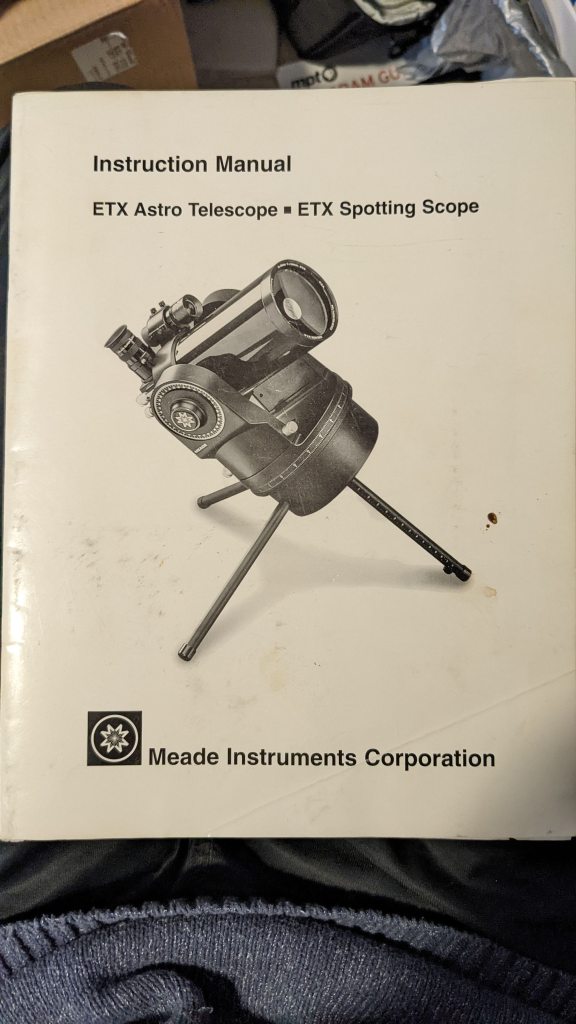
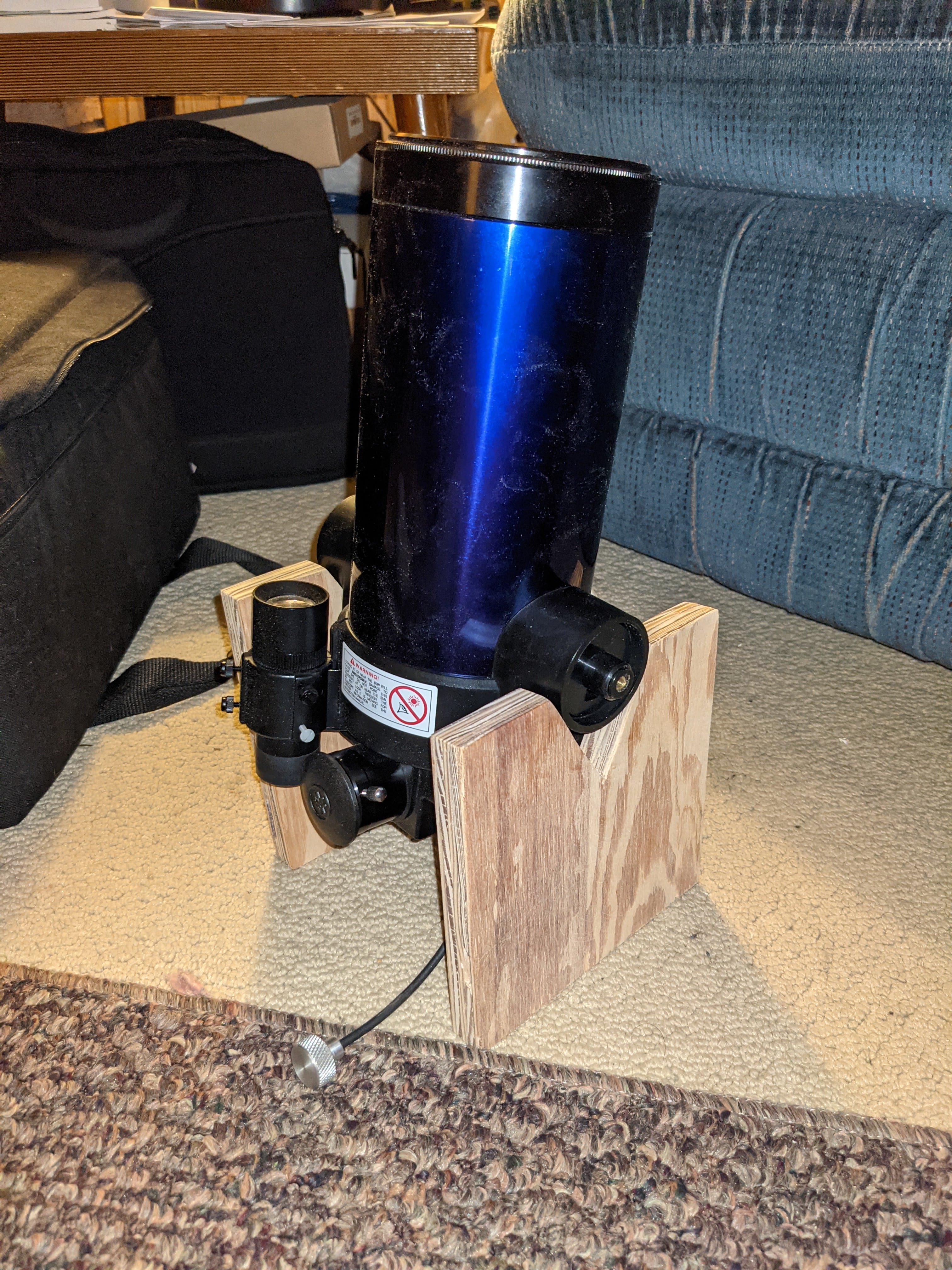
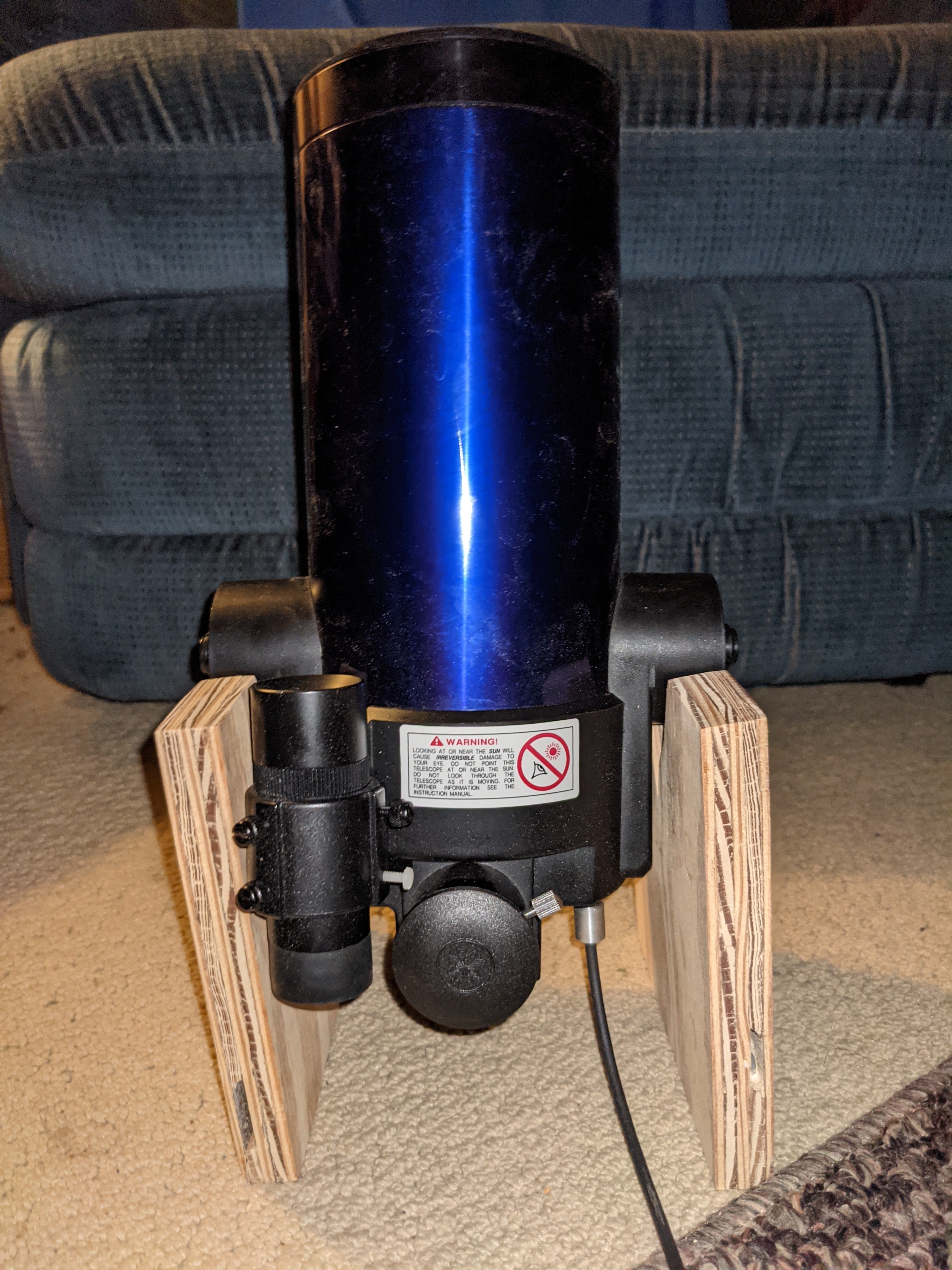
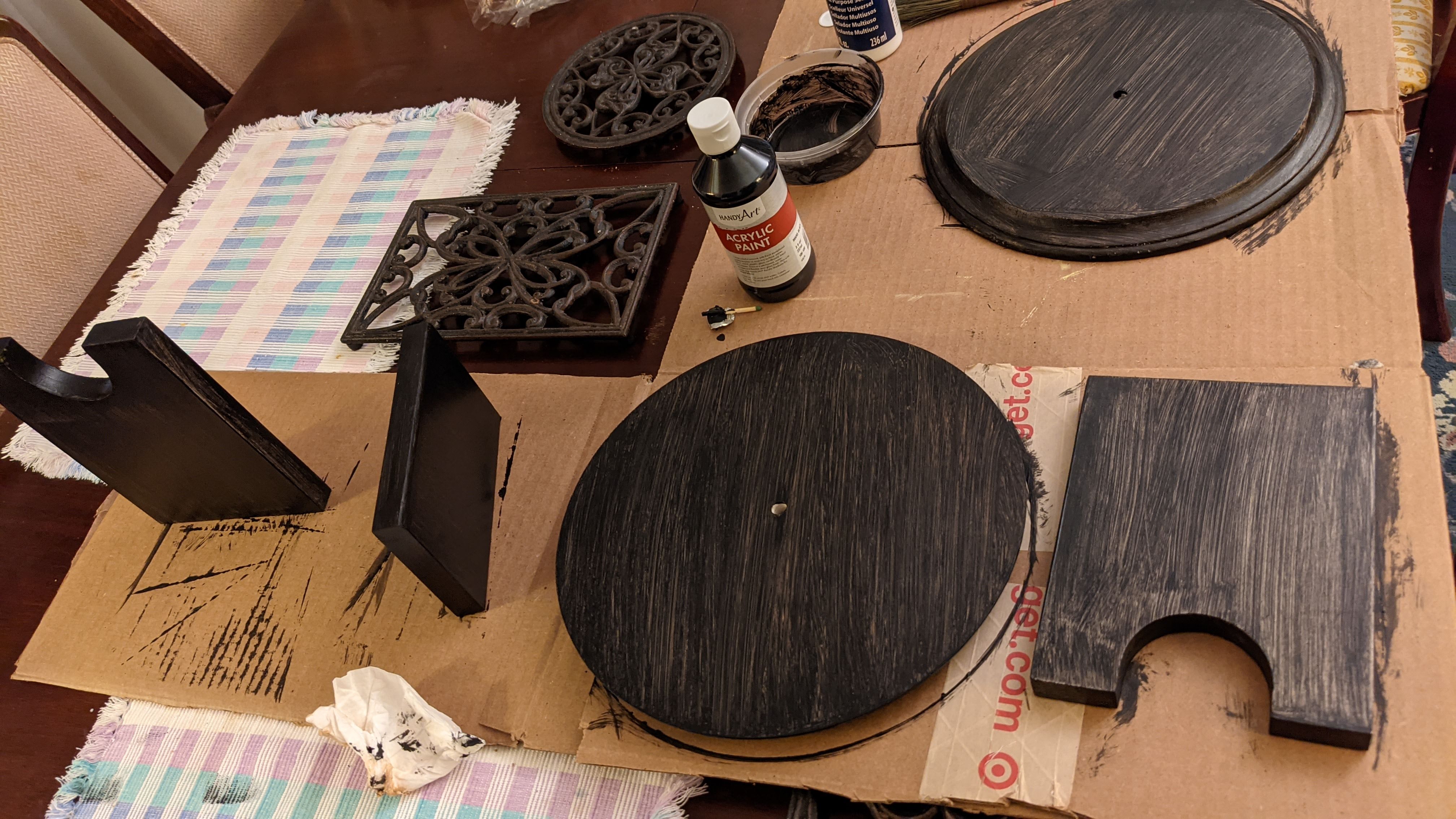
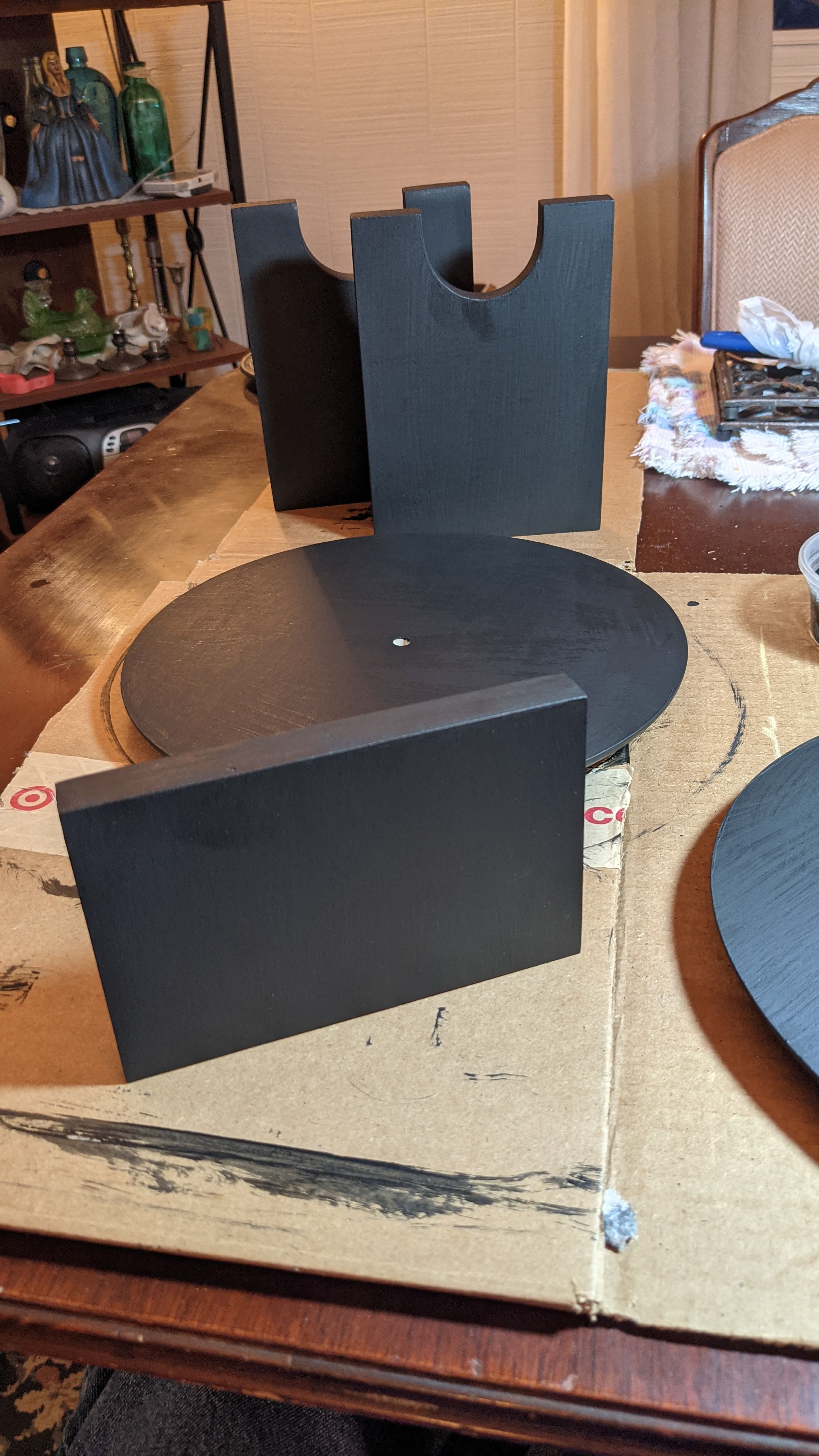
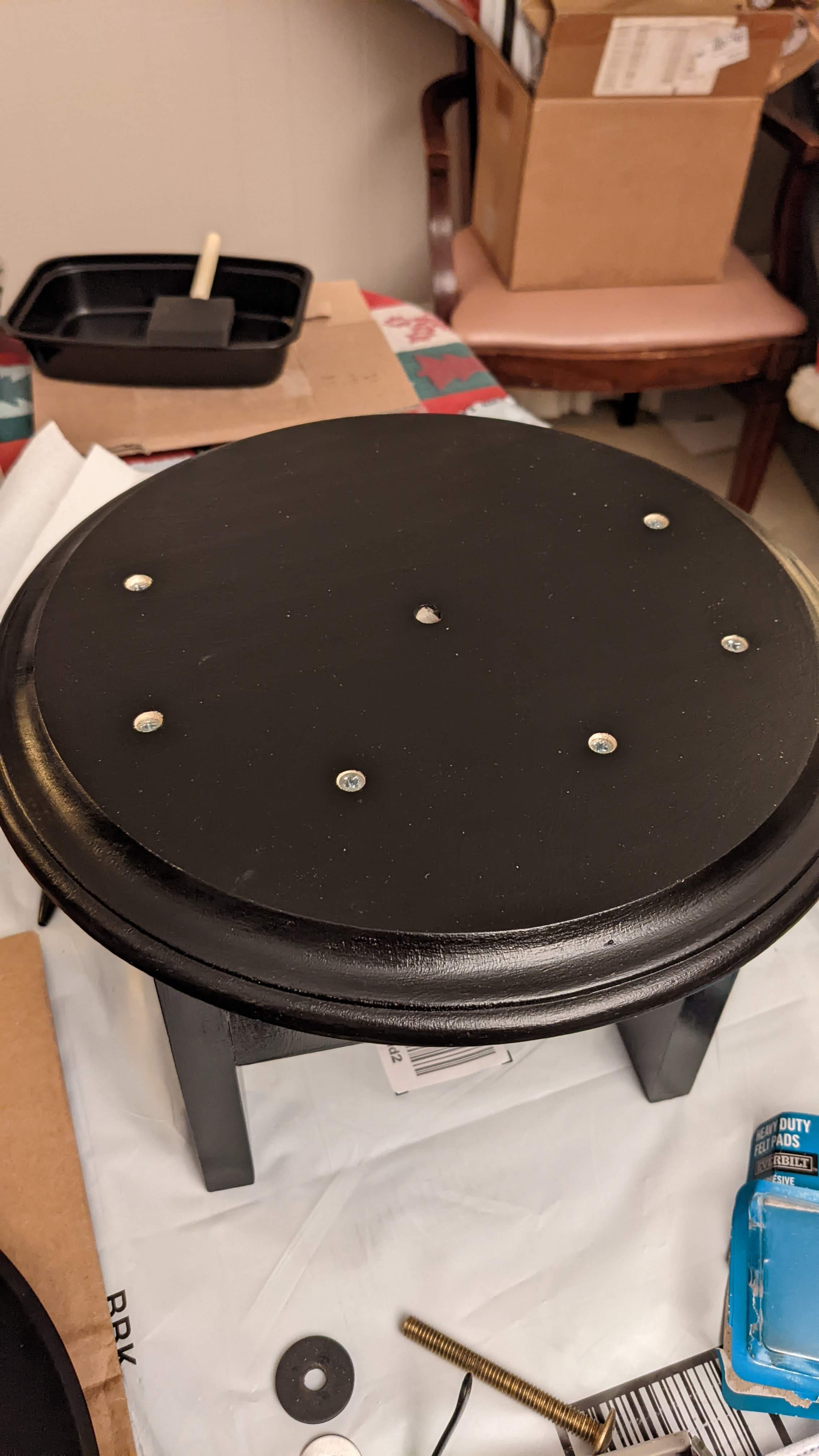
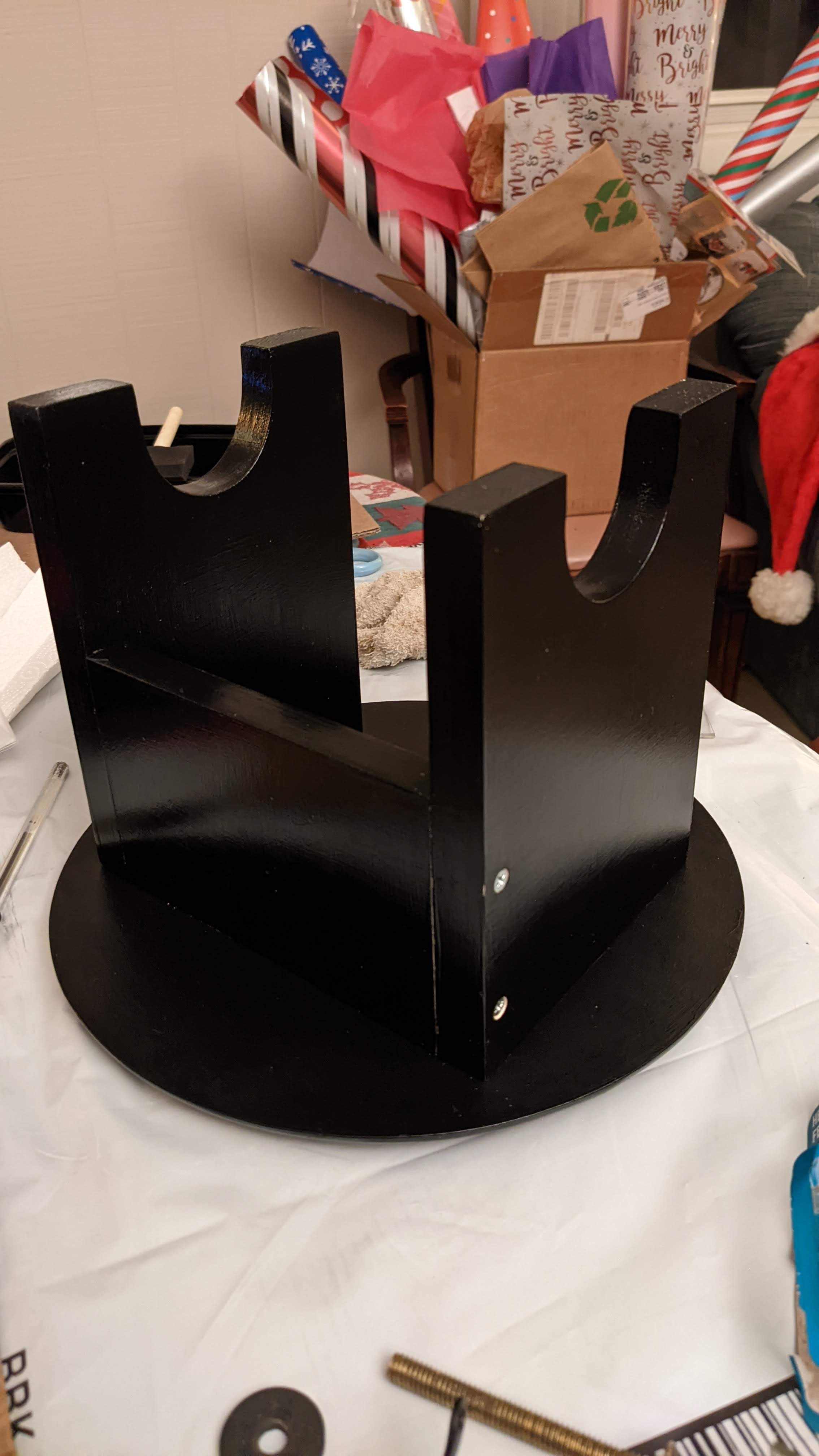
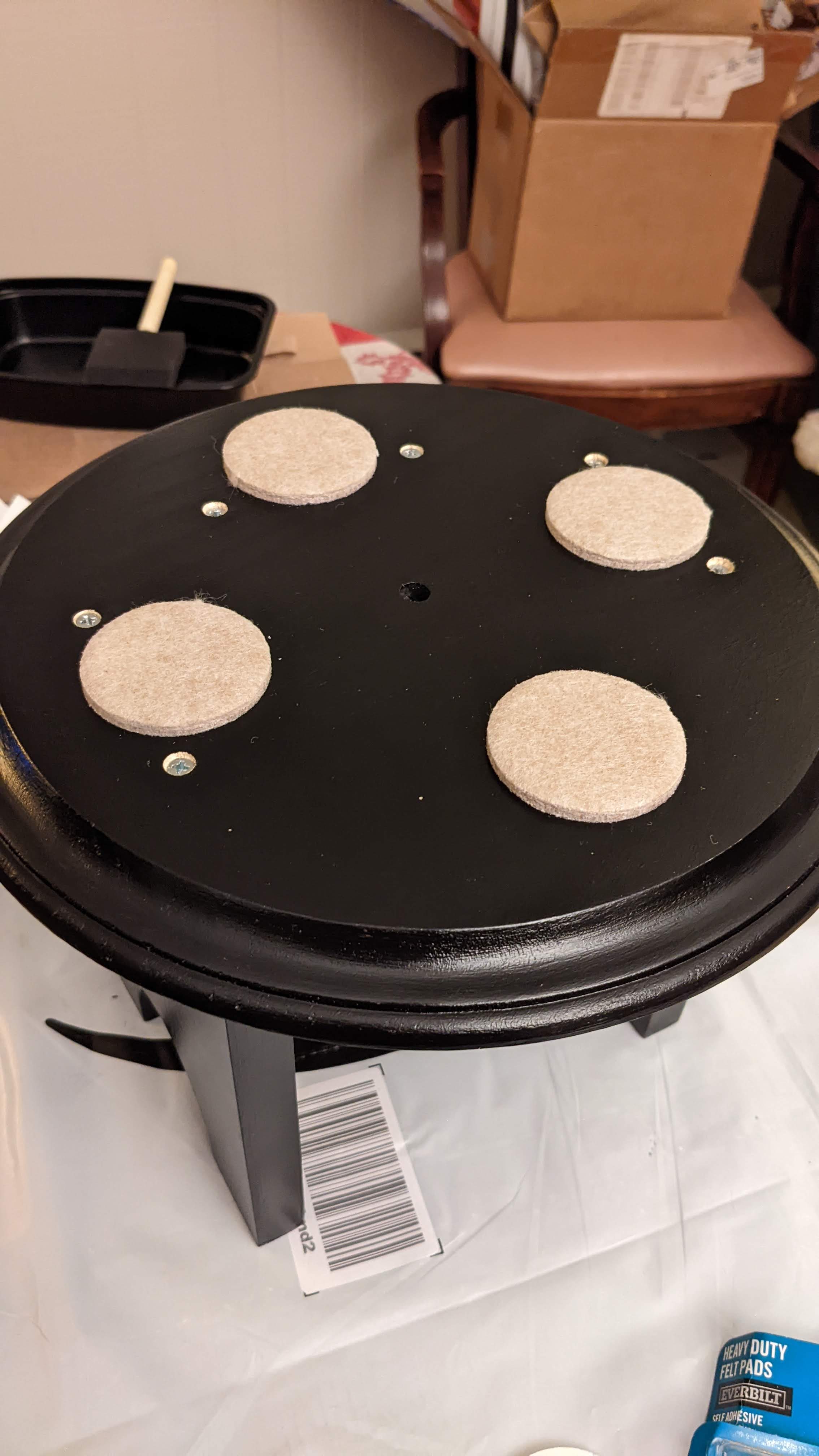
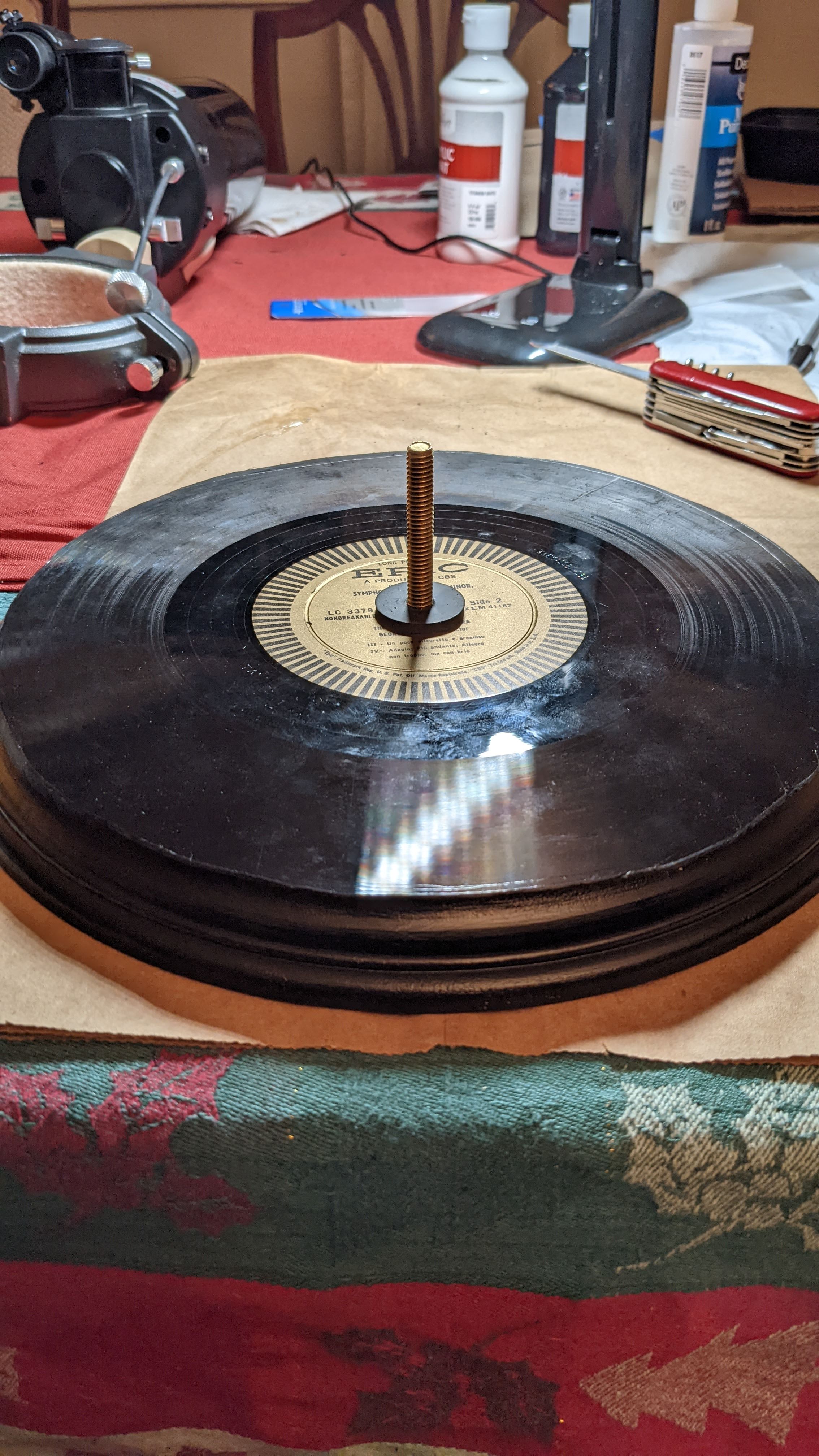
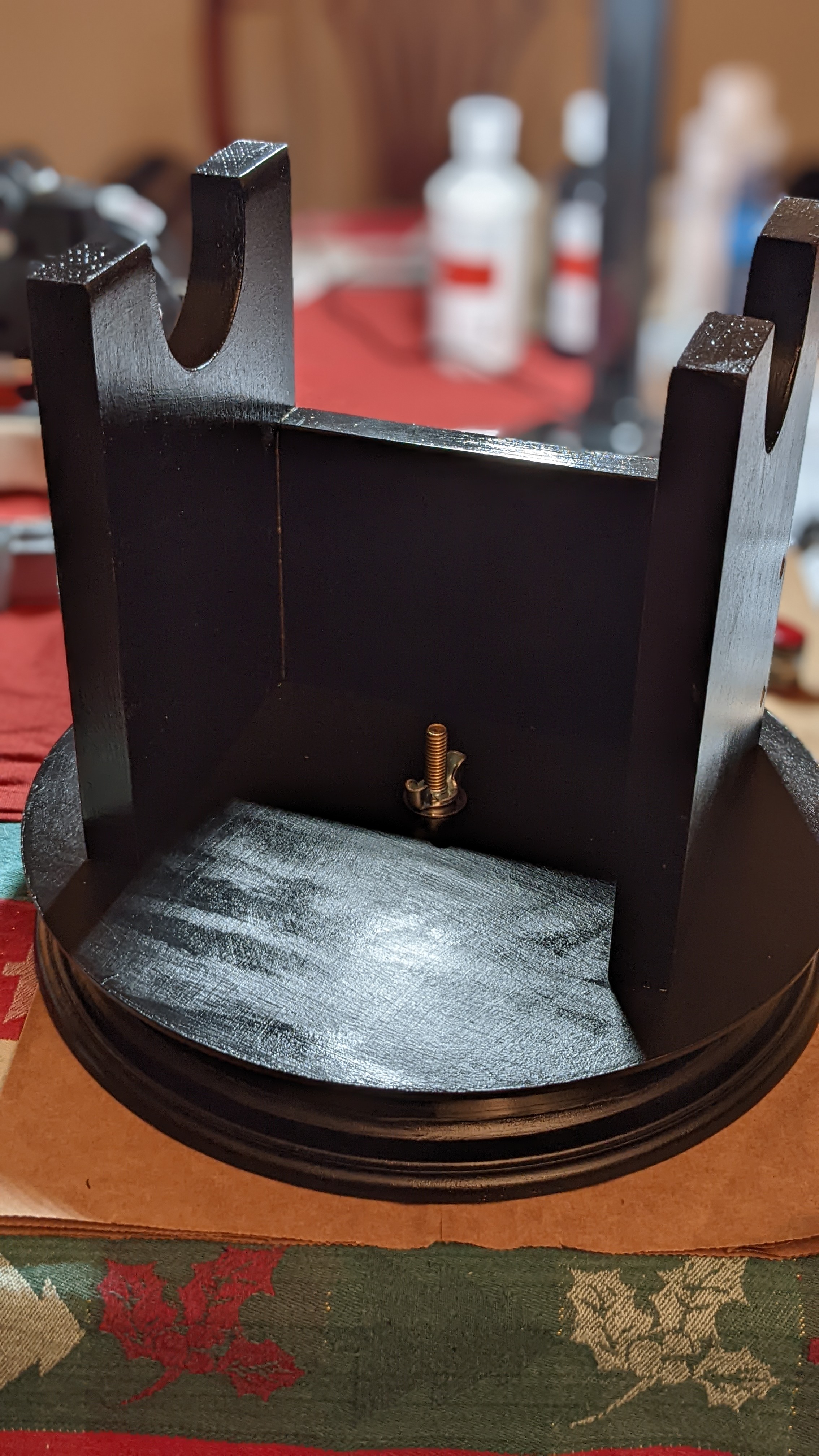
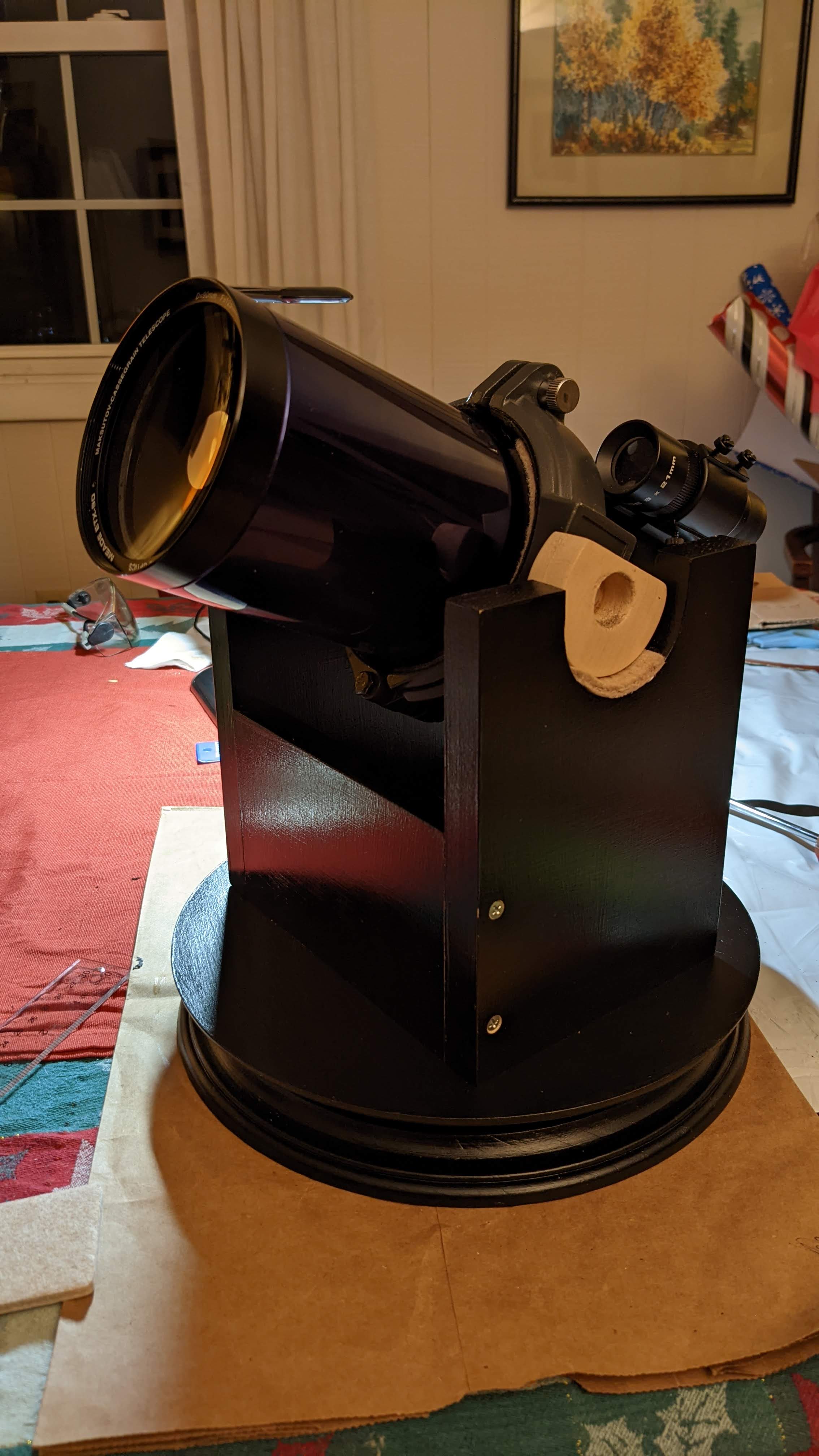
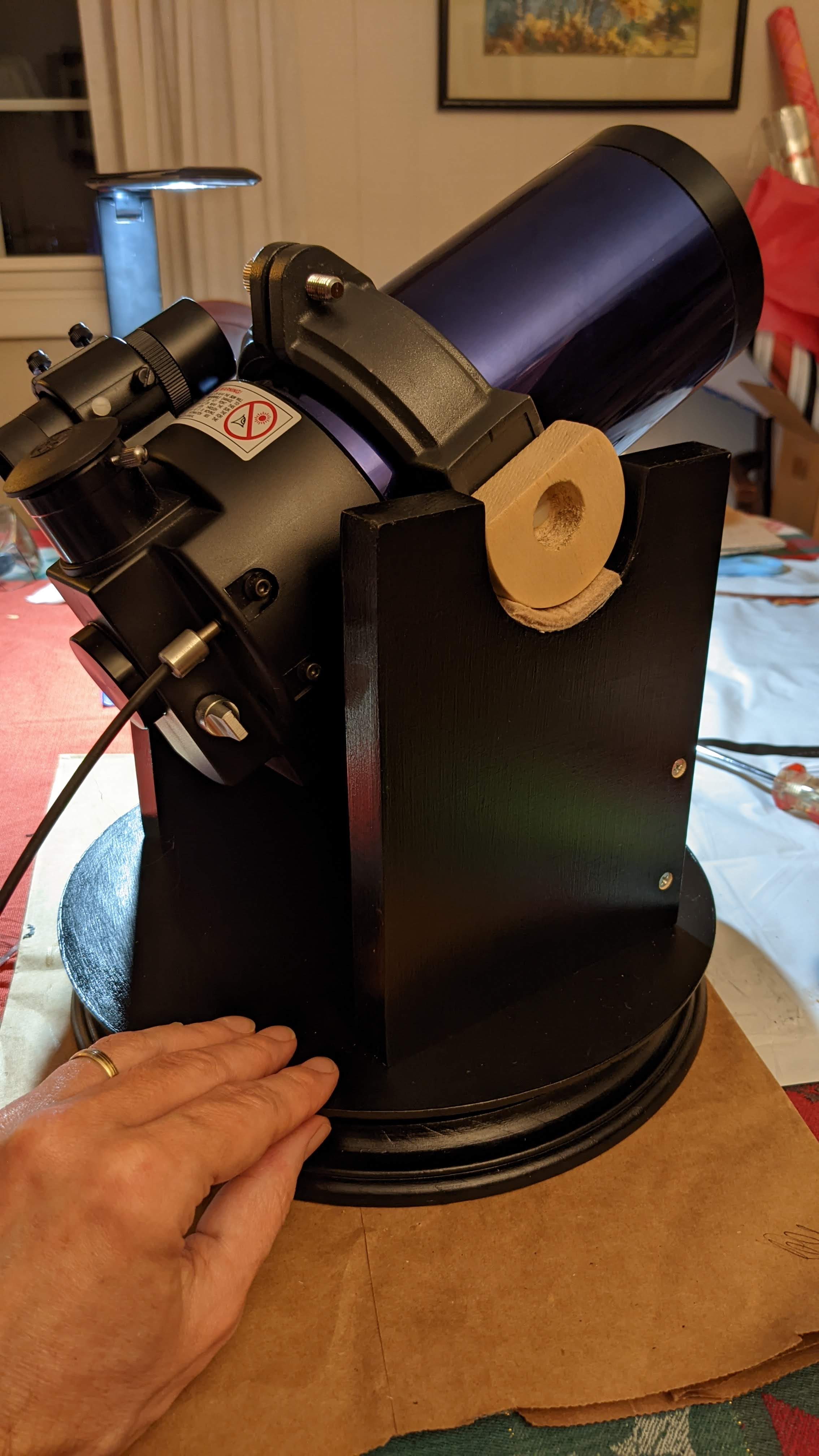
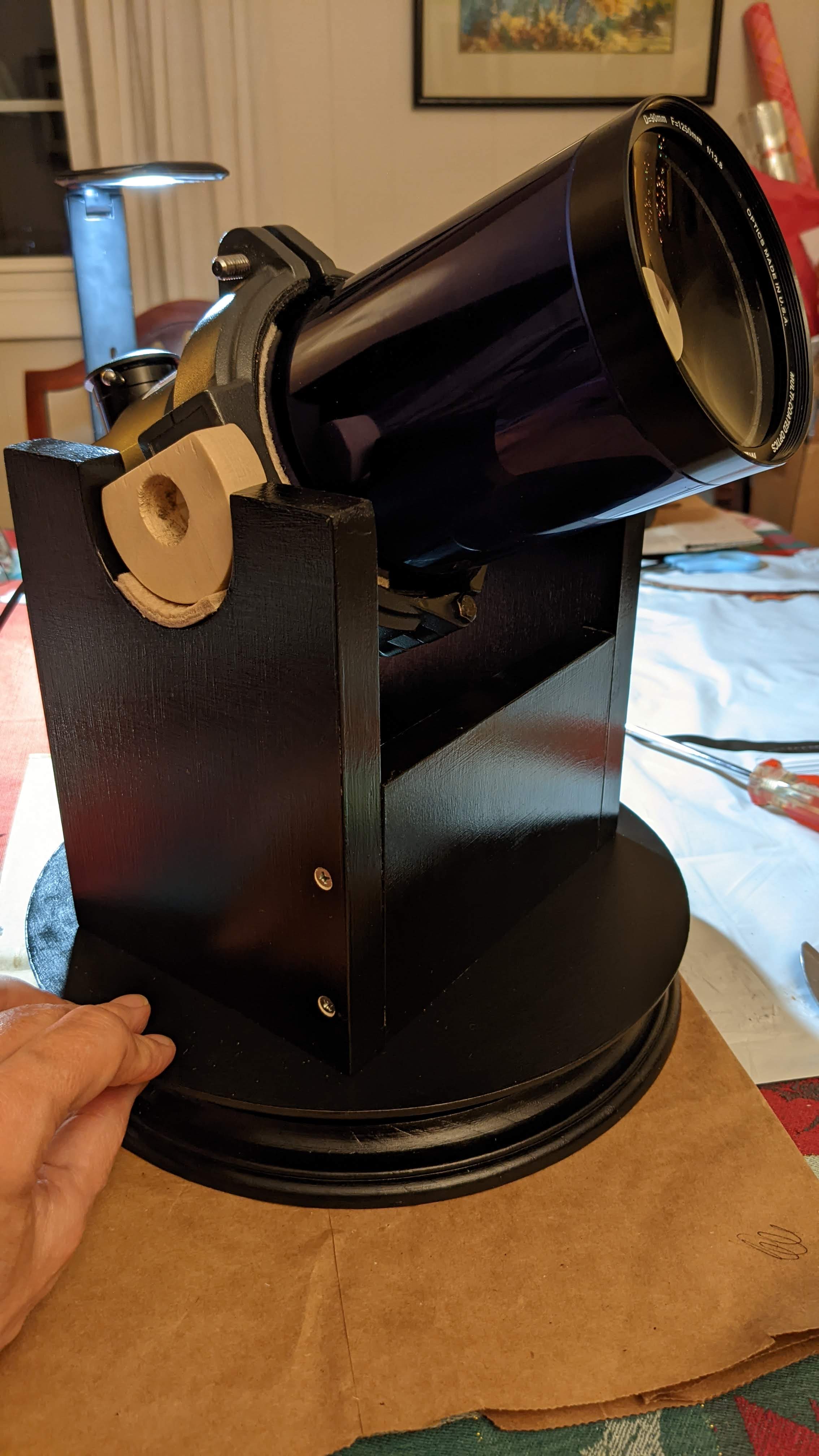
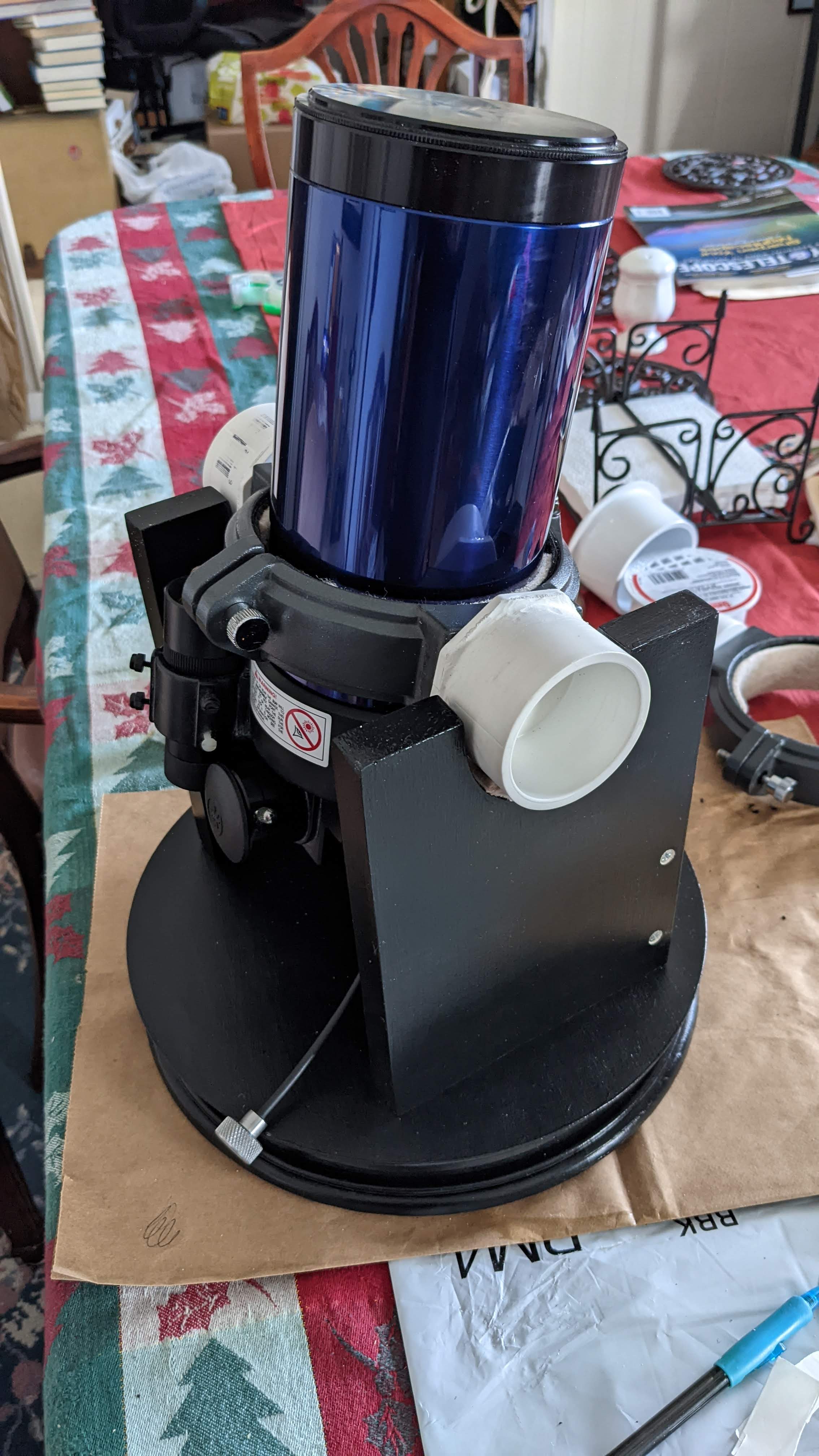
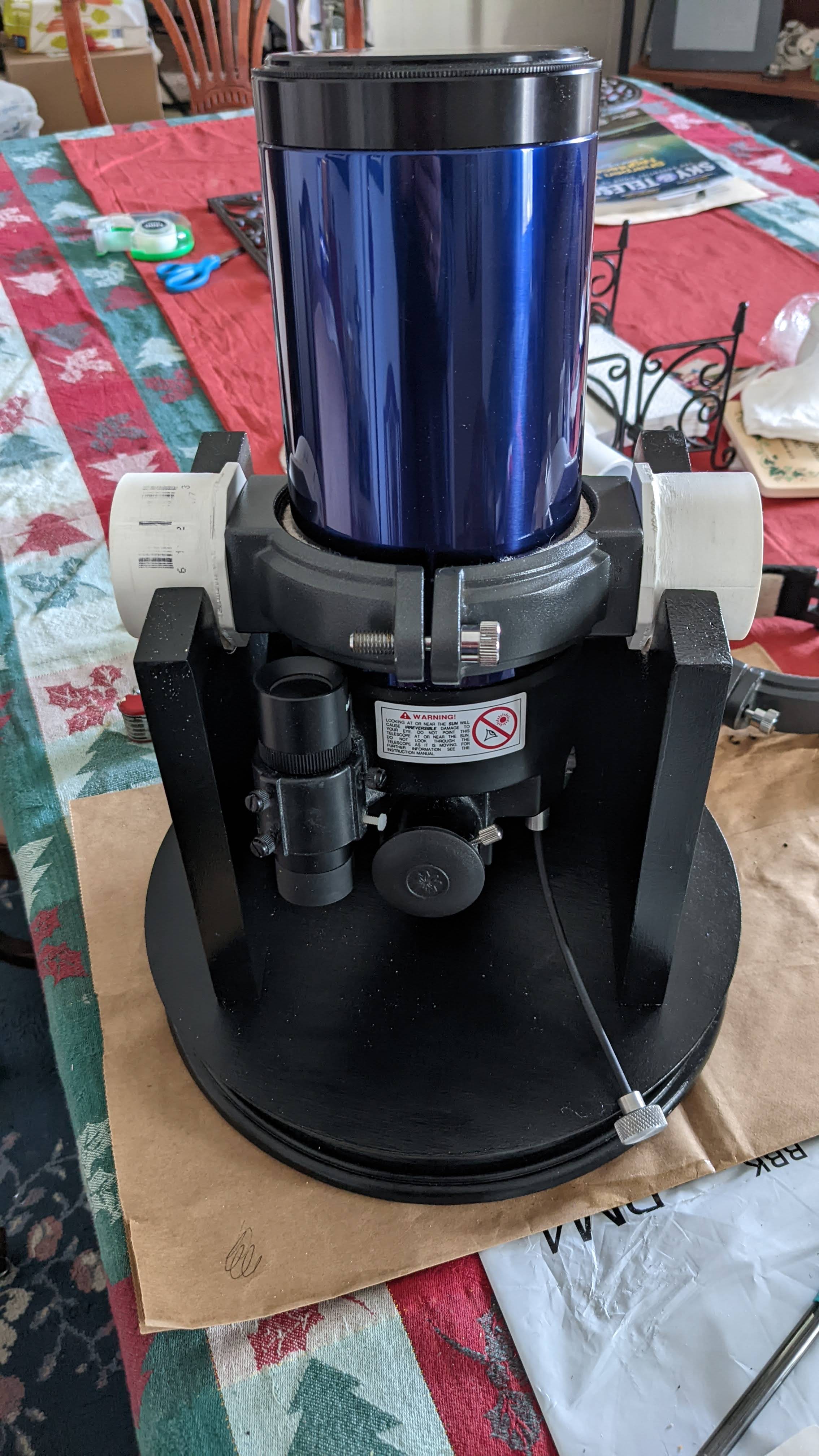
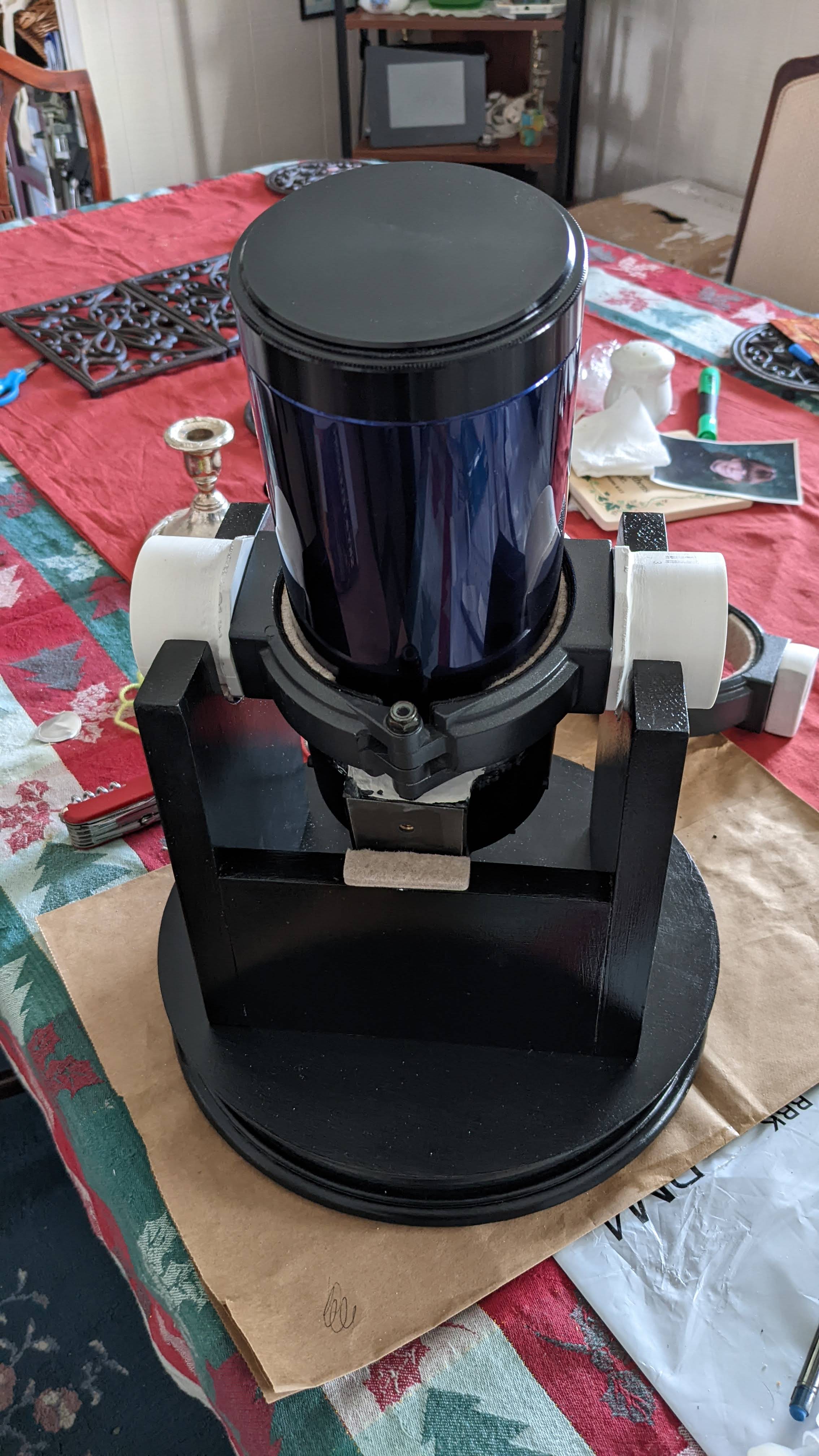
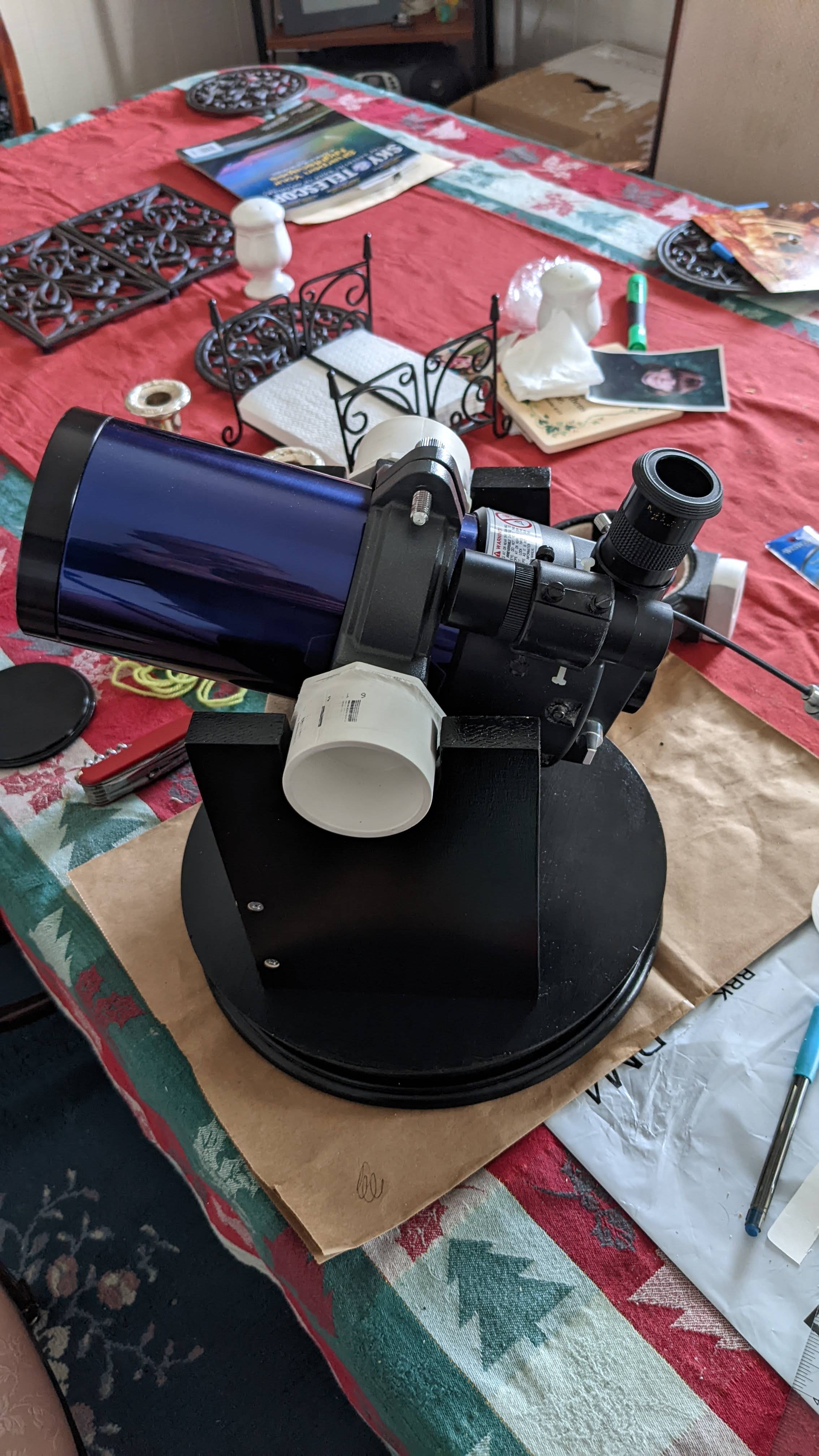
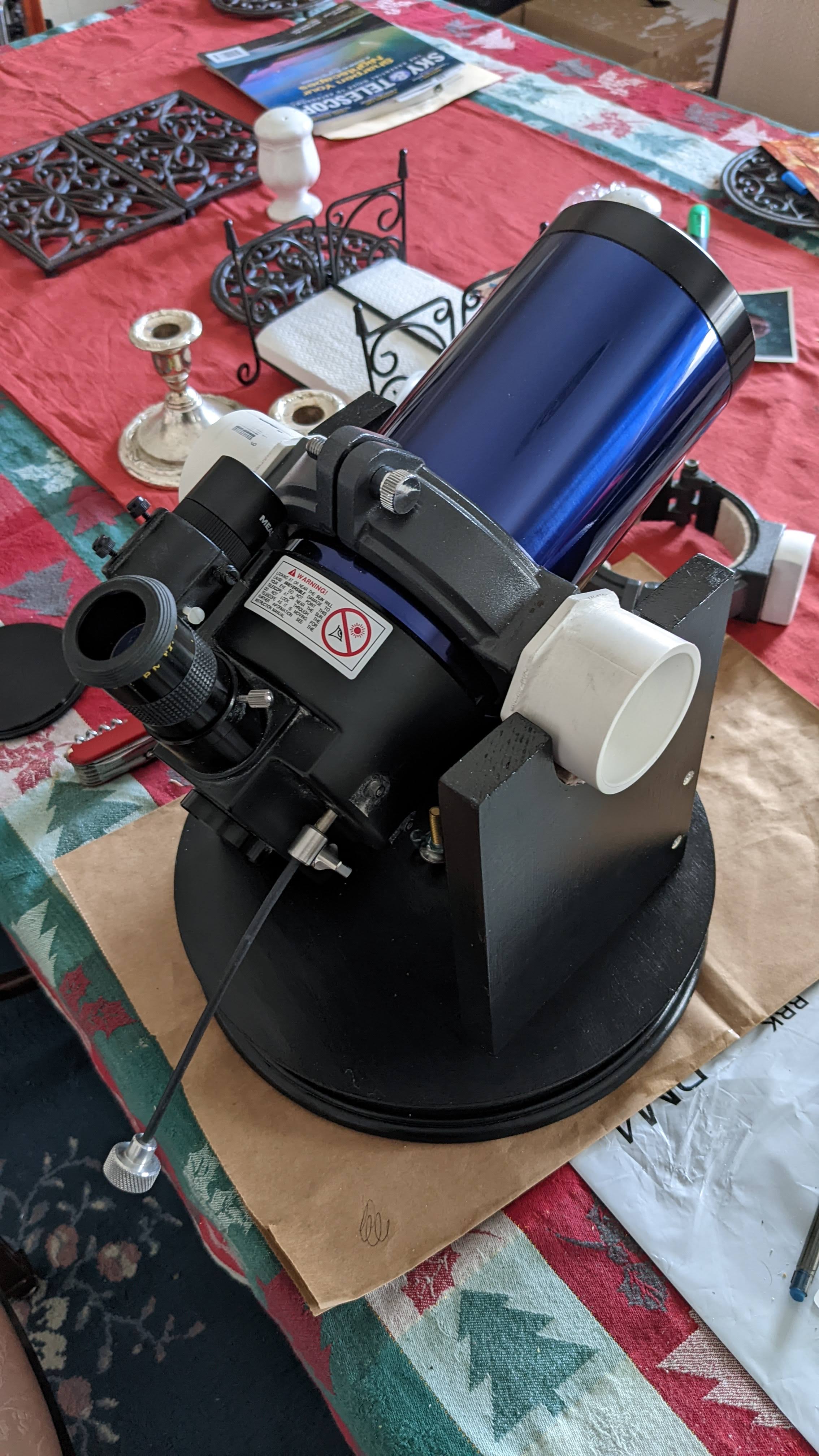
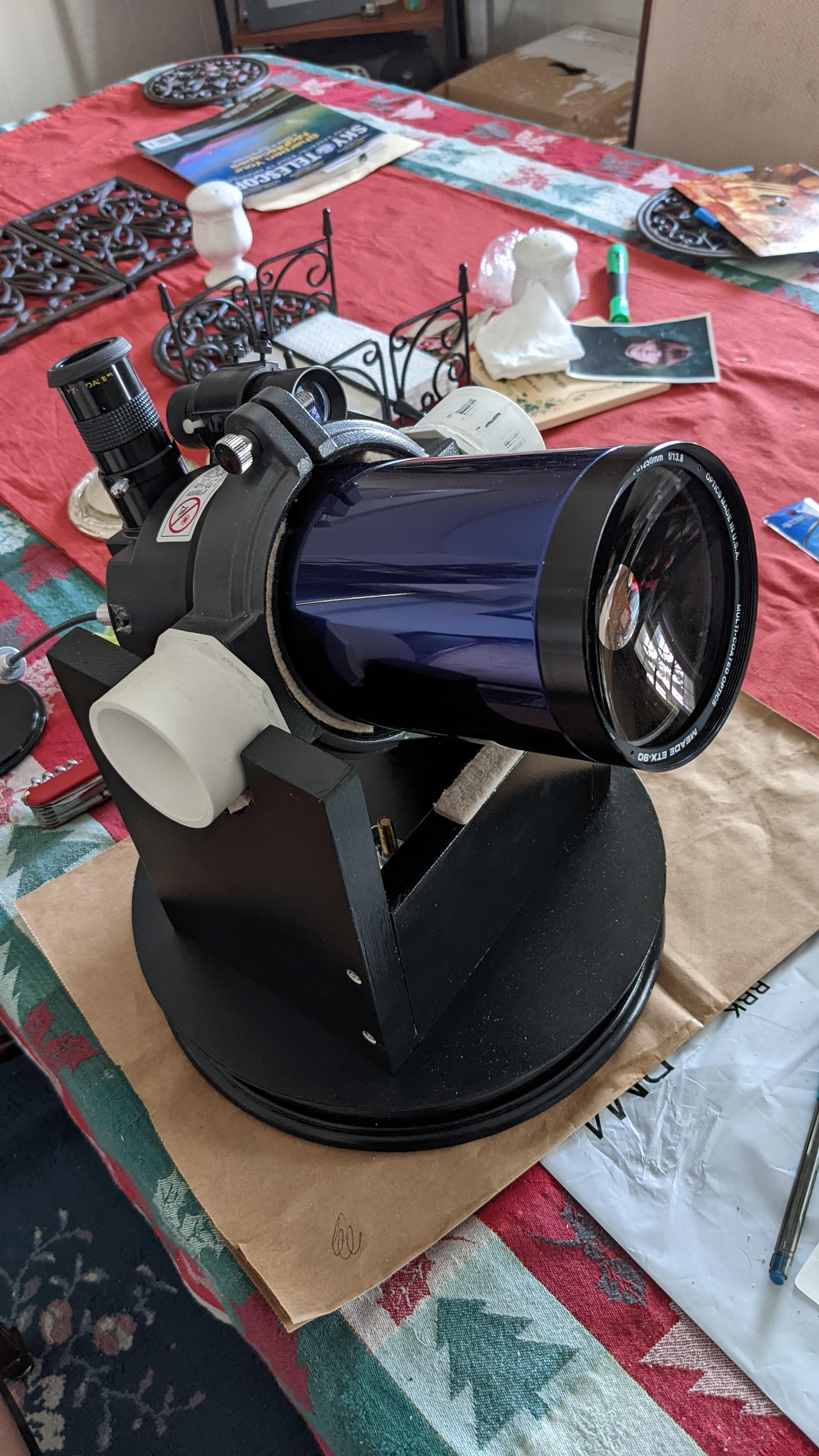
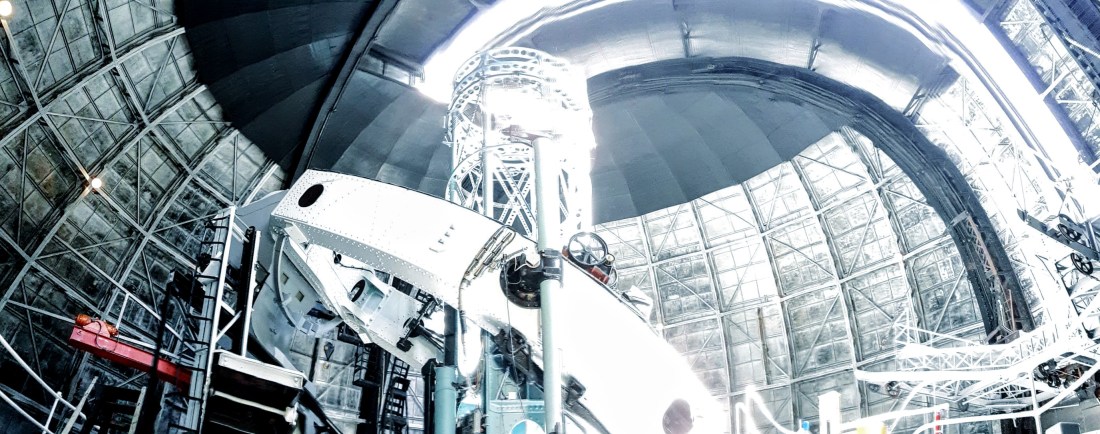
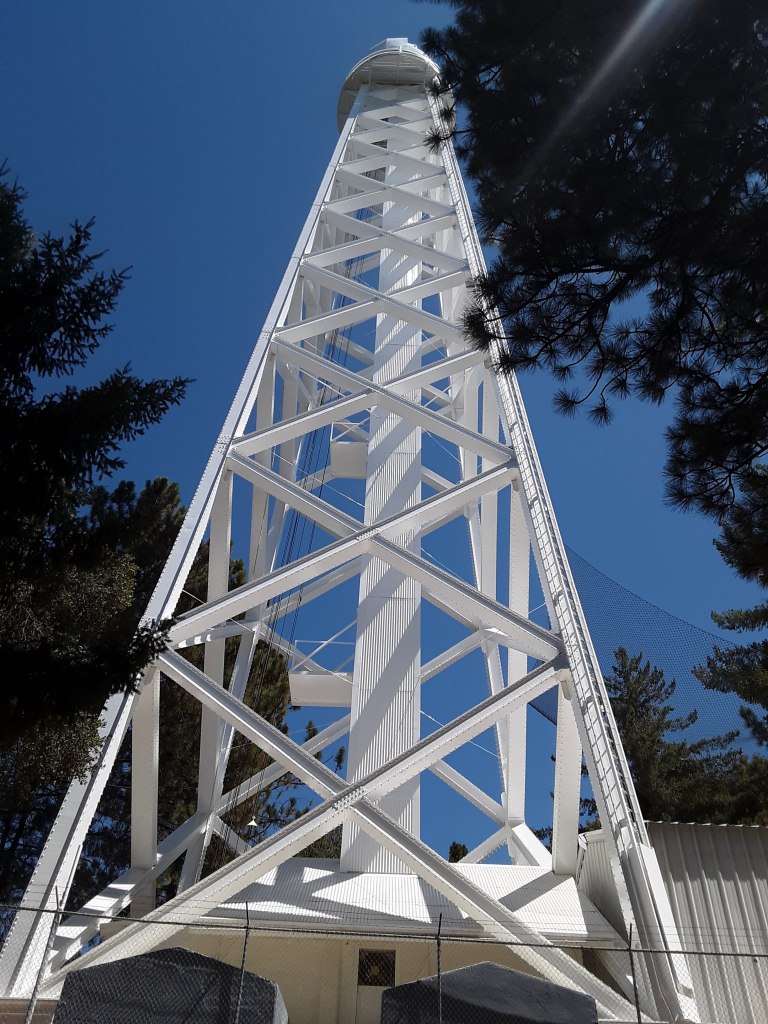
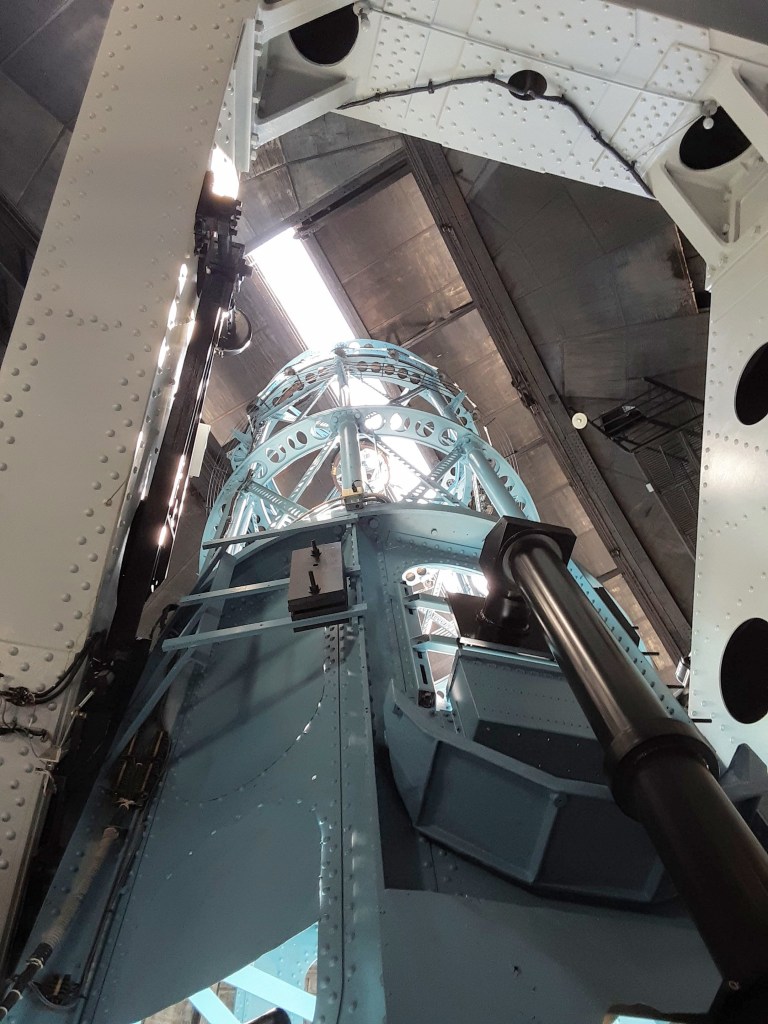
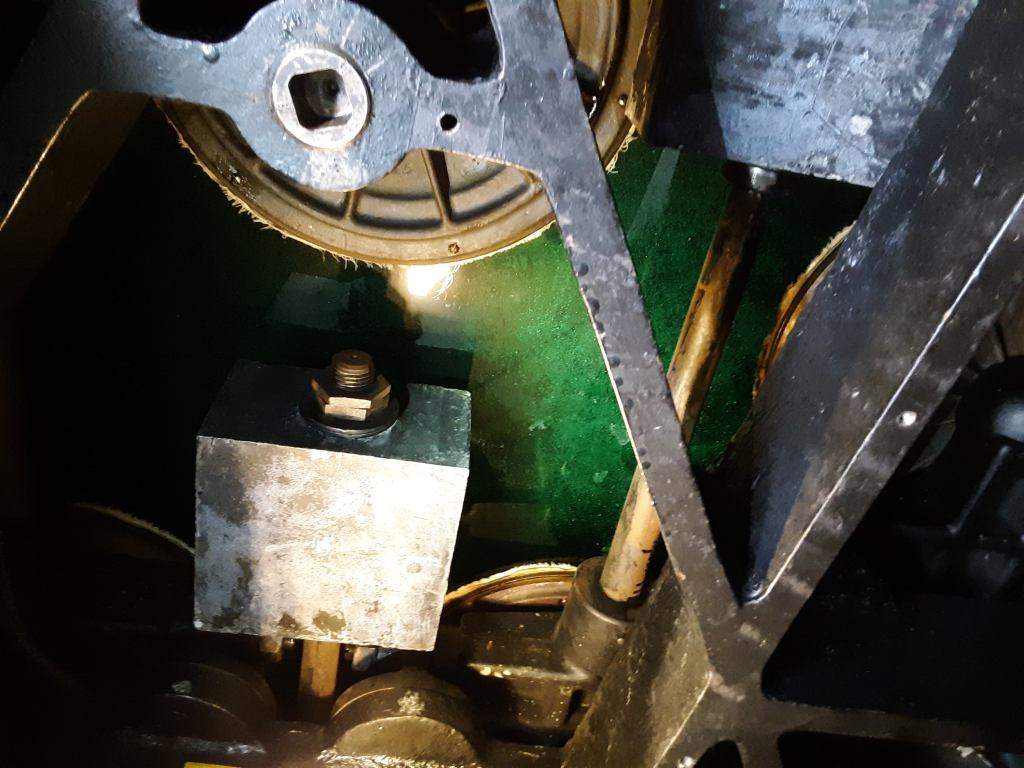
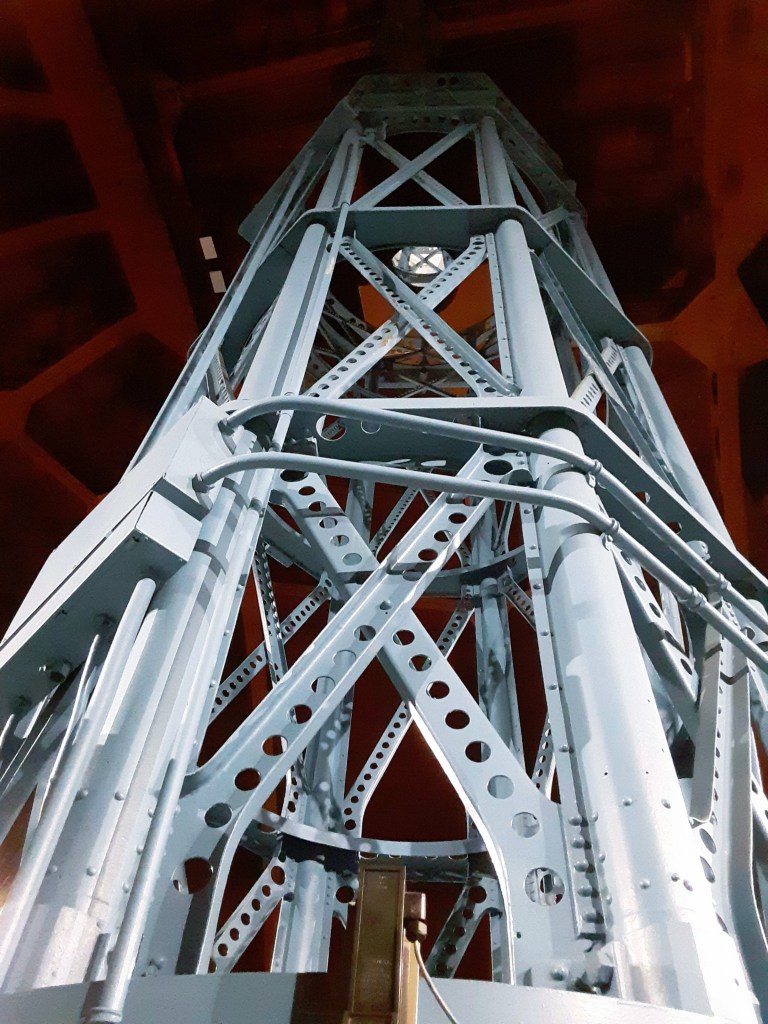

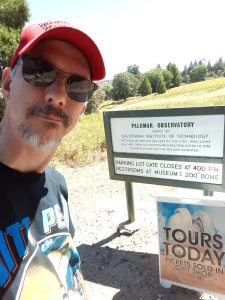





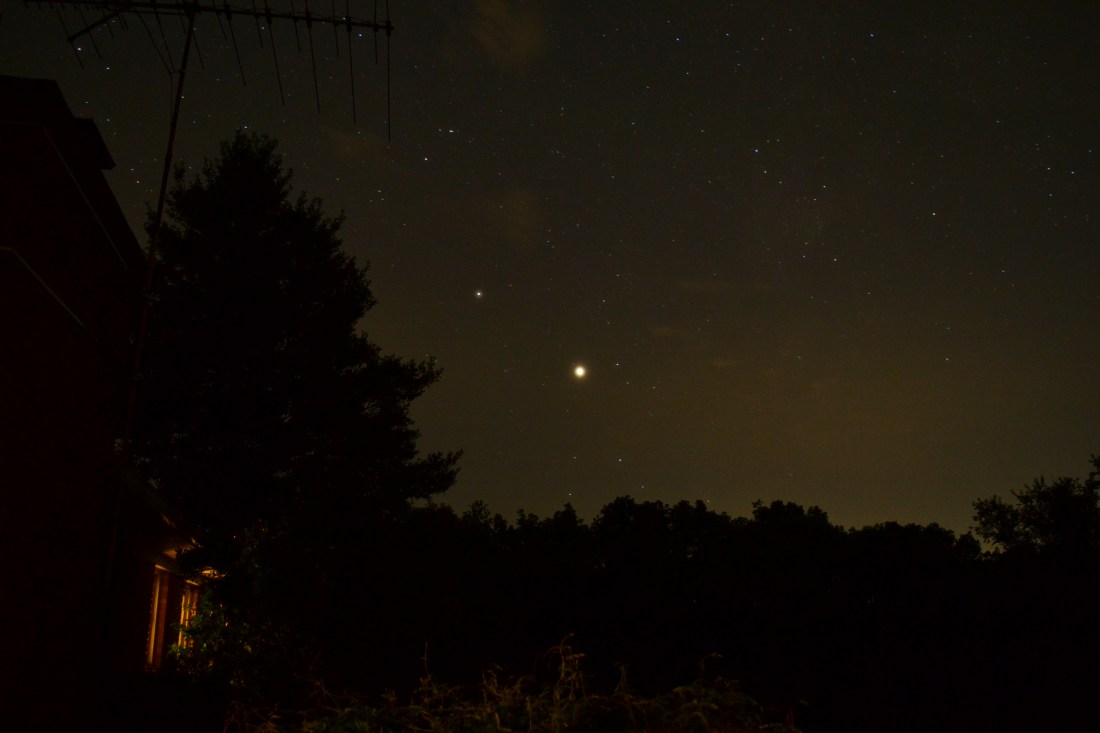

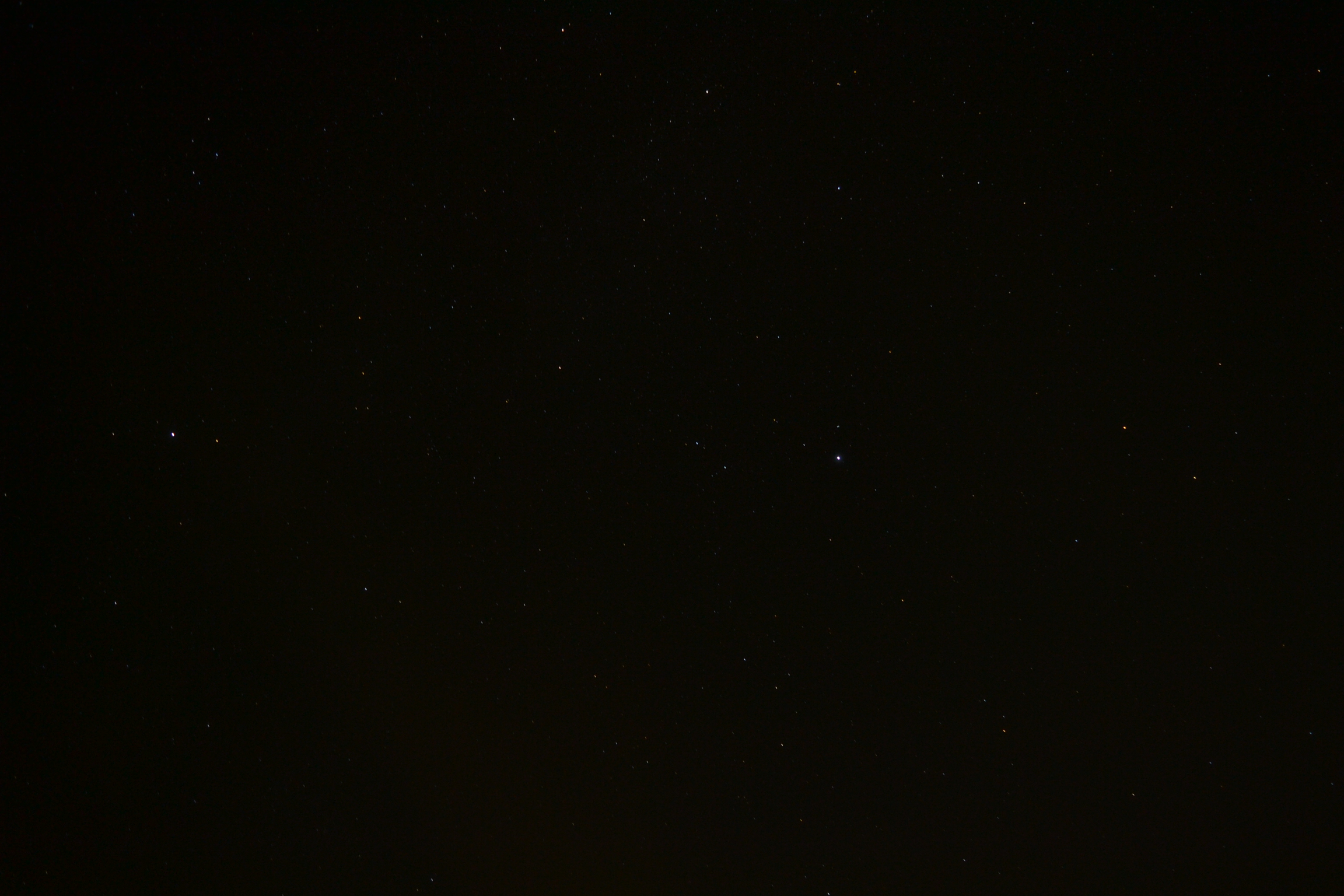
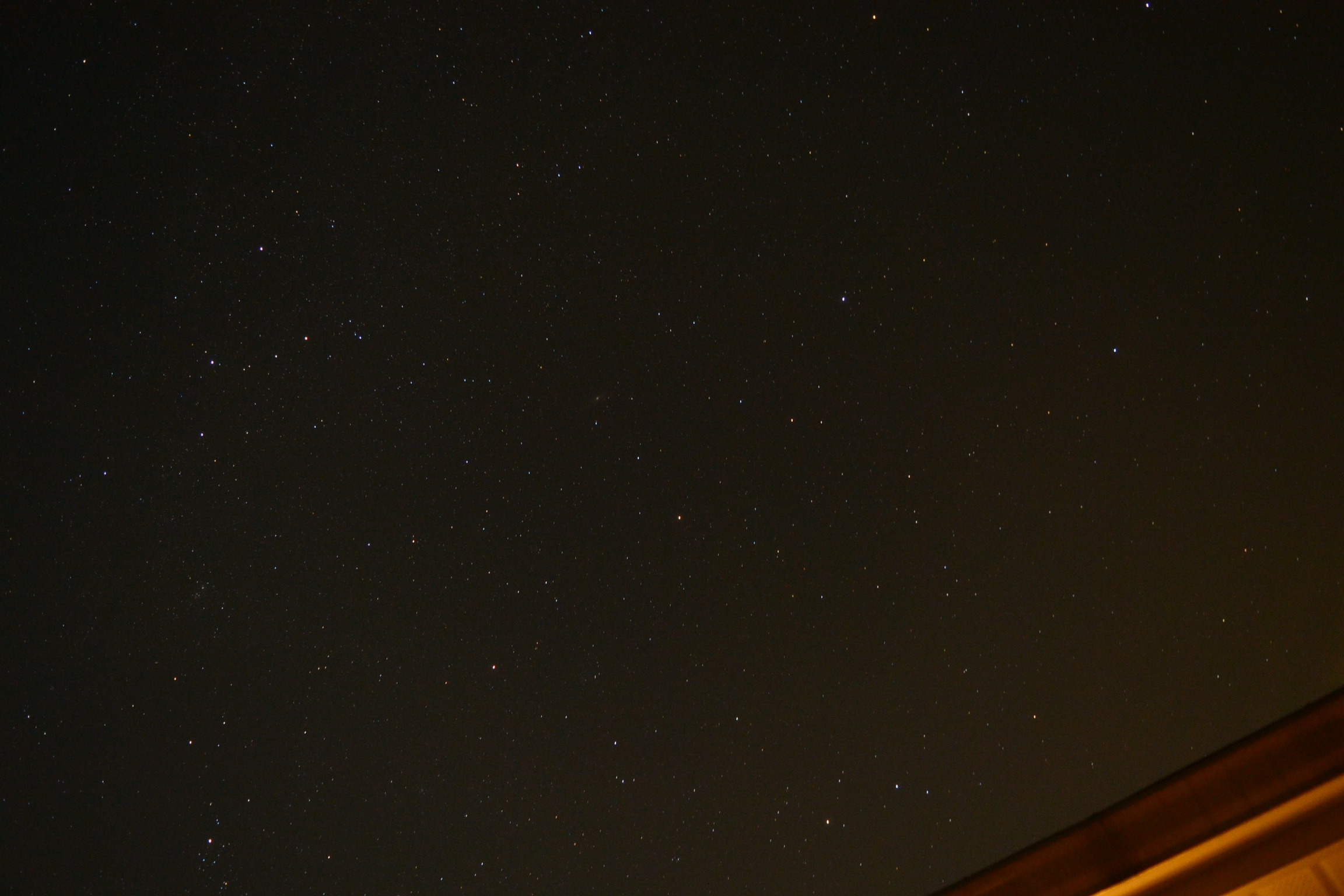
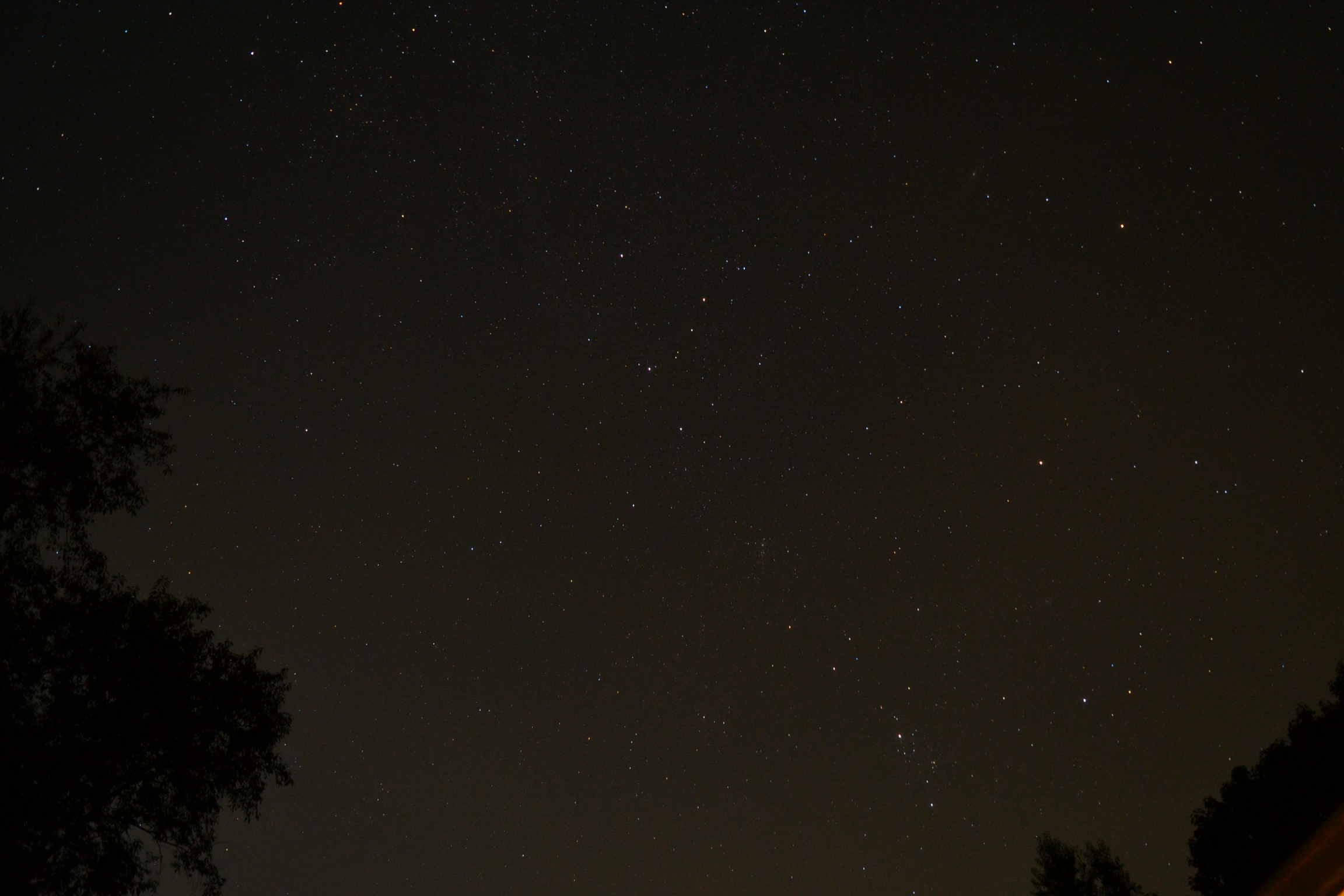
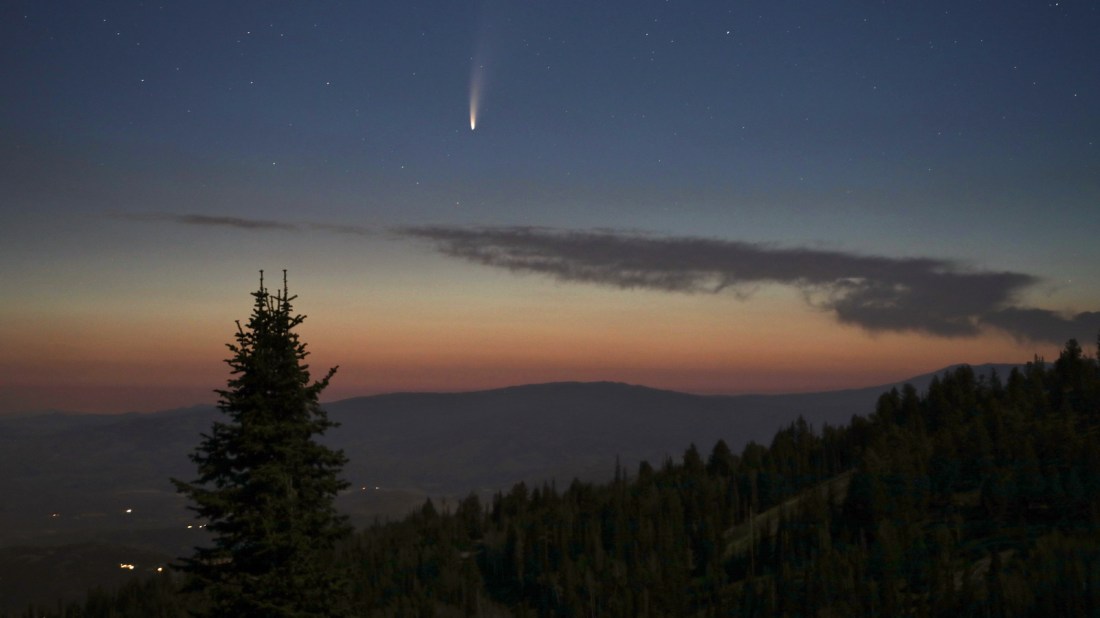
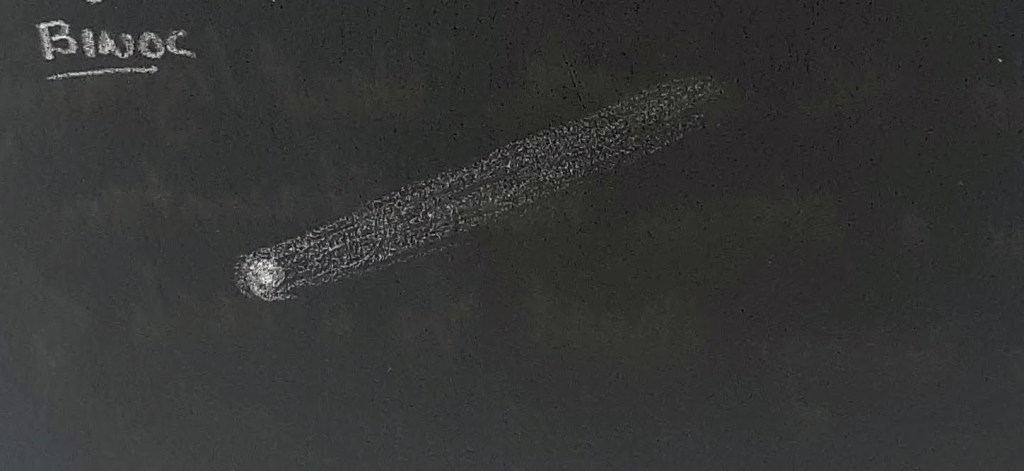

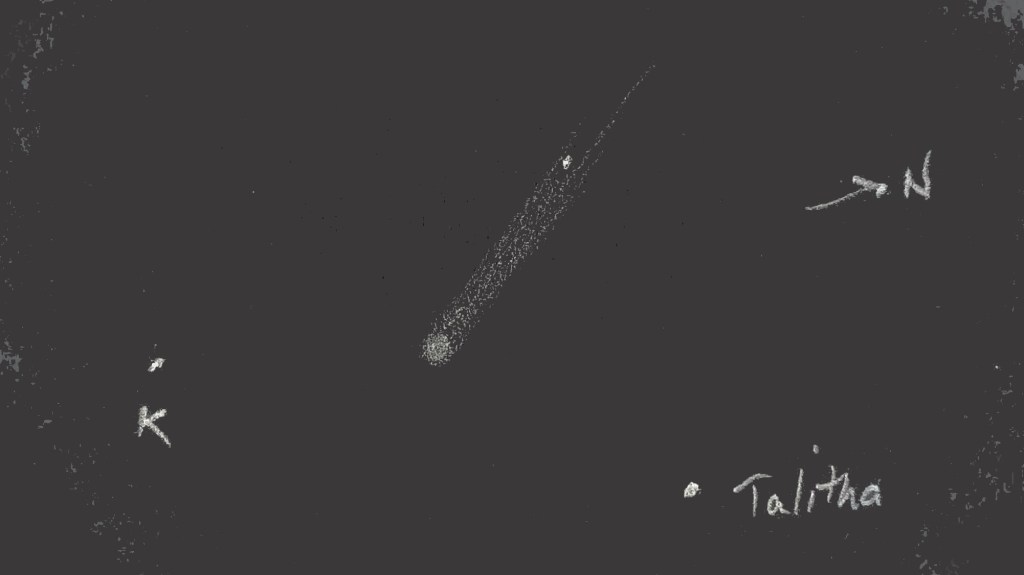
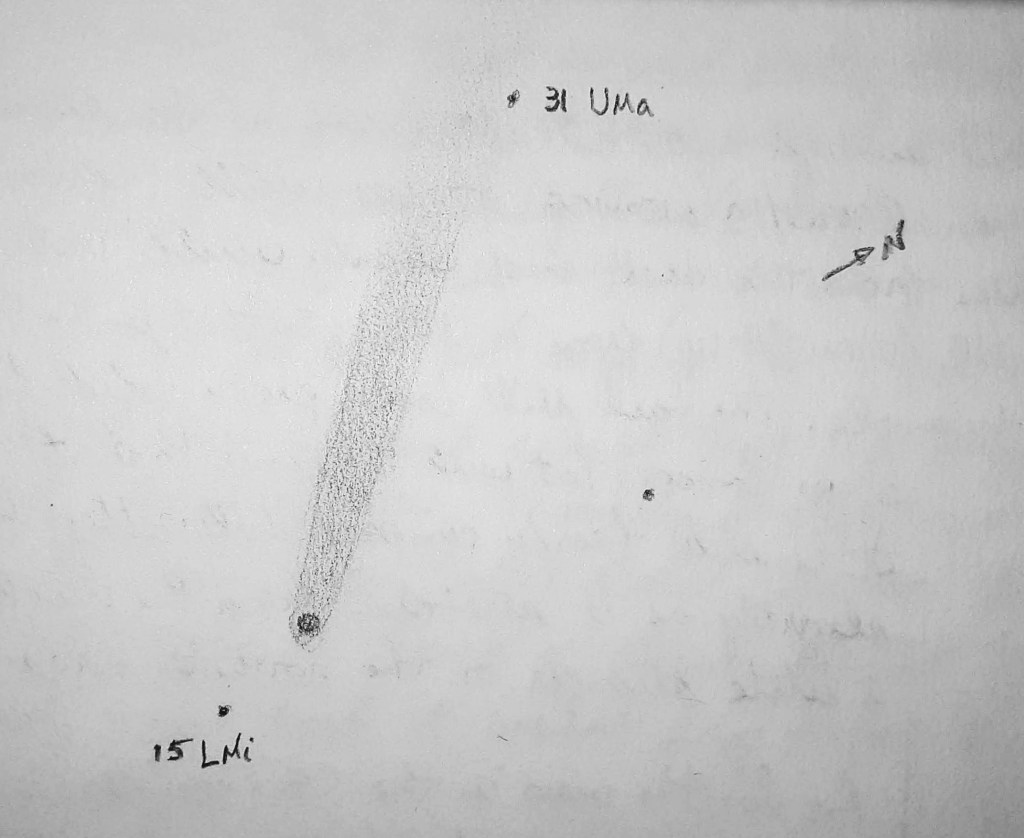
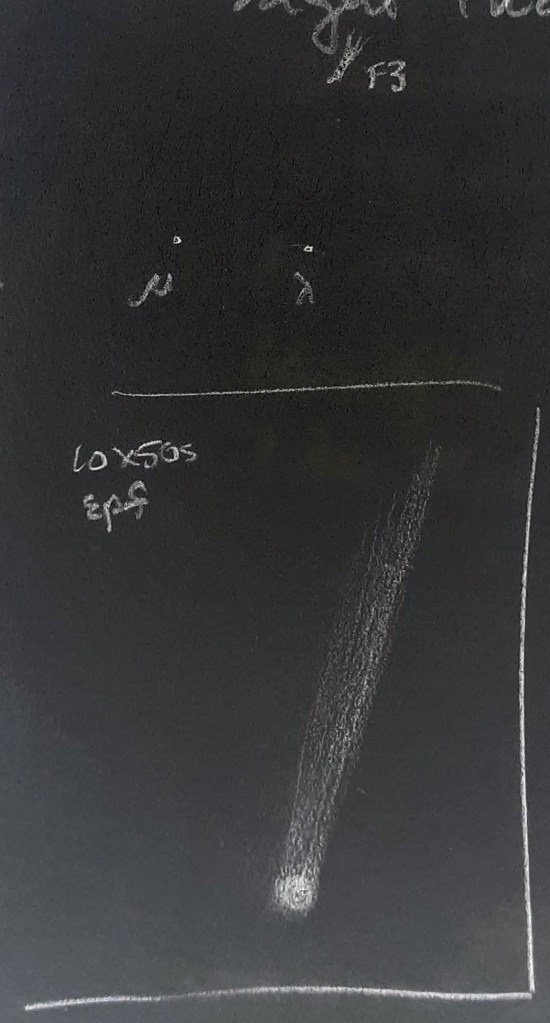
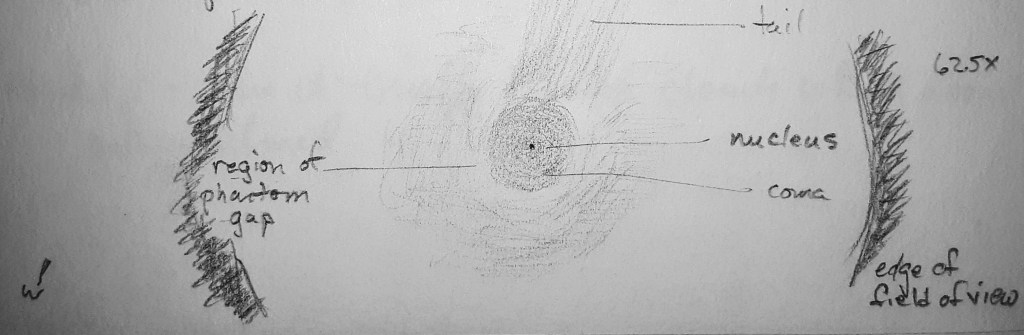
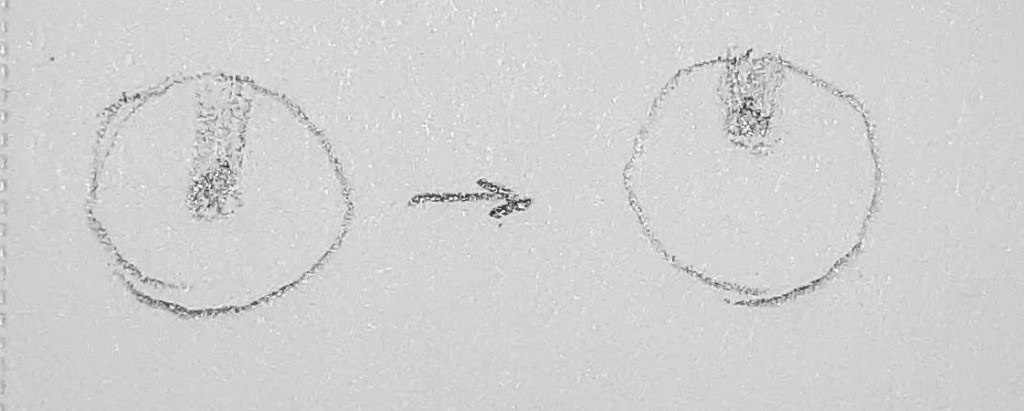
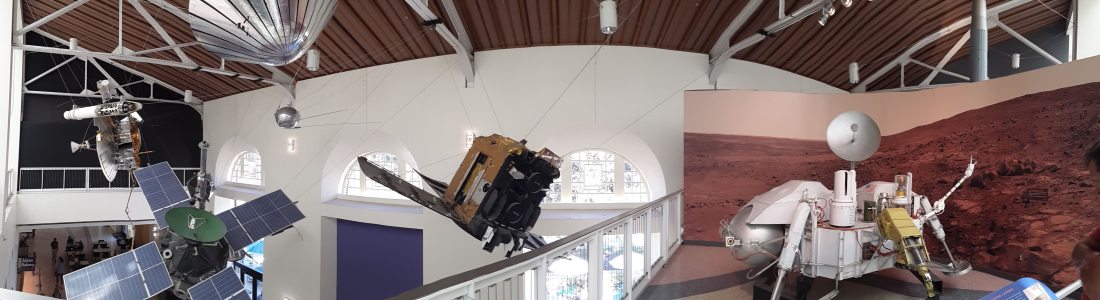
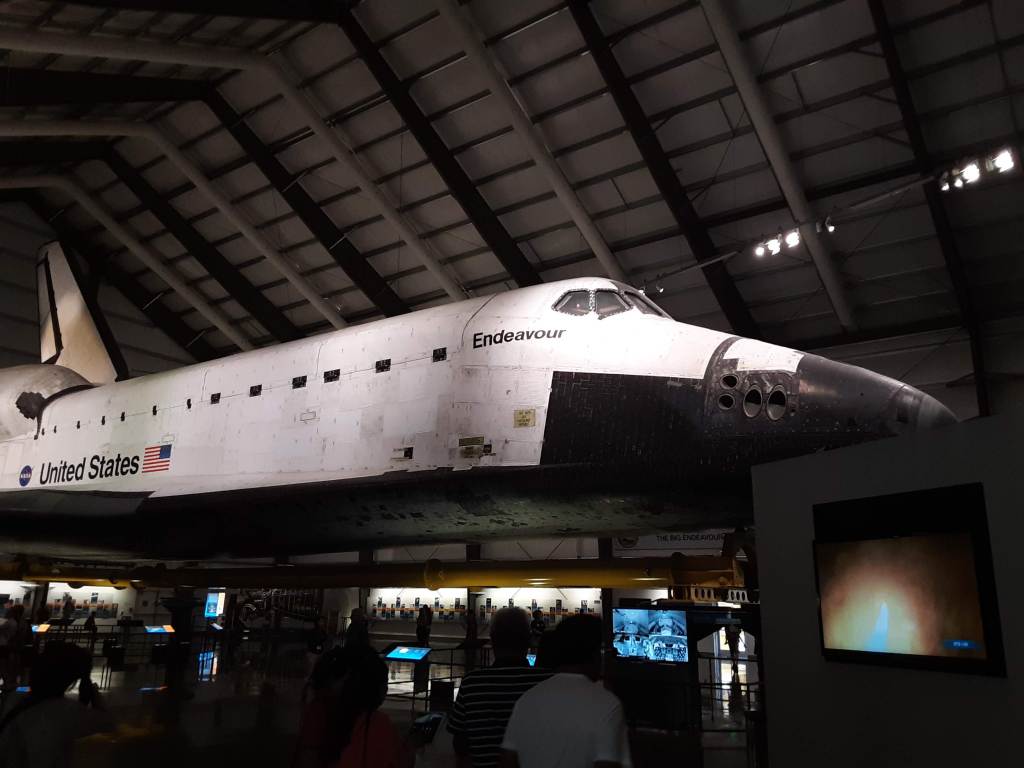

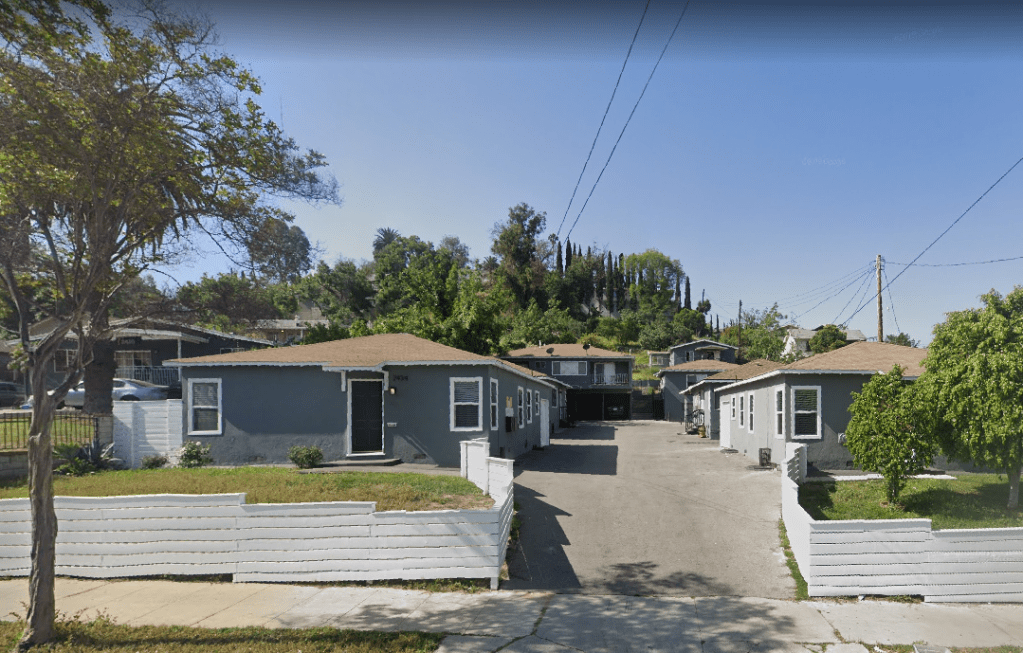

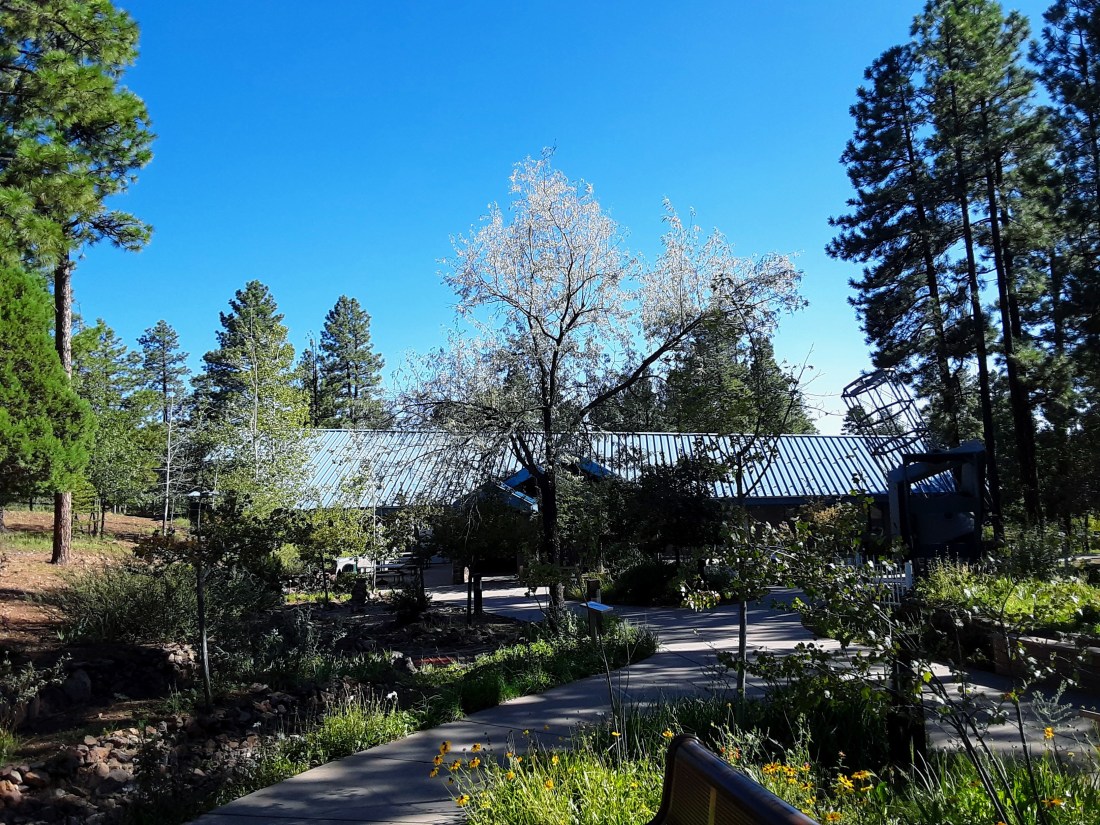


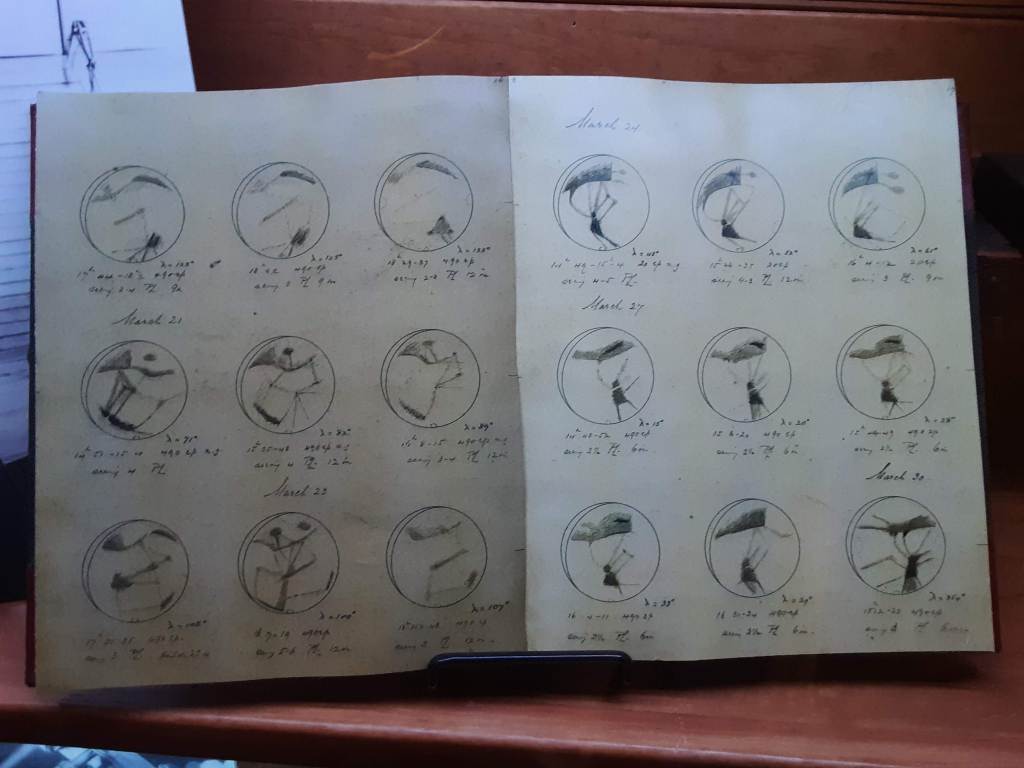
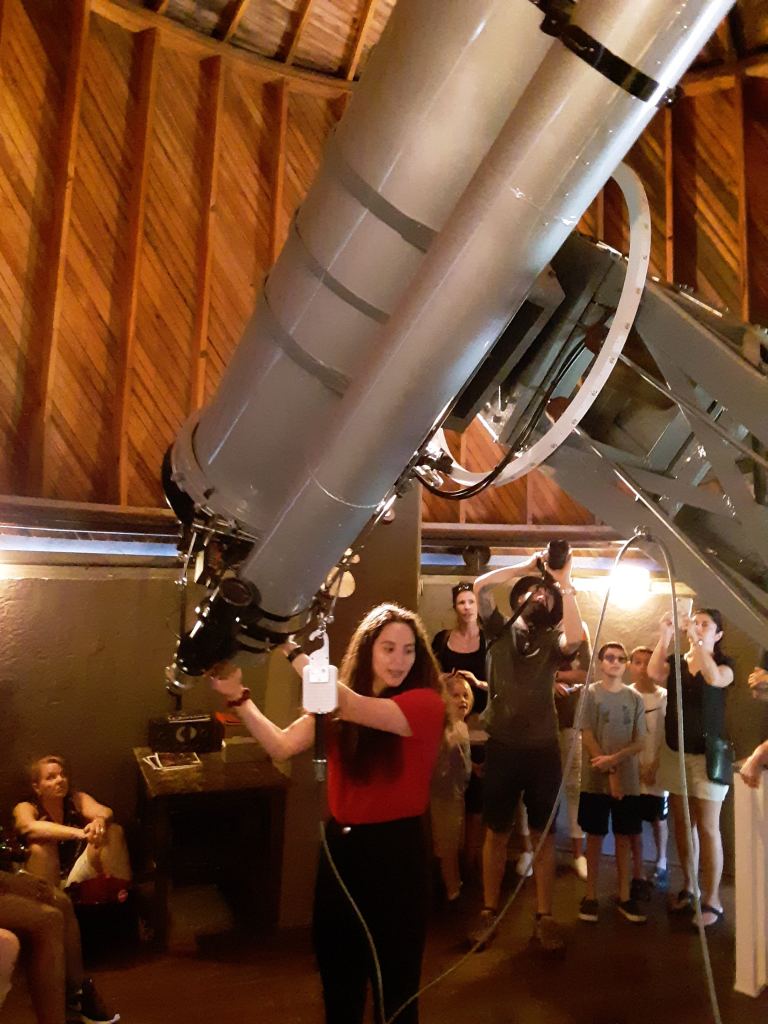

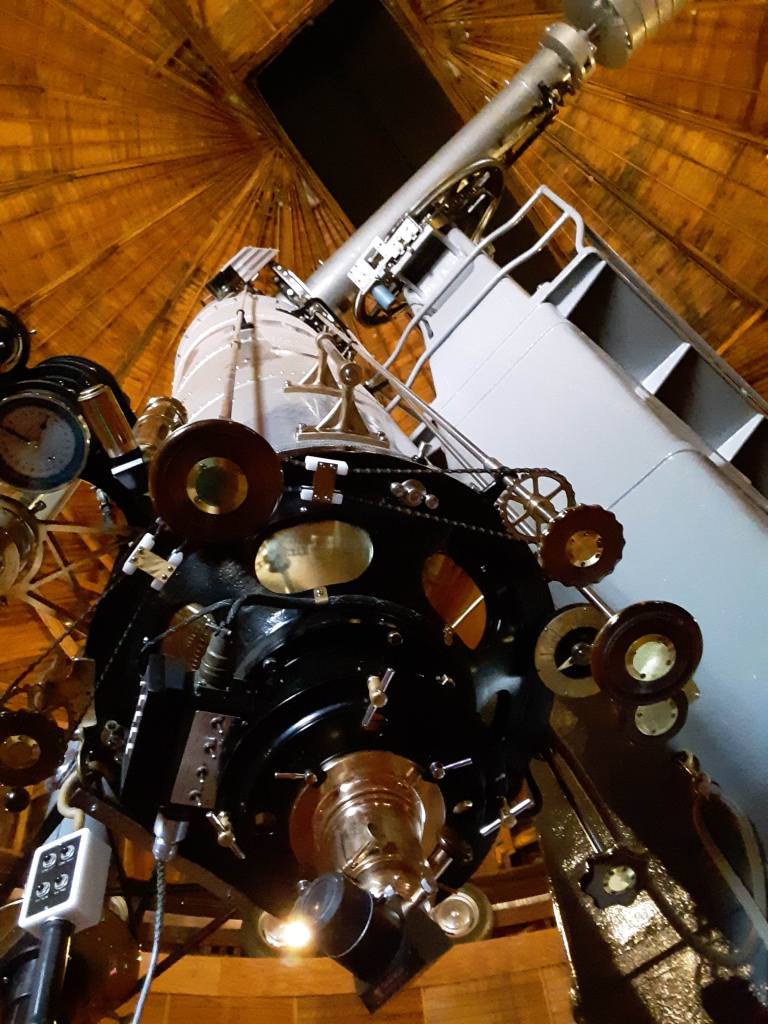
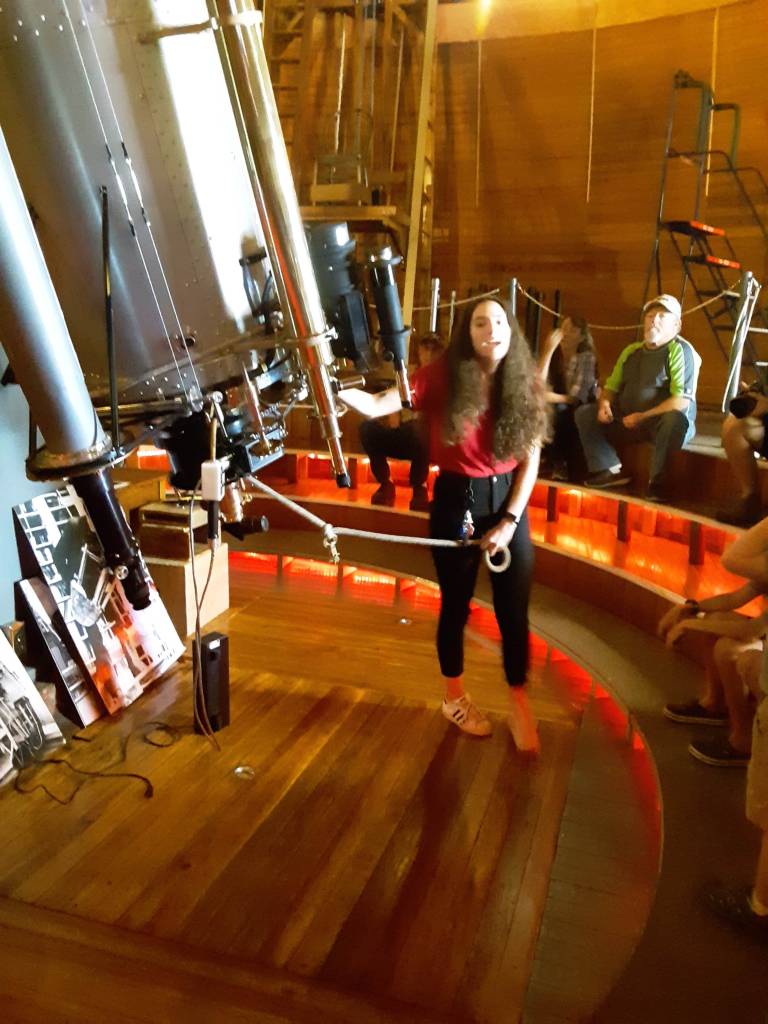
 A Pilgrim of Earth and Heavens