Touring Deep Time, Part 2

As I wrote in PART 1 (you did read Part 1, didn’t you?)

On our recent tour through New Mexico and Arizona, my wife Molly and I found ourselves in the presence of some deep time. And by “found ourselves” I mean “planned our trip to be.” The trip included Ghost Ranch, a Presbyterian camp and conference center near Abiquiu in northern New Mexico, the Chaco Culture National Historical Park a couple hours west, Meteor Crater near Winslow, Arizona (which has its own little time loop), and the Grand Canyon in northern Arizona. An unscheduled but anticipated stop at Lowell Observatory in Flagstaff, AZ, fit into the scheme as well. Each site confronted us with history on scales from human generations to older than human civilization, to a significant fraction of the age of Planet Earth.

Chaco Canyon

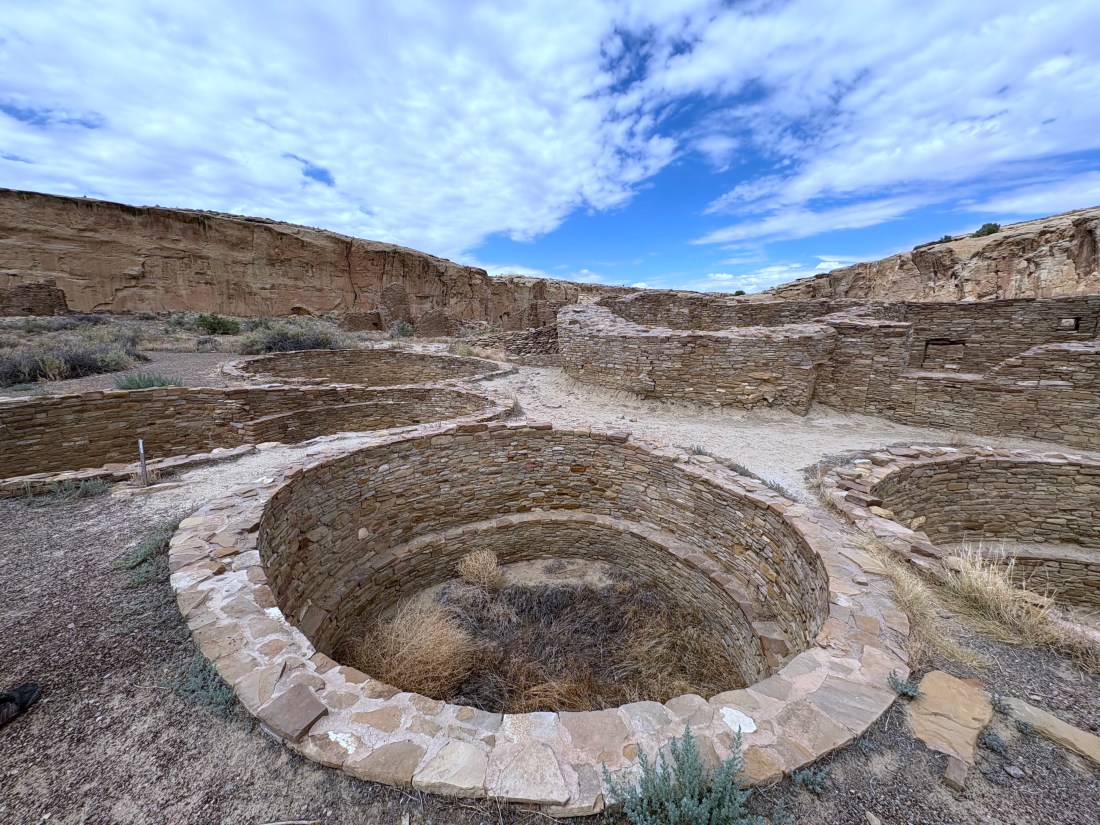
Our next stop was the Chaco Culture National Historical Park. This is a Native American and World Heritage Site that served as the center of a vast economic, political, and religious sphere of influence reaching as far as California and Mexico from 850 to 1250 CE (in the Common Era). I have wanted to visit Chaco for years since I learned about it, because it has a number of sites and architectural elements that are aligned with celestial events such as the solstices and equinoxes. So it’s an ancient astronomy site, and as an astronomy enthusiast, that’s fascinating to me.

In the book In Search of Time: The History, Physics, and Philosophy of Time by Dan Falk (© 2008 by Dan Falk, McClelland & Stewart Ltd., Toronto), the author describes other similar ancient astronomical sites and warns against calling them observatories, because that suggests a level of study and intention associated with modern scientific endeavor that we can’t assume or confirm for an ancient culture. It is most likely that the ancients were concerned primarily with the agricultural and subsequent religio-cultural times the heavens revealed more than the nature of the heavenly bodies themselves. Nevertheless, the accuracy with which the Chacoans and others were able to mark those celestial events with stone and architecture is remarkable.

The Chaco Canyon complex is enormous, much larger than I had imagined. Pilgrims and traders who travelled hundreds of miles on foot to get there would have been rewarded with an impressive expanse of urban hustle and bustle. Five great houses have been identified in the canyon, each covering dozens of acres. Over four hundred smaller structures have been found using modern technology like ground-penetrating radar and lidar but remain unexcavated. The great houses appear to include a mix of apartments, religious buildings, and perhaps governmental offices or shops, or both, everything you would need for a large crowd gathering for festivals in a capital city. The stonework of the architecture is exquisite with tightly-fitting, thin, flat stones laid expertly and held with a mud mortar. Much of this, as beautiful as I found it to be, was in its day covered with plaster to present a clean, bright facade to the public.

I was confronted with my modern bias when I found myself thoroughly surprised at the sophistication of the structures for people who lived twelve centuries ago. My bias comes into sharper focus when I consider the cathedrals of Europe that were built in the same era. I’ve been taught to expect that for white Europeans such building projects were normal and expected but that Native Americans were just living in animal hide tents and stick huts. It ain’t necessarily so. History, it seems, has more stories to tell than we often get to hear.

Keep going! See also: Part 1, Part 3, Part 4,

Touring Deep Time, Part 1

On our recent tour through New Mexico and Arizona, my wife Molly and I found ourselves in the presence of some deep time. And by “found ourselves” I mean “planned our trip to be.” The trip included Ghost Ranch, a Presbyterian camp and conference center near Abiquiu in northern New Mexico, the Chaco Culture National Historical Park a couple hours west, Meteor Crater near Winslow, Arizona (which has its own little time loop), and the Grand Canyon in northern Arizona. An unscheduled but anticipated stop at Lowell Observatory in Flagstaff, AZ, fit into the scheme as well. Each site confronted us with history on scales from human generations to older than human civilization, to a significant fraction of the age of Planet Earth.

Ghost Ranch

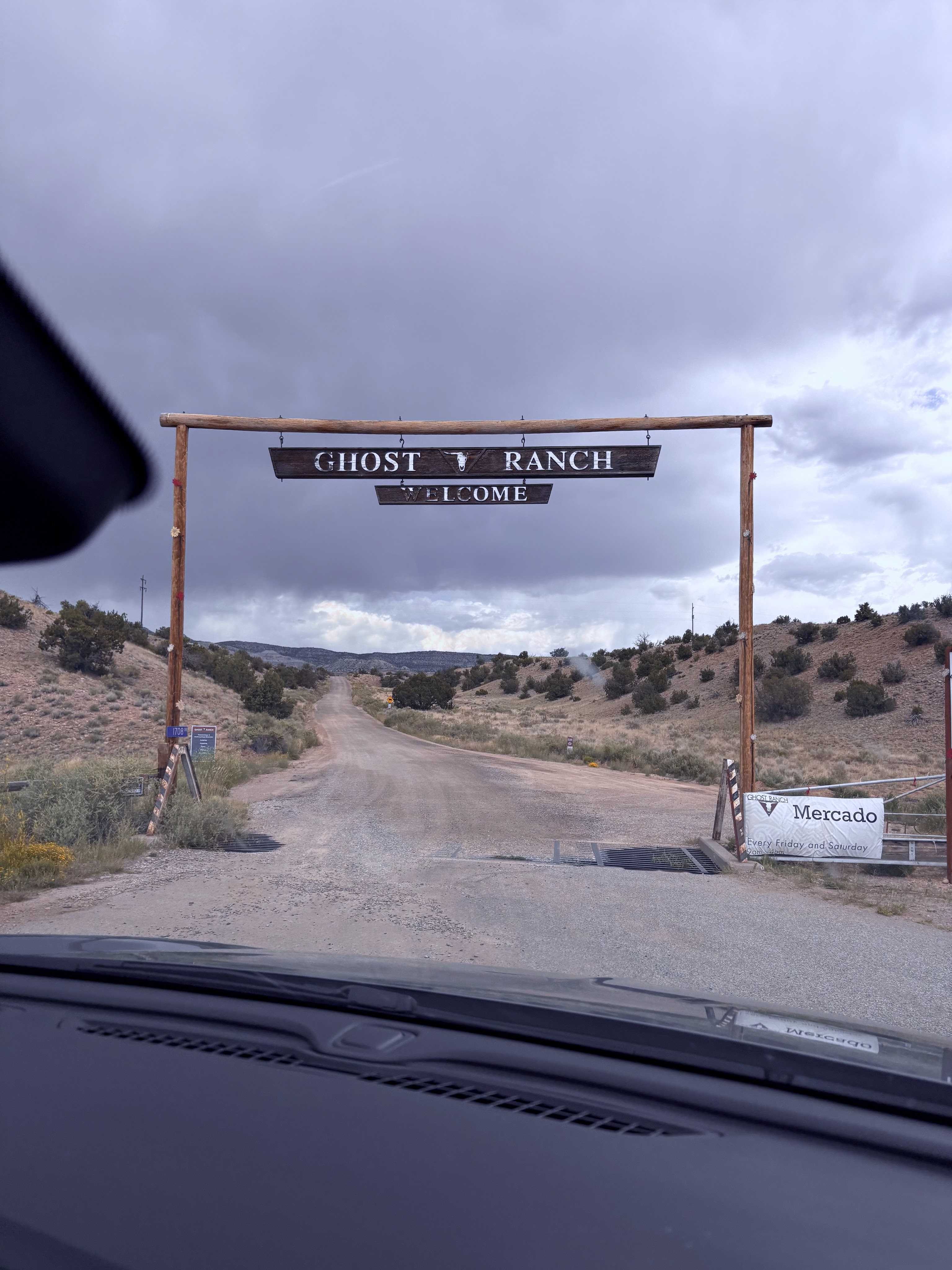
Taking our tour in order, let’s begin at Ghost Ranch. This first stop wasn’t planned for its time connection but as a site for spiritual retreat to begin my sabbatical. Spiritual retreats have their own time bubbles in our experience, standing outside the usual flow of chronos, the chronological time of schedules and calendars and time management. Instead, they tend to flow, in church lingo, in kairos, the timeless time of the eternal. That’s a special experience where time seems to lose its strict meaning and moments of inspiration seem to last forever while still being just now. While retreats aren’t all made up of kairos, they still tend to have a rhythm of their own outside our usual experience of time. I’ll get into all that more in another chapter. The thing here is we wanted to set the sabbatical time apart and a weeklong retreat seemed like a good way to do it.

What I didn’t realize was how beautiful and remarkable a place Ghost Ranch is. While the retreat program itself turned out not to be specifically spiritual, Ghost Ranch created an experience of a God-blessedness just for being at Ghost Ranch.

For me, the landscape carried much of the blessing. The geology of the area has created a system of mesas, flat-topped hills or ridges with steep sides that rise above a plain. They are refugees of erosion, having an area of denser rock at the top that protected the sedimentary layers below from washing away as quickly as surrounding areas. As a result, the sedimentary layers are laid bare for all to see and for geologists to study, date, and catalogue, and for artists and poets to gaze on in wonder, to capture in color and language. Being one with a love of science and a penchant for art, I was enthralled.

Ghost Ranch has two museums, one anthropological about the Native cultures of the area and one paleontological about the geology and dinosaurs of the area. What I learned about the geology blew my mind. You can look up the details yourself, but the two things that really grabbed me were that the bottom layers of the mesas date back to the time before dinosaurs appeared on earth, and that several of the layers of the mesas were laid down when New Mexico was under an inland sea and all the continents were still all mashed together. In a culture where 50 years is considered historic, walking on 250-million-year-old ground and being conscious of continental drift is shocking.

I wonder what would happen if we carried this awareness with us more consciously in our daily lives. No matter where you stand on the planet, you can have this sort of experience if you let your mind go there. Would we be more humble about our endeavors, less anxious about our mistakes and failures, more careful about how we spend our tiny slice of time, if it were in the context of millions of years instead of hours, minutes, and seconds? Would it be a step toward experiencing eternal life to frame our existence in the midst of such deep time instead of the urgent now?

Wait! There’s more! See also: Part 2, Part 3, Part 4,

The Western Tour: An Overview

Molly and I have been traveling since July 12 (it being July 25 as I write this), so it’s definitely time for an update. This is a brief summary of what we have been up to. I’ll try to go into more detail in future posts.

July 12 – flew from Washington Dulles to Denver, got our rental car, and stayed overnight near the airport.

July 13 – Drove to Ghost Ranch near Abiquiu, New Mexico. The weather deteriorated from sunny to spitting rain, but it was a pleasant enough drive. We were very excited to arrive and get checked in. Our room was in Coyote Lodge on top of the mesa, putting us about as far from the dining hall as possible. We’ll be getting our steps in for sure! The room was a simple but pleasant suite with a sitting room with two loveseats and a couple tables, the bedroom, and a full bath. No A/C, but adobe, windows, and fans do a fine job keeping things comfortable. Made our way down for dinner, then orientation in the Agape Center (sort of chapel/community space), got introduced to our class instructors and saw where we would be meeting, then back up the mesa. The sky had cleared and was spectacular! Took some pics of the Milky Way that were amazing.

July 14-19 – Regular routine of breakfast at 7:30 a.m., Morning Light service at 8:30, class at 9:00-noon, lunch at 12:30, more class and/or free time in the afternoon, dinner at 5:30, usually free evenings, and early to bed. Made several friends over the course of the week, which is cool: Joel and Tammy from North Carolina, and Polly and Rigel from Texas, in particular. Hope to stay in touch with them.

My painting class turned out to be really good. I was the only real beginner, and everyone else in the class was very skilled and talented, so I felt a bit awkward knowing nothing, essentially. But everyone was very supportive, and I found my way. More on that later.

The scenery at Ghost Ranch is amazing. Such dramatic views wherever you look, and they change as the light changes through the day, so it’s always different. There’s height with the mesas, depth with the rock layers, and expanse across the valley and sky. More on that later, too.

July 19 – We left Ghost Ranch and drove to the Chaco Culture National Historical Park about 3 hours to the west. It’s three hours because you can’t get there from here. I’ve been wanting to go there since my last sabbatical trip, because it is not just a cultural heritage site but also an archaeo-astronomy site with buildings aligned with the solstices and such. There is a “sun dagger” that passes across a spiral petroglyph in one of the ruins, but that site is closed to the public because it’s gotten pretty unstable. Bummer. Unfortunately, no one made much of that aspect of the place while we were there. The ranger didn’t seem to know too much about it. Nevertheless, it was a remarkable place to see. The roads in and out were pretty … rustic. We went on to stay in Gallup, NM, that night.

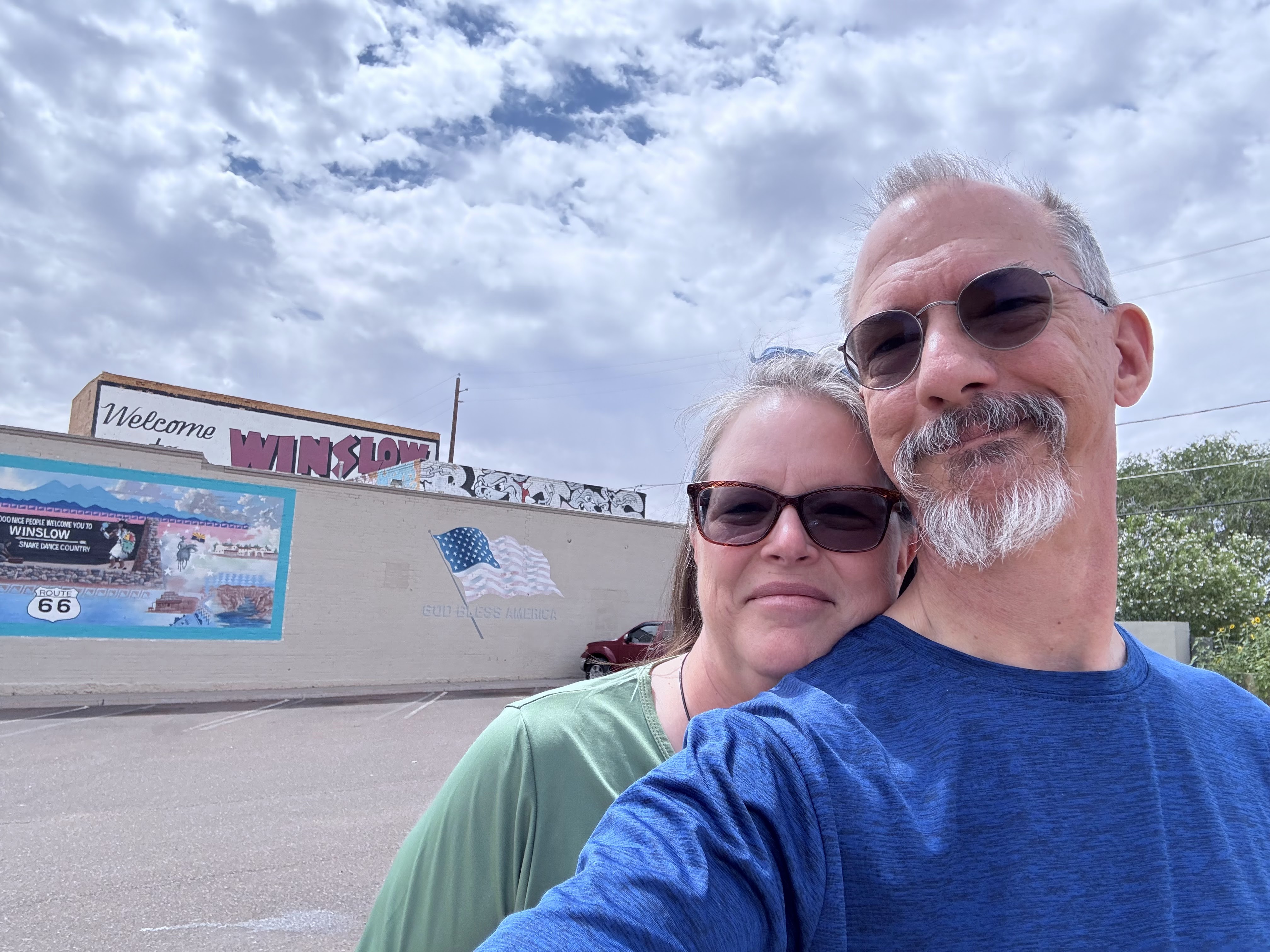
July 20 – Next day we crossed into Arizona. We made a quick stop at Winslow on Route 66 and the “Take It Easy” Park, site of the line from the Eagles’ song of the same name. Kitschy fun! 

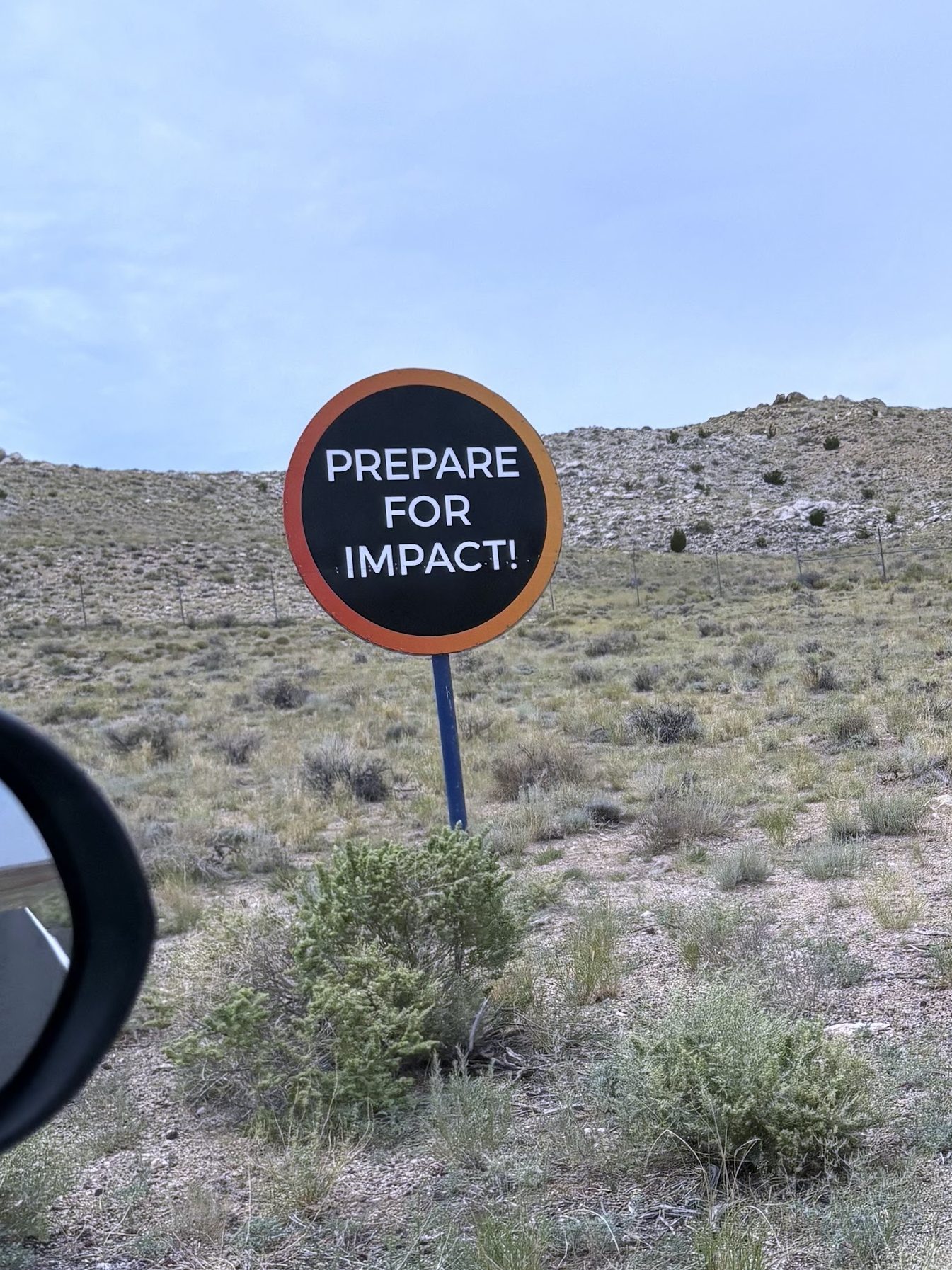
Just down the road a bit then is Meteor Crater, the target for the day’s outing. It is a mile-wide, 550-foot deep crater created by an asteroid strike about 50,000 years ago. Of course there were no humans in the area at the time, and there’s nothing much to recommend that patch of ground now, except the big hole and a nice visitor center with science displays. It’s another remarkable site that gives one a sense of time and the chanciness of existence.

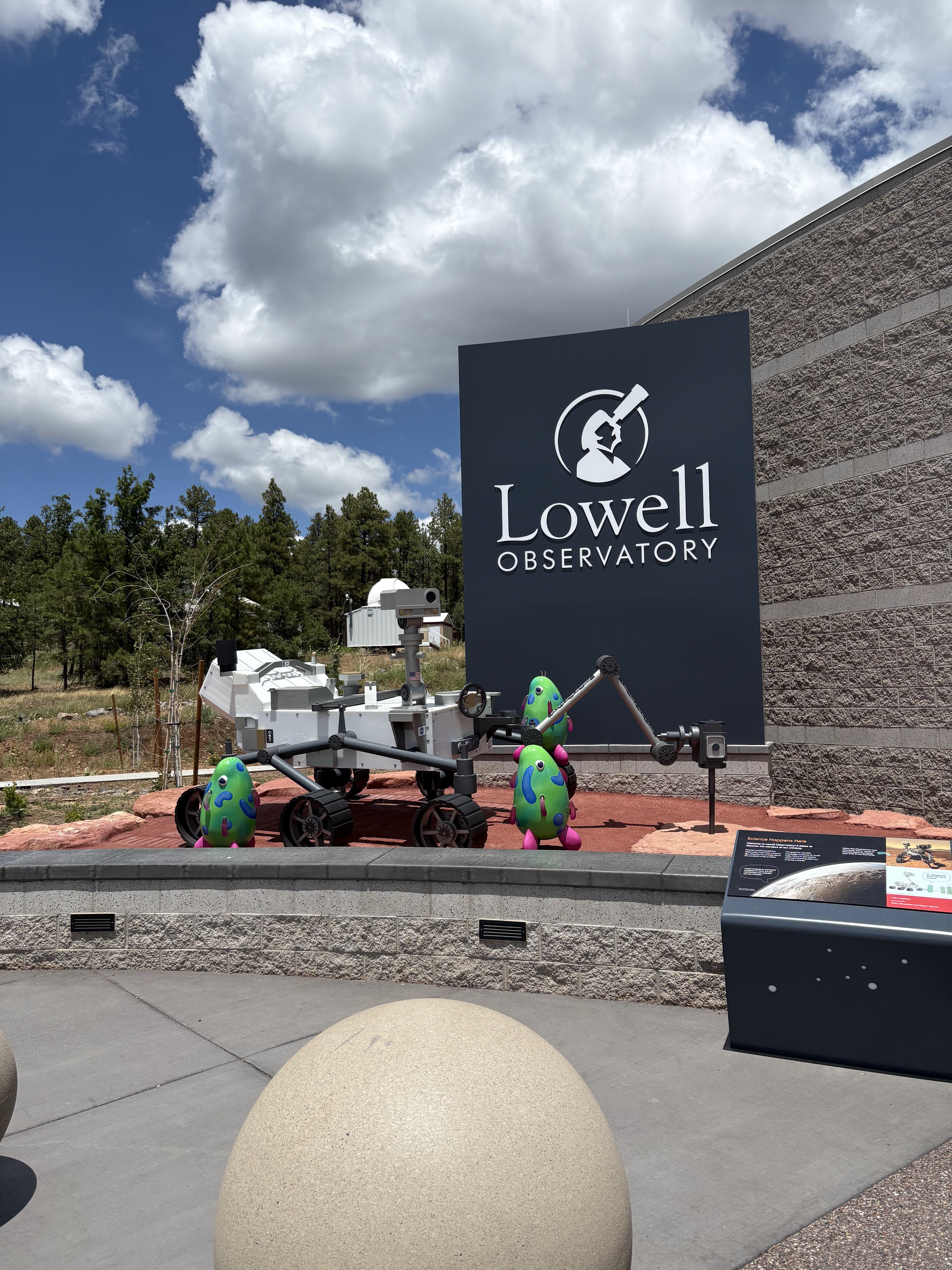
July 21 – We had spent the night in Flagstaff, so we had a nice breakfast, went to pick up a few things at Wally World, and then spent the afternoon at Lowell Observatory. I had been there seven years ago, but they have added a new Discovery Center and telescope patio since then, making an already great science center even better in my opinion. It’s just a beautiful campus anyway.

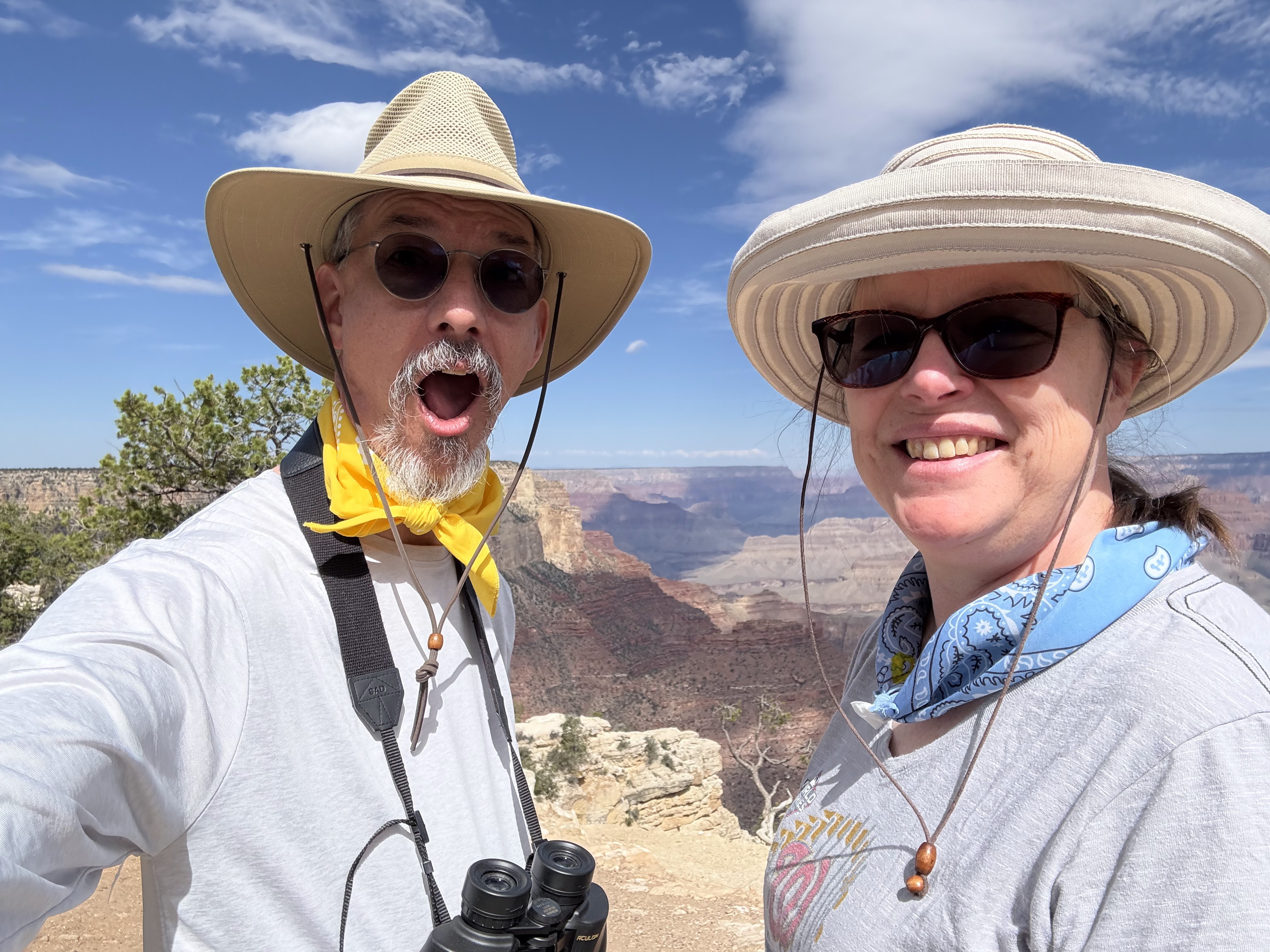
July 22 – We signed up for a tour with Canyon Dave Tours to go to the Grand Canyon and had a great experience! Our tour guide, Keaton, picked us up at the hotel in Flagstaff at 7:45 a.m. and four other folks along the way. Then we spent the whole day at the canyon. Keaton was amazing, very knowledgeable and personable, imparting geology, biology, and history that was just fascinating. The scenery is of course amazing. We could see smoke still on the North Rim, which increased through the day. The weather was beautiful – sunny and upper 70s with nice breezes. We heard so many different languages through the day, too. Keaton delivered us back to the hotel at about 5:30 p.m. Great day! 10 out of 10, would recommend.

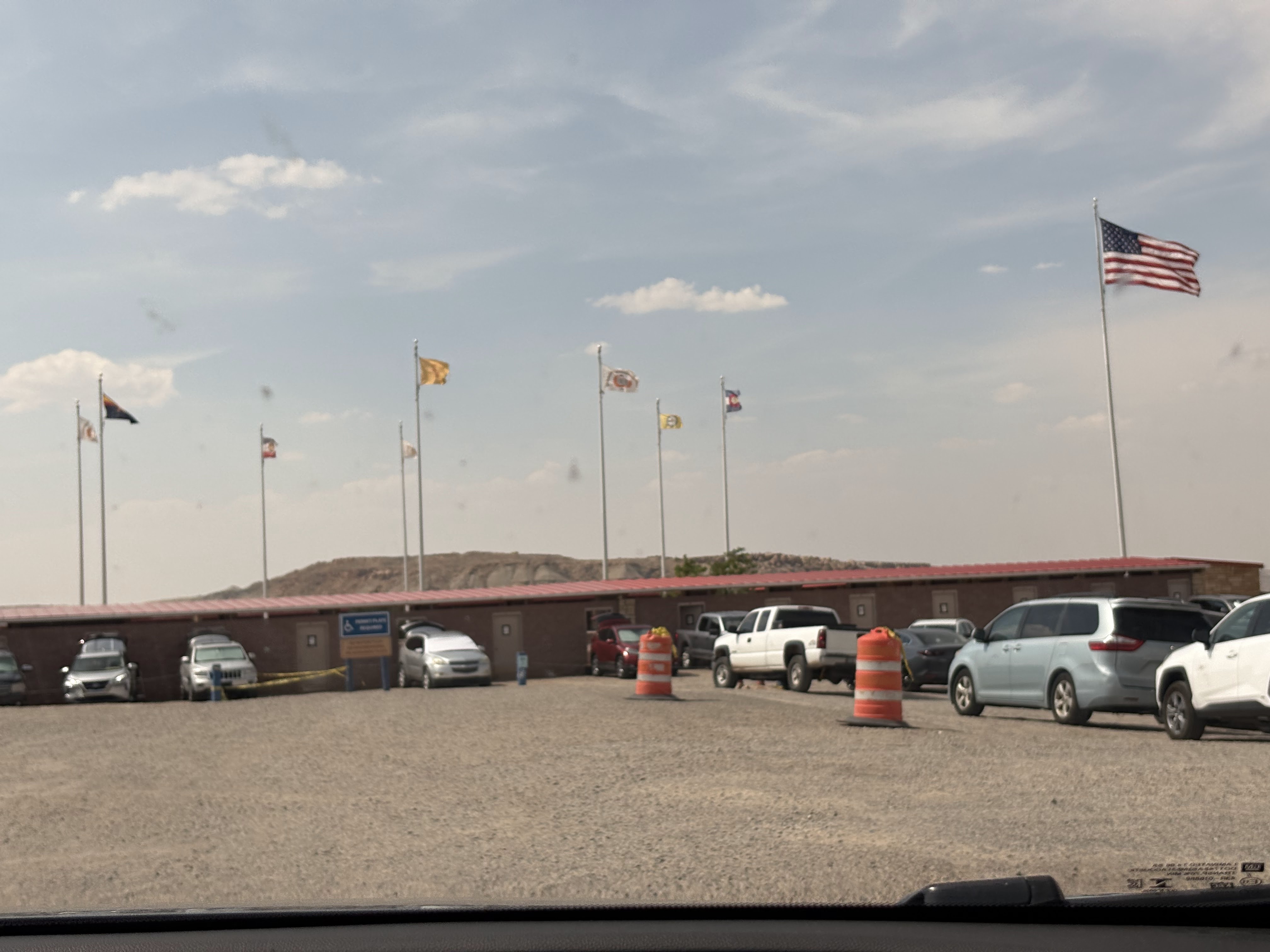
July 23 – Drove from Flagstaff to the Four Corners Monument, the point at which Utah, Arizona, New Mexico, and Colorado meet at right angles. We took the scenic route, US 160, a mostly two-lane road called the Navajo Trail (at least in part anyway). Lots of amazing scenery. The Four Corners Monument is on Navajo land. It’s a fairly simple site with the flags of the four states and the Navajo nation, various informational plaques, and a circle where the borders cross and you can stand in all four states at the same time. People take turns taking pictures. The plaza is surrounded by booths with native folk selling their crafts. We bought a couple really pretty pieces. You could tell the introvert merchants from the extrovert merchants pretty easily.

After that, we continued on Rt. 160, crossing Wolf Creek Pass, and on to Alamosa, CO, for the night. We got a call from the hotel about 9:15 saying that they close their desk and lock the door at 10pm, but if we could say when we were coming they’d have someone to let us in. That’s a local, non-chain hotel for you! And while the room had all the necessaries, it was definitely nonstandard. Not sure if it was a refreshing change or off-putting. It was a little more like staying in someone’s guest room than a Wyndham room (All hotels are Wyndham now, aren’t they?).

July 23 – Long drive from Alamosa to Mom’s house near Loveland, about seven and a half hours. Mostly high traffic on I-25, but otherwise uneventful. We’ll be here for a few days, and then we’ll fly home. As wonderful as this trip has been, I’m looking forward to just sitting and not touristing for a little while.

So those are your headlines from the Western front. Stay tuned for more details to follow, and stay subscribed!

Sabbatical 2018: The Movie

Here’s a video summary of my sabbatical travels touring U.S. astronomical observatories. It is entirely inadequate to capture the depth and richness of the experience, but it will give you a taste with some pretty pictures and peppy music (from http://www.bensound.com).

The review presentation

I presented this with a review of the whole experience, or bits and pieces of the whole experience, for the congregation after worship on Sunday, December 9, 2018. We also video recorded that presentation, including this. It’s under an hour long, and you can see that here:

A Sabbatical Map

Here is a map of my sabbatical journeys. It includes the trip to Green Bank, the New England swing, and the Grand Tour in chunks. The paths are approximate, especially on the Grand Tour, as they are here driving routes, and I took the train. Also, I didn’t put the exact addresses of the places I stayed. But you’ll get the idea. I think if you click on the box in the top left of the map header you’ll get the legend. Then if you want, you can turn off the driving routes, which will make it easier to see the places I visited. There are several light blue pins marking places I thought I might get to but ended up not going. This time. I worked out a rough estimate that I traveled over 8000 miles in a little over two months.

I can’t tell you how grateful I am for this experience, for the opportunity to travel to see these amazing astronomical instruments, and for the people who made it possible, namely my congregation at Catoctin Presbyterian Church, my family, and my wife Molly. I am grateful to the church for the financial means to go and for the spiritual support to send me. I am grateful to Molly for her encouragement and for her taking over many of the duties I left as I went. I am grateful to God for the privilege of this journey and for these beloved people in my life.

As my sabbatical is drawing to an end I plan still to keep writing about my experiences. I’m still processing the whole thing, what happened, what didn’t happen, what I learned and didn’t learn, what it all means. So stay tuned.


Photo Dump… Observatories 7-17!

My sabbatical is drawing quickly to an end. My Grand Tour wrapped up last week. My writing output has been lousy. I do, however, have lots and lots of pictures from the Tour that are in annotated albums over at my Google account. (My last photo dump went to my flickr account, but I got a new Android phone for the Grand Tour, so all the pictures automatically synced with Google, so there we go.) So I’m doing what I did after the Lesser Tour and dumping the pics for you to see. I then hope to go back and add commentary posts here for each leg, plus some interpretive and reflective posts on the whole experience.

So here we go. Click on the headings to see the pictures.

Arizona

Kitt Peak Observatory

Kitt Peak, near Tucson, Arizona, is the National Optical Astronomy Observatory for the United States, established in 1958. There are over two dozen telescopes of various shapes, designs, and age there ranging from 16″ to 4 meters (160″) in size. They do a nice job with their tours, visitor center, and gift shop. I also participated in a nighttime observing program, and that was also well done, despite the monsoon making actual observing impossible.

Sunset at Kitt Peak

As part of the evening program, we got to view the sunset from the crest, which was spectacular. I took many pictures which only hint at the glory. The clouds made it more dramatic, but as the light faded the clouds took control of the night, precluding any astronomical observing.

Mount Graham International Observatories

A couple hours east of Tucson you can find Mount Graham, but you can’t go up it without a permit or signing on with the Eastern Arizona College Discovery Park tour, which is what I did. It takes over an hour to ascend the mountain road with its 108 switchbacks. At the summit are three observatories: the Sub-millimeter Radio Telescope, the Vatican Advanced Technology Telescope, and the Large Binocular Telescope. We toured all three. Meanwhile, the weather degraded from mostly sunny to socked in, foggy, and 25-30 mph winds. The monsoon is real. I’m sure it had nothing to do with me being there.

Lowell Observatory

I traveled by car from Tucson to Flagstaff to see the Lowell Observatory, about a 4-hour drive. It saved me some logistical nightmares of getting there by train. Lowell is a beautiful facility, and they do very nice interpretive work. They also do public observing every clear night, and we happened to get such a thing while I was there. Lowell, named for famed astronomer Percival Lowell, is where Clyde Thombaugh discovered Pluto.

California

California Science Center

Not an observatory, but a cool science museum that has lots of space artifacts including the space shuttle Endeavor.

Griffith Observatory

Sitting on a hill overlooking Los Angeles is Griffith Observatory, named for Griffith Griffith. Yep, that was his name. This facility has been an important center for science education in L.A. for generations. It’s still very cool. They do public observing through their 12-inch Zeiss every clear night, despite the atrocious light pollution. You still get a decent view of the planets, which can be a real Gee-Whiz! moment, especially for the uninitiated.

Palomar Observatory

The Big Eye, that is the 200″ Hale reflector, one of the most famous telescopes in the world, is housed in this beautiful, Art Deco observatory dome. If you ever see an observatory in a cartoon, it’s probably based on Palomar. It is still among the largest telescopes in active service, and this is an active scientific facility. A couple hours southeast of Los Angeles, actually closer to San Diego, Palomar doesn’t suffer too much from pollution of the bright lights, big city. They have nice gift shop and visitor center and a good tour.

Mount Wilson Observatory

Mount Wilson was one of the first great observatories on the West Coast, developed by George Hale, the man behind Yerkes and (eventually) Palomar. It’s about an hour and change northeast of Los Angeles and is home to several former claimants of World’s Largest Telescope. Now primarily an educational outreach facility and center for outdoor activities like hiking and mountain biking, Mt. Wilson played a key roll in changing the way we understand the shape, structure, size, and age of the Universe.

New Mexico

Molly flew out to join me in Albuquerque 32 days after I boarded the train in Harpers Ferry. We spent a day doing a self-guided Breaking Bad tour, which you can look here at if you’re into the show. We also enjoyed the New Mexico Space History Museum, the White Sands National Monument, the Three Rivers Petroglyph park, and the Valley of Fires lava flow site. Again, if you are interested in these, feel free to click on over. I’m going to keep the major bullet points for the official Grand Tour sites, such as…

Sunspot and Apache Point Observatories

Up on a mountain overlooking Alamogordo and White Sands, near the town of Cloudcroft, and just down the way from Mayhill where I spent a week on my last sabbatical, you can find Sunspot, the national solar observatory. You might have heard about Sunspot in the news recently. It was closed and evacuated by the FBI three days before we got there, leading to all sorts of speculation and conspiracy theories. Turned out to be a criminal investigation of a janitor involved in child porn, and definitely not aliens. Gross. Any way, just around the corner is Apache Point, an active observatory that is home to the Sloan Digital Sky Survey, an important digital, 3-D map of stars and celestial objects that revolutionized the field about the turn of the century. No visitor center, gift shop, or tours, but the public is welcome to stroll around. So we did.

Monastery of Christ in the Desert

This is the bookend retreat for the sabbatical, balancing the week at the Sienna Center in Wisconsin. Molly and I spent three days and three nights with the Benedictine brotherhood at this monastery on the Chama River near Abiquiu, NM. It is a beautiful and remote setting. Most of the time was spent in silence, or a close facsimile, and we attended quite a few of the services of the hours. The brothers start their day with Vigils at 3:30 a.m. and Lauds at 5:00 a.m., and we managed to miss those somehow. We very much enjoyed our time in reflection there, and the night sky was incredible.

Moon Over the Monastery

Here are many repetitive pictures of the moon, Venus, Jupiter, and friends low over the mountains west of the monastery on two successive nights.

Acoma Sky City Pueblo

Molly’s mom joined us from Colorado when we returned from the monastery to Albuquerque. We spent a day at the Acoma Pueblo, about an hour west of ABQ. I had been planning to go to the Chaco Canyon Native American Heritage site, which is the remains of a very large community dating from about 800-1200 AD in northwestern New Mexico. Chaco shows a great deal of intricate astronomical knowledge built into the layout and architecture of the entire site. Unfortunately, the logistics of travel precluded getting everywhere I hoped to go, and Chaco fell off the list. Sky City was much more doable and turned out to be a fascinating side trip. The Acoma are thought to be descendants of the Chaco people.

The Very Large Array

The last of the Grand Tour observatories, the Very Large Array, is a bookend to the first observatory on my sabbatical, Green Bank. The VLA is the largest radio observatory in the world, a collection of 27 radio dishes, each 25 meters (82 feet) in diameter, set in a Y pattern with a 22-mile diameter. It is well known from Carl Sagan’s original Cosmos series and the Jodie Foster movie (based on a book by Sagan), Contact. Once again, radio astronomy proved to be absolutely fascinating, not only to me, but also to Molly and Mom who were both quite impressed. Good tour, good visitor center, nice gift shop.

And that’s pretty much it!

We spent a couple days with Mom at her place in northern Colorado, after which we took the train from Denver home to Harpers Ferry. I have some pics of the trip home here. I still have a couple places I want to get to in and around DC, but time is running out to get it in under the title “sabbatical.” Like I said, I hope to post more about the journey, things I learned, ideas I’ve pondered, observations I’ve made about life, the universe, and everything, so stay tuned.